

Maddy summaryHR 4363, the Defend Girls Athletics Act, requires public K-12 schools and colleges to certify annually that they comply with Executive Order 14201, which mandates keeping men out of women's sports. Schools must submit written compliance certifications by August 15 each year (for K-12) or July 1 (for colleges), with states reporting non-compliant agencies to the federal government. Schools or colleges failing to certify or violating the rule risk losing federal education funding, including returning unobligated funds and becoming ineligible for future federal support. The bill directly affects all public schools and colleges receiving federal education funds by tying their eligibility to adherence to this sports participation requirement.
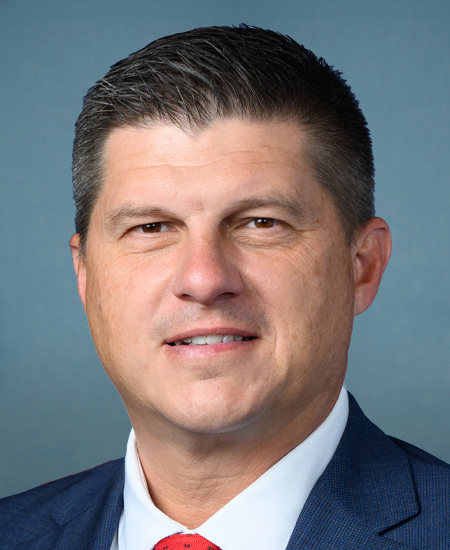
Rep. Brad Finstad
Sponsored bills
Maddy summaryHR 4370, the SAMS Act of 2025, codifies five existing executive orders into law to strengthen U.S. mineral supply chains. It gives legal force to orders focused on securing critical minerals (like lithium and rare earths) for national security and economic resilience, directly affecting federal agencies implementing these strategies. Key provisions require agencies to follow these established policies - addressing reliance on foreign mineral sources, supporting domestic mining, and prioritizing national security in mineral processing - without creating new regulations. The bill does not alter current mineral policies but formally enshrines them as binding federal requirements.
Maddy summaryHRES 571 is a symbolic resolution passed by the U.S. House of Representatives to commemorate the one-year anniversary of the July 13, 2024, attempted assassination of President Donald J. Trump in Butler, Pennsylvania. It condemns two assassination attempts against the President (in Butler and West Palm Beach), honors victims Corey D. Comperatore (who died shielding his family), David Dutch, and James Copenhaver (who were critically injured), and expresses gratitude to first responders. The resolution also condemns incitement of violence against political officials and calls for unity against political violence. As a non-binding resolution, it does not create new laws or policies but formally states the House’s position on these events.
Maddy summaryHR 4234 prohibits U.S. officials from temporarily allowing certain individuals to enter the country at the border. It specifically bans parole (temporary entry) for refugees and individuals identified as having terrorism links, being on terror watchlists, or posing a national security risk due to potential ties to terrorism. The bill defines "known terrorist" (arrested/convicted for terrorism), "special interest alien" (with potential terrorism nexus), and "suspected terrorist" to establish these restrictions. These provisions apply to people seeking entry at the border who meet these criteria, replacing existing parole authority for such cases.
Maddy summaryHRES 519 is a symbolic House resolution condemning the June 14, 2025, attacks in Brooklyn Park and Champlin, Minnesota, where a gunman critically injured State Senator John Hoffman and his wife, and killed State House Speaker Emerita Melissa Hortman and her husband. It honors the victims, commends law enforcement for preventing further harm, and calls on elected officials and the public to reject political violence. The resolution explicitly urges community leaders to publicly denounce such violence and reaffirms commitment to peaceful democratic engagement. As a non-binding statement, it does not create new laws or policies but formally expresses the House’s stance against political violence.
Maddy summaryThe LEDGER Act (HR 4091) requires the Treasury Department to create a system tracking every government payment within 180 days of enactment. It mandates that all federal departments, agencies, and branches (executive, legislative, judicial) must report disbursements from every funding source, including how long funds remain available for spending. This system will detail each payment's origin, recipient, and timing across all government accounts. The bill directly affects all federal spending entities by standardizing expenditure tracking previously handled inconsistently.
Maddy summaryThe GOLDEN DOME Act of 2025 establishes a comprehensive homeland missile defense system designed to protect U.S. citizens and critical infrastructure from ballistic, hypersonic, cruise, and unmanned system threats. The bill creates a new Golden Dome Direct Report Program Manager with significant authority to accelerate development, testing, and deployment of integrated missile defense capabilities across all domains (land, sea, air, space, and cyberspace). It requires a holistic strategy with all-domain awareness, mandates accelerated testing schedules including live-fire exercises, and allocates specific funding for components like space-based sensors, interceptors, and command and control systems. The legislation also includes provisions to protect the space industrial base and secure critical supply chains for missile defense systems.
Maddy summaryThis bill requires major internet companies (including social media, streaming services, and app stores) and broadband providers to contribute to the Universal Service Fund, which subsidizes affordable broadband in rural and high-cost areas. It exempts smaller companies that transmit less than 3% of U.S. broadband data or earn under $5 billion annually. The Federal Communications Commission must create a new support mechanism to help rural broadband providers cover costs, while ensuring contributions remain fair and predictable. The bill explicitly states it does not grant the FCC new authority over these companies.
Maddy summaryThis bill mandates annual funding for USDA programs to prevent, detect, and respond to foreign animal diseases affecting livestock. It requires $30 million annually for 2023-2025, increases to $233 million yearly for 2026-2029, and then reduces to $75 million annually after 2030, with specific allocations for surveillance, laboratory networks, and emergency response. The funds directly support state and federal animal health programs, including the National Animal Health Laboratory Network and the National Animal Disease Preparedness Program. These provisions aim to strengthen protections for U.S. agriculture by ensuring consistent resources for disease monitoring and rapid containment.
Maddy summaryThis bill requires U.S. Customs and Border Protection (CBP) to update its Northern Border Security Threat Analysis every five years, including specific new elements. It mandates assessments of current staffing levels versus projected needs, future retirement surges (noting a 400% increase expected by 2028), housing challenges, and local recruitment plans for northern border ports. The bill also requires CBP to develop and update a plan addressing retirement surges, staffing shortages, and the feasibility of recruitment tools like bonuses or student loan repayment. These provisions directly affect CBP staffing at northern border ports, which face unique challenges like harsh weather and housing shortages that hinder officer retention.