

Maddy summaryThis bill requires the EPA to finalize a rule about E15 fuel (15% ethanol blend) labeling and underground storage tank compatibility within 90 days of enactment. It directly affects fuel retailers and underground storage tank owners by mandating that existing tanks are automatically deemed compliant with E15 without needing documentation, and that tanks manufactured after July 2005 or certain fiberglass piping are considered compatible. The bill also requires new tank components installed after the rule's effective date to be compatible with up to 100% ethanol, regardless of current fuel types. These provisions aim to simplify compliance for fuel retailers while expanding flexibility for future fuel blends.
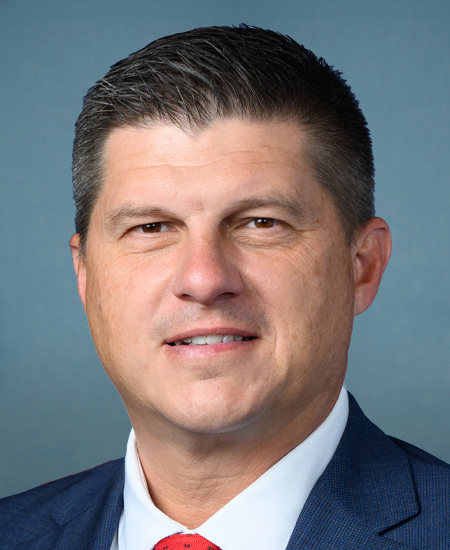
Rep. Brad Finstad
Sponsored bills
Maddy summaryThis bill updates the TRICARE Young Adult Program to make healthcare coverage more accessible for military dependents. It directly affects young adults (ages 21-26) who are children of active-duty service members, by eliminating a separate premium they previously paid for coverage. Key changes include removing an extra cost for young adults and adjusting eligibility rules to simplify enrollment. These amendments aim to reduce out-of-pocket expenses and streamline access to health insurance under the program.
Maddy summaryThe LIFT Act of 2025 streamlines regulations for drone and eVTOL (electric air taxi) operations in the U.S. It requires the Transportation Secretary to create new safety rules enabling routine drone flights beyond visual range (BVLOS) within six months and use AI to speed up approval requests for drone waivers. The bill also establishes a 3-year pilot program giving grants to state, local, tribal, and territorial governments to test eVTOL operations - prioritizing projects using U.S.-manufactured drone technology and focusing on applications like medical response and cargo transport. This directly affects drone operators, local governments implementing air mobility projects, and U.S. drone manufacturers by accelerating regulatory approvals and funding for safe integration into national airspace.
Maddy summaryThe Next Generation Farmer Act lowers experience requirements for beginning farmers seeking USDA farm loans or programs. It reduces the mandatory farming experience from 3 years to 1 year and creates two waiver paths: 1) 1 year of hired farm labor with management duties, or 2) mentorship from retired farmers/retired executives (SBA's SCORE program) or approved local farm organizations. This directly affects new farmers and ranchers applying for USDA financial assistance. The bill makes it easier for those without traditional farming backgrounds to qualify for federal support programs.
Maddy summaryHR 4658, the STUDENT Act, would impose new requirements on the National Education Association (NEA) to maintain its federal charter. The bill mandates explicit employee consent for membership dues (ending automatic payroll deductions), prohibits the NEA from engaging in political activities or lobbying, and bans the promotion of specific beliefs (such as claims that the U.S. is fundamentally racist) in schools. It also repeals the NEA's property tax exemption in the District of Columbia and requires the organization to comply with anti-discrimination rules and labor laws. These changes directly affect the NEA and its state/local affiliates, altering how they operate and interact with public schools.
Maddy summaryHR 4704, the ROTOR Act, requires the Defense Health Agency to study cancer rates among military helicopter pilots and aviation support personnel. It directly affects service members who served as rotary-wing aircrew (pilots or support staff) since 1961 and receive VA healthcare. The bill mandates a two-phase study: first, comparing cancer prevalence/mortality for 12 specific cancers (like lung, prostate, and breast cancer) between these service members and the general population; second, if increased rates are found, investigating potential causes like aircraft toxins, radiation exposure, or other service-related hazards. The study will use existing VA and cancer registry data, with findings reported to Congress within two years.
Maddy summaryThis bill establishes a federal right for livestock producers to sell meat and dairy products across state lines without facing conflicting state regulations. It prevents states from imposing production standards (like animal welfare rules) on products not raised within that state, ensuring a uniform national market for covered livestock products. The law specifically covers animals raised for meat or dairy (including milk products), but excludes egg production. This aims to eliminate barriers to interstate commerce for these products while aligning with U.S. trade obligations.
Maddy summaryHR 4590 would codify Executive Order 14305 into permanent law, giving it the force of law rather than treating it as a temporary executive directive. This bill does not create new policy but formally enshrines the existing order’s provisions about "restoring American airspace sovereignty" into statute. It directly affects federal agencies like the Federal Aviation Administration, which must now implement these airspace sovereignty measures as binding legal requirements. The change ensures the order’s provisions will remain in effect without needing repeated presidential action.
Maddy summaryThis bill modernizes the process for seasonal agricultural workers who need commercial driver's licenses (CDLs). It requires the Transportation Secretary to create online systems for easy license renewal (Section 2(a)) and clarifies that farm equipment like tractors and harvesters ("implements of husbandry") are not subject to commercial vehicle weight calculations (Section 2(b)). It directly affects farm-related service industries and their seasonal employees who operate restricted CDL vehicles. The changes simplify administrative processes and remove regulatory barriers for agricultural operations.
Maddy summaryThis bill establishes a new federal program to improve rural roads critical for agriculture. It provides funding for projects that replace weight-limited bridges, enhance access to farms and agricultural facilities, and upgrade safety on high-risk rural roads. The program targets local roads and rural minor collectors, with the federal government covering up to 90% of eligible project costs. It directly affects rural communities and agricultural businesses by addressing infrastructure barriers to farm operations and local economic activity. The funding is allocated through existing highway apportionment formulas under Title 23, U.S. Code.