

Maddy summaryThe Jumpstart Savings Act creates a new tax-advantaged savings program for state-run accounts that help individuals save for career-specific training and expenses. It directly affects workers, apprentices, and students pursuing certified trades or occupations by allowing tax-free contributions to accounts covering costs like community college tuition, apprenticeship fees, certification exams, trade tools, and business startup expenses. The bill enables rollovers from existing 529 college savings plans into these accounts and requires states to administer the programs with reporting rules similar to current 529 plans. The program will apply to taxable years beginning after December 31, 2025, and is designed to support career advancement in regulated fields.
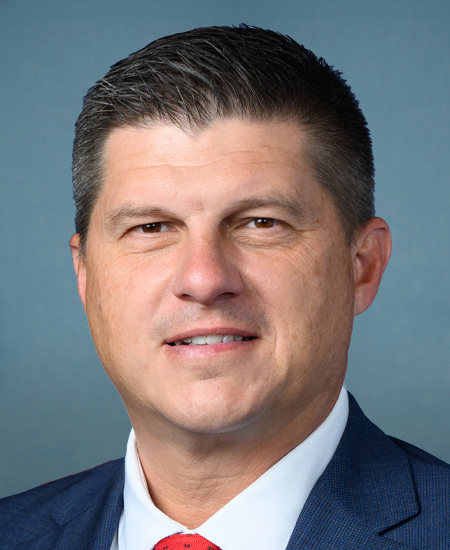
Rep. Brad Finstad
Sponsored bills
Maddy summaryThis resolution (HRES 998) is a symbolic House of Representatives commendation honoring President Trump, U.S. military/intelligence agencies, and Justice Department personnel for the alleged success of "Operation Absolute Resolve" in apprehending Venezuelan leader Nicolás Maduro. It cites Maduro's charges (including narcoterrorism conspiracy) and the Maduro regime's alleged dismantling of Venezuelan democracy, state-sponsored drug trafficking, and human rights abuses. The resolution expresses support for Venezuela's democratic transition but contains no new policy, funding, or legal changes. As a procedural resolution, it does not directly affect any individuals or alter laws.
Maddy summaryHR 7074 requires the Secretary of the Interior to join the Committee on Foreign Investment in the United States (CFIUS) when reviewing transactions involving land or resources near federal lands managed by agencies like the Bureau of Land Management, National Park Service, or Bureau of Indian Affairs. It specifically targets acquisitions by foreign entities from China, North Korea, Russia, or Iran, mandating CFIUS to assess whether such transactions - reported by the Interior Secretary - constitute a "covered transaction" requiring review. The bill creates a new process for evaluating these land deals, with the review ending for a specific country once it’s removed from the U.S. list of "foreign adversaries." This directly affects foreign buyers from those four nations seeking to acquire land adjacent to federally protected areas.
Maddy summaryThis bill requires state agencies administering the SNAP (food stamp) program to provide recipient-level data to the USDA Secretary upon request. It directly affects state SNAP agencies, which must submit this data within 30 days (or sooner for urgent cases) in secure electronic formats. Key provisions include mandatory data sharing for program oversight and integrity, strict privacy safeguards under the Privacy Act, and potential withholding of federal funds for non-compliance. The bill also clarifies that this does not limit the USDA's existing authority to access state data for program administration.
Maddy summaryThis bill modernizes the Conservation Reserve Program (CRP), which pays farmers to convert environmentally sensitive land to conservation uses. It clarifies definitions for "conservation buffers" (like riparian buffers, prairie strips, and wetland buffers), expands eligible land to include grasslands, wetlands (such as prairie potholes), and marginal pasture, and updates payment rules. Payments for establishing conservation practices (e.g., fencing, vegetation) remain at 50% of costs, but annual rental payments for reenrolled land decrease by 10 percentage points per renewal (starting at 85% for the first reenrollment). The changes directly affect farmers and landowners enrolled in CRP, as well as state/tribal partners proposing conservation plans.
Maddy summaryHR 5038, the American Protein Processing Modernization Act, creates a formal process for meat and poultry processing plants to request operating at "alternate inspection rates" (higher than standard government-mandated rates) while meeting USDA food safety criteria. The bill requires the USDA Secretary to publish food safety criteria within 90 days and respond to facility requests within 90 days (with automatic approval if no response is given). Existing facilities already using alternate rates can continue if they maintain food safety standards or until their request is reviewed. The bill also outlines procedures for addressing noncompliance, including written notices, 180-day correction periods, and timelines for reverting to standard inspection rates if needed, while minimizing impacts on operations and animal producers.
Maddy summaryHR 2617, the "Say No to Indoctrination Act," amends the Elementary and Secondary Education Act to prohibit public K-12 schools receiving federal funds from teaching "concepts related to gender ideology" as defined in Executive Order 14168. The bill adds this specific restriction to Section 8526 of the ESEA, directly affecting curriculum content in federally funded schools. This policy change would require schools to avoid instructional materials or lessons addressing gender identity concepts as defined by the referenced executive order.
Maddy summaryHR 2516, the Accreditation for College Excellence Act of 2025, prohibits accreditation agencies from requiring colleges to support specific political views, ideologies, or partisan positions. It explicitly prevents agencies from assessing institutions based on their commitment to any ideology or requiring adherence to statements of faith for religious institutions. The bill also limits federal criteria for accreditation to only what is necessary, ensuring colleges comply with their accreditor’s standards - not additional unrelated requirements. This directly affects all colleges seeking federal funding through accredited programs by clarifying permissible accreditation standards.
Maddy summaryHR 909, the Crime Victims Fund Stabilization Act of 2025, modifies how funds from the False Claims Act are deposited into the Crime Victims Fund. It specifies that from 2025 through 2029, certain False Claims Act proceeds (specifically those for qui tam plaintiff payments and government damage reimbursements) cannot be deposited into the fund. This change directly affects the composition of the Crime Victims Fund by excluding these specific revenue streams during the specified period. The bill does not create new benefits or alter victim services; it only adjusts fund allocation rules for existing False Claims Act revenues.
Maddy summaryHRES 984 is a symbolic resolution designating January 9, 2026, as "National Law Enforcement Appreciation Day." It directly honors all federal, state, local, and tribal law enforcement officers across the United States for their service and sacrifices. The resolution expresses the House's support and gratitude, encourages public observance through ceremonies, and recognizes officers who have made the ultimate sacrifice. As a non-binding resolution, it does not create new laws or policies but serves as a formal expression of appreciation.