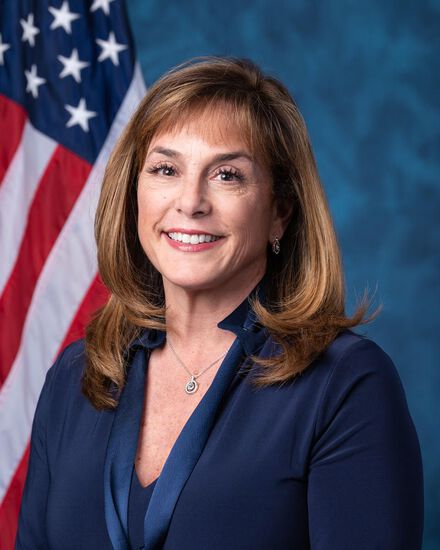
Photo of Lisa C. McClain
R United States House · District 9 · Michigan On the 2026 ballot

Rep. Lisa C. McClain

Compare
Total votes
2,837
all sessions
Attendance
98%
57 missed
Near the chamber average
With party
95%
of cast votes
Near the chamber average
Bipartisan score
3%
crosses aisle rarely
Near the chamber average
Sponsored
562
bills & resolutions
Lower than 97% of chamber peers
Committees
6
assignments
562 bills and resolutions

Sponsored bills

Total
562
Primary
71
Co-sponsor
491
This page
562
matching current filters
Co-sponsor HR 53
In committee · Indiana House · Co-sponsor
FIND Act

Maddy summaryHR 53 (FIND Act) requires federal contractors to certify they do not refuse to work with firearm manufacturers, dealers, ammunition sellers, or related safety device companies based on bias. It prohibits main contractors from awarding subcontracts exceeding 10% of a contract’s value to entities that fail to make this certification, and bans efforts to circumvent the rule through complex subcontract tiers. The law applies to all federal procurement contracts, directly affecting businesses bidding on government work. Violations risk contract termination and suspension from future government contracts.

In committee Jan 9, 2023 1 co-sponsor
Co-sponsor HRES 366
Passed · Indiana House · Co-sponsor
Promoting awareness of motorcyclist profiling and encouraging collaboration and communication with the motorcycle community and law enforcement officials to prevent instances of profiling.

This resolution promotes increased public awareness of motorcyclist profiling. The resolution also encourages the motorcyclist community and law enforcement to collaborate and communicate on efforts to end motorcyclist profiling.

Passed Dec 23, 2022 1 co-sponsor
Co-sponsor HR 7903
Signed into law Dec 20, 2022 1 co-sponsor
Co-sponsor HR 263
Signed into law · Indiana House · Co-sponsor
Big Cat Public Safety Act

Big Cat Public Safety Act This act revises requirements governing the trade of big cats (i.e., species of lion, tiger, leopard, cheetah, jaguar, or cougar or any hybrid of such species) under the Lacey Act to limit the possession, breeding, and exhibition of big cats. The Lacey Act prohibits any person from importing, exporting, buying, selling, transporting, receiving, or acquiring big cats across state lines or the U.S. border. However, some exemptions are provided for certain entities, such as universities and wildlife sanctuaries. (Sec. 3) The act expands the Lacey Act prohibitions to include a prohibition on possessing or breeding big cats. Breeding means facilitating propagation or reproduction (whether intentionally or negligently), or failing to prevent propagation or reproduction. Owners of big cats that were born before this act's enactment may keep their big cats, but the owners must register them with the U.S. Fish and Wildlife Service. The act modifies the list of entities that are exempt from prohibitions to export, buy, sell, transport, receive, acquire, possess, or breed big cats. The modified list includes exemptions for entities or facilities exhibiting animals to the public if they (1) hold a Class C license in good standing under the Animal Welfare Act, and (2) do not allow individuals to come into direct physical contact with big cats. However, direct contact is allowed if the individual is a trained professional, a veterinarian, or directly supporting conservation programs that do not involve commercial activities and meet other specified restrictions. (Sec. 4) A person who knowingly violates the act must be fined not more than $20,000, or imprisoned for no more than five years, or both. The act considers each violation to be a separate offense. The offense must be deemed to have been committed not only in the district where the violation first occurred, but also in any district in which the defendant may have taken or been in possession of the prohibited wildlife species. (Sec. 5) The act extends forfeiture provisions to fish, wildlife, or plants that are bred or possessed; thus, big cats bred or possessed in violation of the act are subject to forfeiture. (Sec. 6) The Department of the Interior must issue regulations to implement this act.


Signed into law Dec 20, 2022 1 co-sponsor
Co-sponsor HR 9470
In committee · Indiana House · Co-sponsor
American SAFER Act of 2022

American Safety And Fairness through Expedited Removal Act of 2022 or the American SAFER Act of 2022 This bill expands the classes of non-U.S. nationals (aliens under federal law) who are subject to expedited removal (i.e., removal from the United States without further hearing or review). Specifically, the bill nullifies a 2004 Department of Homeland Security (DHS) rule  that generally limits expedited removal to certain situations, such as for non-U.S. nationals encountered within 14 days of entry into the United States without inspection and within 100 miles of a U.S. international land border. The bill also (1) prohibits DHS from implementing a rule that limits expedited removal based on how far a non-U.S. national was from the border when encountered or apprehended, and (2) modifies the relevant statute to state that expedited removal authority applies regardless of where the non-U.S. national was encountered or apprehended.

In committee Dec 8, 2022 1 co-sponsor
Primary HR 9429
In committee · Indiana House · Lead sponsor
College Cost Transparency and Student Protection Act

College Cost Transparency and Student Protection Act This bill outlines requirements for financial aid offers that must be provided to prospective and enrolled students. Specifically, the bill requires the Department of Education (ED) to publish requirements for financial aid offers that each institution of higher education (IHE) participating in federal student aid programs must provide to students. These requirements include standardized terms and definitions, certain formatting requirements, and components regarding costs. In particular, a financial aid offer must first include a component related to direct costs (i.e., tuition, fees, and other expenses required for the student to enroll in the IHE). If the student completes the component related to direct costs and confirms that the student is seeking financial assistance for indirect costs (e.g., housing and food, books and supplies, and transportation), then the offer must include components related to those indirect costs. IHEs may not refer to these offers as award letters. The bill requires ED to ensure that information published on the website of each IHE or the College Scorecard includes information on costs, earnings, and loan payments in a manner consistent with financial aid offers. The College Scorecard is a comparison tool for information on school sizes, settings, graduation rates, average costs, and salary ranges per field of study.

In committee Dec 5, 2022 0 co-sponsors
Co-sponsor HRES 1412
In committee · Indiana House · Co-sponsor
Of inquiry directing the Secretary of the Treasury to transmit certain documents to the House of Representatives relating to the projected inflationary impact of the implementation of the Infrastructure Investment and Jobs Act, the Build Back Better Act, and the Infrastructure and Jobs Act in conjunction with the Build Back Better Act.

This resolution directs the Department of the Treasury to transmit to the House of Representatives any documents that refer or relate to the projected inflationary impact of the implementation of the Infrastructure Investment and Jobs Act and the Build Back Better Act.

In committee Dec 1, 2022 1 co-sponsor
Showing 291 to 300 of 562 bills
Previous 1 … 29 30 31 … 57 Next