

Maddy summaryHR 582, the Credit Union Board Modernization Act, changes the required meeting frequency for boards of directors at federal credit unions. It replaces a simple "monthly" requirement with tiered schedules based on each credit union's performance rating under the Uniform Financial Institutions Rating System. Top-rated credit unions (ratings 1 or 2) must meet at least six times yearly, with one meeting per fiscal quarter. Lower-rated credit unions (ratings 3, 4, or 5) must meet monthly, and new credit unions must meet monthly for their first five years. This directly affects all federal credit unions by adjusting their board meeting obligations based on their regulatory rating.
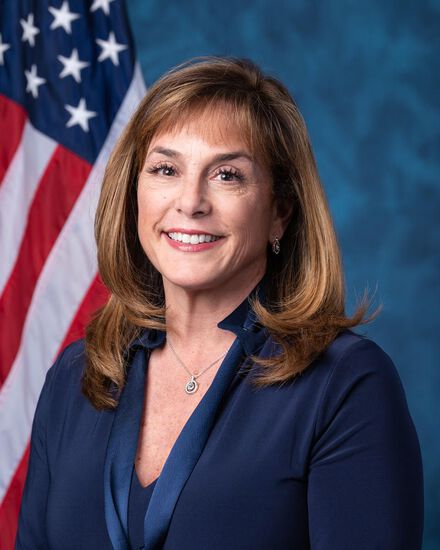
Rep. Lisa C. McClain
Sponsored bills
This resolution recognizes and appreciates the dedication and devotion demonstrated by the men and women of law enforcement. It also condemns calls to defund, disband, dismantle, or abolish the police.
This resolution expresses support for the Supreme Court's holding in Dobbs v. Jackson Women's Health Organization (that there is no constitutional right to abortion). The resolution also applauds the courage of the Justices for standing by their allegiance to the Constitution and the legitimacy of the Supreme Court, and it expresses a commitment to supporting policies that continue to protect all life.
Balkans Security Cooperation Act This bill requires the Department of Defense to report on security cooperation between Western Balkan countries and the United States, Russia, China, and NATO. For the purposes of this bill, the Western Balkan countries are Albania, Bosnia and Herzegovina, Croatia, Kosovo, Montenegro, North Macedonia, Serbia, and Slovenia. The report must include (1) an assessment of how Western Balkan security cooperation with Russia and China affect the security interests of the United States and NATO; and (2) an assessment of the Russian Humanitarian Center in Nis, Serbia, and any influence or coordination it may have with Russian intelligence agencies.
Maddy summaryThis bill would prohibit the FDA from approving new abortion medications or investigational uses of existing ones. It would restrict currently approved abortion drugs to in-person administration only in clinics, hospitals, or medical offices by certified providers who can handle complications like ectopic pregnancy or severe bleeding. The law requires detailed adverse event reporting (excluding patient identifiers) to the FDA by both manufacturers and prescribers, and mandates provider certification covering pregnancy assessment, surgical intervention capabilities, and patient safety documentation. These provisions apply directly to healthcare providers, patients seeking medication abortions, and manufacturers of abortion drugs.
Maddy summaryThe Educational Choice for Children Act creates tax credits for individuals and corporations that contribute to scholarship granting organizations providing education scholarships. Individuals can claim a credit up to $5,000 or 10% of their income, while corporations can claim up to 5% of taxable income. The scholarships are available to students from households with income up to 300% of the area median income, and can be used for private school tuition, tutoring, and other educational expenses at elementary and secondary schools. The bill includes strict requirements for scholarship organizations to verify income, conduct audits, and prevent misuse of funds, while also prohibiting government control over these organizations and protecting private and religious schools from discrimination in the program. It establishes a $10 billion annual cap on the total tax credits available.
This concurrent resolution calls on the President to abandon the One China policy in favor of one that recognizes Taiwan as an independent country that is not a part of China. The resolution also urges the President to bolster diplomatic and economic relations between the United States and Taiwan through specified means.
Maddy summaryThis bill expands foreign investment review to cover U.S. agriculture by requiring transactions involving foreign control of agricultural businesses to undergo scrutiny by the Committee on Foreign Investment (CFIUS). It classifies agricultural supply chains as both critical infrastructure and critical technologies, directly affecting foreign entities seeking to acquire or influence U.S. farms, food production, and supply chains. The bill mandates annual reports from the Secretary of Agriculture and the Government Accountability Office on foreign investments in agriculture, including risks to food security and intellectual property. These provisions aim to mitigate potential threats to U.S. food supply chains from foreign adversaries through enhanced oversight.
Maddy summaryThis bill requires healthcare providers to give the same medical care to infants born alive during abortions as they would to any newborn, and to immediately admit such infants to a hospital. It mandates reporting of non-compliance to law enforcement and imposes penalties including up to 5 years in prison for violations. Women who undergo abortions can file civil lawsuits seeking money damages for injuries, three times the abortion cost, and punitive damages if care standards are not met. The bill also clarifies that abortion includes intentionally killing an unborn child or terminating pregnancy without specific exceptions (e.g., after viability to preserve life or removing a dead fetus).
Maddy summaryHR 23, the Family and Small Business Taxpayer Protection Act, rescinds unobligated funds previously allocated to the Internal Revenue Service (IRS) under the Inflation Reduction Act of 2022. Specifically, it cancels unused balances from certain IRS funding provisions (sections 10301(1)(A)(ii), (iii), (B), (2), (3), (4), and (5)) of the Inflation Reduction Act. This bill does not change tax laws or directly affect taxpayers; it only redirects unspent IRS budget authority. The provision applies solely to funds that were not obligated by the IRS as of the bill’s enactment date.