

Maddy summaryHR 500, the Medicare Hearing Aid Coverage Act of 2025, removes Medicare's longstanding exclusion of hearing aids and related examinations from coverage. This change would directly affect Medicare beneficiaries with hearing loss by allowing them to receive coverage for hearing aids starting January 1, 2026. The bill amends the Social Security Act to eliminate the specific exclusion, making hearing aid coverage a standard Medicare benefit. Additionally, it requires the Government Accountability Office (GAO) to study existing hearing aid programs and submit a report with recommendations to Congress within 18 months of the effective date.
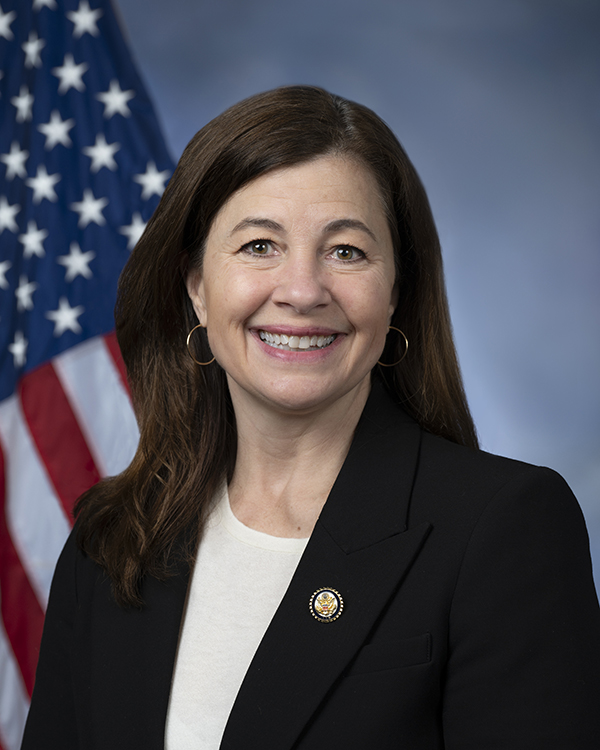
Rep. Kristen McDonald Rivet
Sponsored bills
Maddy summaryHR 429, the Rosie the Riveter Commemorative Coin Act, authorizes the U.S. Treasury to mint and sell three types of commemorative coins ($5 gold, $1 silver, and half-dollar) to honor women who worked on the U.S. home front during World War II. The coins will be sold at face value plus surcharges ($35 for gold, $10 for silver, $5 for half-dollar), with all surcharge revenue directed to the Rosie the Riveter Trust to support the Rosie the Riveter WWII Home Front National Historical Park and related educational programs. The coins must be issued between January 1, 2028, and December 31, 2028, in specified quantities (50,000 gold, 400,000 silver, 750,000 half-dollar), with all costs covered by the sales revenue to avoid net government expense.
Maddy summaryHR 433, the Department of Education Protection Act, prohibits the use of federal funds to reorganize the Department of Education. Specifically, it blocks any spending from current fiscal year appropriations on activities that would decentralize the department, reduce staffing, or alter its structure, responsibilities, or authority relative to its organization as of January 1, 2025. The bill directly affects the Department of Education by preventing structural changes to its existing offices and operations. This is a procedural measure focused solely on preserving the current departmental framework, not on changing education policy or funding.
Maddy summaryThis bill changes the name of Coverdell education savings accounts to "Coverdell lifelong learning accounts" and expands their use to cover skill development expenses for people over 16. It allows funds to be used for career training, technical education, adult education, and related costs like computer equipment. The bill raises the age limit for contributions from 18 to 70, sets a $10,000 account limit after age 30, and creates a new tax credit for employers who contribute to these accounts for their employees. It also allows beneficiaries aged 18 and older to deduct their contributions to these accounts. The changes will take effect for contributions and distributions after 2025.
Maddy summaryThis bill changes tax rules to allow Native Americans receiving care through the Indian Health Service (IHS) to qualify for Health Savings Accounts (HSAs). Previously, individuals using IHS services might have been disqualified from HSAs solely because of that care. The law amends the tax code to explicitly state that IHS eligibility does not disqualify someone from an HSA. The change takes effect for tax years starting after December 31, 2024.
Maddy summaryHR 413, the CHILD Act of 2025, increases the annual tax benefit limit for dependent care assistance programs from $5,000 to $10,000 (with $2,500 to $5,000 for single filers) for taxpayers using employer-sponsored dependent care accounts. It adds automatic annual cost-of-living adjustments to these limits based on inflation, rounding increases to the nearest $50. The bill also removes an outdated provision (previously referenced as subparagraph (D)) from the tax code. These changes directly affect working parents and caregivers who use dependent care benefits, applying to tax years beginning after December 31, 2024.
Head start Education And Development Workforce Advancement and Yield Act or the HEADWAY Act This bill allows some teachers in Early Head Start programs to teach while in the process of earning their Child Development Associate (CDA) credential and completing training. Currently, the Department of Health and Human Services (HHS) must ensure that all teachers providing direct services to children and families in Early Head Start centers (1) have a minimum of a CDA credential and have been trained in early childhood development, and (2) have been trained in early childhood development with a focus on infant and toddler development. The bill revises this requirement by requiring at least one teacher per classroom (instead of all teachers) to have a CDA credential and training. In particular, the bill requires HHS to ensure that (1) each additional teacher providing direct services to children and families is in the process of earning a CDA credential and completing training, and (2) the Early Head Start agency provides a mentor to oversee the progress and guide the work of a teacher who is in the process of earning a CDA credential and completing training.
Maddy summaryThis bill reauthorizes the Great Lakes Restoration Initiative (GLRI) through fiscal year 2031, providing $500 million annually for Great Lakes cleanup and restoration projects. It directly affects federal agencies (like the EPA), state governments, tribes, and environmental groups working on Great Lakes water quality, habitat restoration, and pollution prevention. The key provision extends existing funding levels for five additional years (2027-2031), ensuring continued support for projects addressing invasive species, toxic pollutants, and coastal wetlands restoration across the Great Lakes region. This is a funding authorization bill, not a policy change to the program's scope.
Maddy summaryThe Proxy Voting for New Parents Resolution (HRES 23) would allow U.S. House Members who have given birth or whose spouse has given birth to appoint another Member as a proxy to cast their vote or record their presence in the House and committees for up to 12 weeks after childbirth. To use this, the new parent must submit a signed letter to the Clerk detailing the birth or medical condition and naming the proxy; the proxy must vote exactly as instructed and announce the vote as "by proxy." The proxy vote does not count toward quorum, and the new parent can revoke the proxy at any time by submitting a new letter or casting their own vote. This resolution applies to all House Members, including Delegates and the Resident Commissioner, though they cannot cast votes for the House itself.
This resolution honors the life, achievements, legacy, and distinguished public service of former President Jimmy Carter. The resolution also (1) acknowledges President Carter's contributions to the state of Georgia, the United States, and the world; and (2) establishes his legacy as one of the great leaders and statesmen of the United States.