

Maddy summaryHR 3532, the Striking and Locked Out Workers Healthcare Protection Act, prohibits employers from terminating or altering an employee’s employer-sponsored health coverage during a lawful strike or a lockout (when an employer withholds work to influence bargaining). It directly affects workers participating in strikes or facing lockouts, ensuring continued healthcare access during these labor disputes. The bill adds penalties: $75,000 per violation for lockout-related coverage termination (up to $150,000 for repeat offenses), and $50,000 per violation for strike-related termination (up to $100,000 for repeat offenses), with penalties applied alongside other remedies. These provisions amend the National Labor Relations Act to protect workers’ healthcare rights during collective bargaining actions.
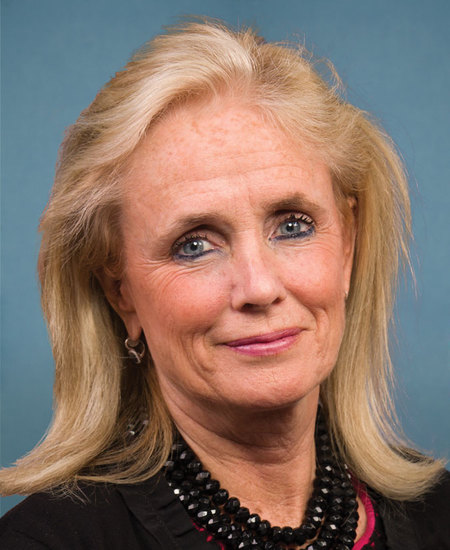
Rep. Debbie Dingell
Sponsored bills
Clinical Trial Modernization Act This bill authorizes a grant program and provides certain exemptions to support the participation of individuals in clinical trials. Specifically, the bill authorizes a grant program to support outreach, education, and recruitment efforts for clinical trials that may benefit certain underrepresented populations or communities in need, such as rural or tribal areas. The bill also exempts from anti-kickback laws for federal health care programs (1) remuneration that is offered to cover participants' expenses to participate in clinical trials, (2) the provision of free digital health technologies to support participation of underrepresented populations in clinical trials, and (3) payment for participants' cost-sharing obligations in relation to clinical trials. Finally, the bill exempts up to $2,000 in remuneration that is received for participating in a clinical trial from income tax.
Maddy summaryHR 3526, the Uplifting First-Time Homebuyers Act of 2025, increases the maximum amount first-time homebuyers can withdraw penalty-free from retirement accounts. It amends the Internal Revenue Code to raise the limit from $10,000 to $50,000 for qualified first-time homebuyer distributions. This change directly affects individuals using retirement savings to purchase their first home, allowing them to access significantly more funds without incurring the usual 10% early withdrawal penalty. The provision applies to taxable years beginning after December 31, 2024.
Stronger Communities through Better Transit Act This bill requires the Department of Transportation (DOT) to establish a grant program to support operating projects for public transportation and related service improvements, particularly in underserved communities and areas of persistent poverty. Specifically, the bill requires DOT to allocate funding under the program for urbanized areas, states, and Indian tribes that are recipients of funds under either the Federal Transit Administration's (FTA's) Urbanized Area Formula Funding program or Formula Grants for Rural Areas program. Eligible recipients may use funding for operating costs associated with projects that improve public transportation service for transit-dependent populations and support increased transit ridership (e.g., service expansion, information technology enhancements, and workforce development). DOT must apportion the funding so that recipients receive funds that are proportional to their share of operating costs. The bill also provides for an increased federal cost share for operating assistance for projects or programs carried out in areas of persistent poverty or underserved communities. DOT must set up a multimodal access measurement interface for public agencies to aid transit agencies in determining and reporting on access to jobs and essential services. A grant recipient must (1) report specific information to the FTA for inclusion in the National Transit Database, and (2) survey transit riders and non-riding residents regarding transit service improvements. Further, the bill expands the purposes of the public transportation programs to include supporting public transportation's role in combating climate change through growing/retaining transit ridership.
Maddy summaryHRES 419 designates May 17, 2025, as "DIPG Awareness Day" to raise public awareness about diffuse intrinsic pontine glioma (DIPG), a fatal pediatric brain cancer with a median survival of 9 months and less than 1% 5-year survival rate. The resolution encourages public and private funding sources to prioritize research for DIPG and other pediatric cancers by considering mortality rates and life-years lost when allocating grants. It does not create new laws but symbolically urges greater attention to this unmet medical need.
Maddy summaryThis resolution (HRES 417) is a symbolic gesture to honor the National Science Foundation (NSF) on its 75th anniversary. It recognizes the NSF’s founding in 1950 to advance science, engineering, and education, highlighting its role in supporting research across all 50 states, fostering global scientific collaboration, and enabling key innovations like the internet, MRI technology, and AI. The resolution does not create new policy or funding but formally commends the NSF’s mission and achievements, including its annual support for roughly 350,000 researchers and its contribution to 268 Nobel Prize-winning discoveries. It concludes by reaffirming congressional support for the NSF’s ongoing work.
Maddy summaryThis resolution (HRES 420) supports designating May 16, 2025, as "Endangered Species Day" to recognize conservation efforts under the Endangered Species Act of 1973. It highlights the Act's success in preventing extinction for species like the bald eagle and loggerhead sea turtle, and acknowledges the cultural and economic value of protecting wildlife. The resolution has no legal effect or policy changes - it is a symbolic gesture to celebrate biodiversity conservation and the Act's role in addressing the global biodiversity crisis. It does not impose new requirements or directly affect any individuals, communities, or agencies.
Maddy summaryHR 3443 creates a new Medicare payment model to provide supplemental funding for ground and air ambulance services that administer specific life-saving medications (like epinephrine, lidocaine, and blood products) during emergencies. It directly affects EMS agencies serving Medicare beneficiaries by requiring them to apply for participation, meet data reporting standards (including patient outcomes and service metrics), and receive monthly or quarterly supplemental payments based on costs for maintaining medication supplies and data systems. The model runs for at least 5 years, with a requirement for a congressional report analyzing whether the payments improve medication access, patient outcomes, and care quality - especially for rural and underserved communities. The bill also mandates a MedPAC report on EMS payment structures and EMTALA guidance to reduce "wall time" delays in hospital handoffs.
Maddy summaryThe HEADs UP Act of 2025 would improve healthcare access for people with developmental disabilities by adding them to the list of medically underserved populations that health centers must serve. It authorizes $15 million annually from 2026 to 2030 to fund new primary care and specialized dental services through health centers in underserved areas. Health centers receiving these grants must use the funds to supplement, not replace, existing services for this population. The bill directly affects health centers serving underserved communities and the people with developmental disabilities who face barriers to healthcare.
Maddy summaryThis bill establishes minimum nurse-to-patient ratios for hospital units across the country, requiring hospitals to maintain specific staffing levels (such as 1:1 in trauma units, 2:1 in critical care units, and 3:1 in emergency rooms) to improve patient safety and quality of care. Hospitals must develop transparent staffing plans that account for patient acuity, involve direct care nurses in planning, and document actual staffing levels for each shift. The bill includes strong whistleblower protections for nurses who object to unsafe staffing levels and prohibits hospitals from retaliating against nurses who report violations. It requires hospitals to comply with these standards as a condition for receiving Medicare and Medicaid payments, with enforcement through audits and civil penalties of up to $50,000 for repeated violations. The bill also includes provisions to support nurse recruitment and retention through workforce initiatives and training programs.