

Maddy summaryThe DISCLOSE Act of 2026 aims to increase transparency in election spending and prevent foreign influence. It expands the ban on foreign money to cover federal, state, and local elections, including ballot initiatives and judicial nominations, and criminalizes using corporations to conceal these funds. The bill mandates that organizations spending over $10,000 on campaign-related activities, such as independent expenditures or judicial nomination advocacy, disclose their beneficial owners and top donors. Additionally, it establishes new "Stand By Every Ad" disclaimers for political communications, requiring the highest-ranking official to approve the message and, for certain ads, list their top funders. These provisions directly affect non-candidate organizations, individuals involved in political and judicial nomination spending, and foreign nationals.
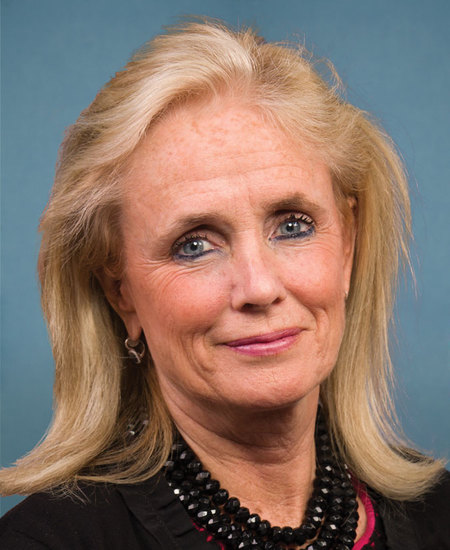
Rep. Debbie Dingell
Sponsored bills
Maddy summaryThis resolution urges the Senate to ratify the Convention on the Elimination of All Forms of Discrimination Against Women (CEDAW), an international treaty adopted by the UN in 1979. CEDAW establishes global standards to end gender discrimination in education, employment, healthcare, and political participation, and has been ratified by 189 countries. The U.S. has signed the treaty but never ratified it, making it one of only five nations without formal adoption, despite widespread domestic support from cities and states implementing its principles.
Maddy summaryHR 7740, the African American History Act of 2026, authorizes $4 million annually for the National Museum of African American History and Culture to develop educational resources and support teaching about African American history. The bill directs the museum to create digital and print materials, provide teacher training, and expand access to curriculum resources for K-12 and college classrooms. It requires annual reports to Congress on fund usage and expires in 2030. This program directly affects educators and students by enhancing classroom materials and professional development on African American history.
Maddy summaryThis resolution (HRES 1083) is a ceremonial honor recognizing William DeHart Hubbard, the first African American to win an individual Olympic gold medal (1924 Paris Games). It commemorates his athletic achievements - including NCAA championships, world records in long jump, and overcoming racial barriers - and his post-competition work promoting civil rights and community development in Cincinnati. The resolution does not create new laws or affect any policies; it solely serves to honor Hubbard's legacy during Black History Month. It was introduced by Rep. Landsman and co-sponsors on February 25, 2026.
Maddy summaryHRES 1082 is a symbolic resolution recognizing 250 years of Polish-American friendship and affirming U.S. support for Poland’s democracy, sovereignty, prosperity, and security. It specifically calls for continued U.S. military stationing in Poland to support defense coordination and training with Polish forces, and expresses gratitude for Poland’s historical and ongoing partnership, including recent support for Ukraine. The resolution highlights key milestones like Poland’s NATO membership, defense investments, and refugee assistance for Ukrainians. As a non-binding resolution, it does not change laws but formally strengthens diplomatic recognition of the alliance.
Maddy summaryHRES 1080 is a symbolic resolution recognizing and celebrating Black History Month 2026, focusing on its theme "A Century of Black History Commemorations." It highlights historical figures and events central to Black history, including Carter G. Woodson’s founding of Negro History Week (the precursor to Black History Month), Juneteenth, and key moments like the 1865 Charleston commemoration. The resolution emphasizes how Black history commemorations counter historical erasure and affirm Black contributions to U.S. history, referencing figures like Mary McLeod Bethune and W.E.B. Du Bois. As a ceremonial resolution, it has no binding effect but aims to raise awareness of Black achievements through official recognition.
Maddy summaryThis bill, known as the Justice for Allie Act, would create a new federal crime for coercing adults with specific disabilities into sending intimate images. It directly affects individuals aged 18 and older who have conditions like autism, intellectual disabilities, cerebral palsy, Down syndrome, dementia, or schizophrenia that may limit their ability to protect themselves from exploitation. The law prohibits anyone from using mail or interstate communications to persuade, induce, entice, or coerce these protected adults to transmit intimate visual depictions with the intent to harm them. Penalties include fines and up to one year in prison for a first offense, or up to two years for repeat offenses. The bill defines harm broadly to include physical, psychological, financial, or reputational damage.
Maddy summaryHR 7706, the Federal Retirement Safety Act, modifies federal retirement rules to protect victims of domestic violence. It allows federal employees to bypass spousal consent requirements for lump-sum retirement payments if they self-certify that their spouse or former spouse committed a domestic violence crime (as defined in federal law) against them within the past year. The bill requires the Office of Personnel Management to create safety-focused procedures for obtaining consent or waiving it without consent when domestic violence poses a safety risk. This directly affects federal employees in domestic violence situations who need to access retirement benefits without risking further harm. The law takes effect one year after enactment, with regulations required within one year of passage.
Maddy summaryHRES 1070 is a non-binding House resolution congratulating Michigan athletes who competed in the 2026 Milano Cortina Olympics and Paralympics. It formally honors 232 U.S. athletes (including 88 Michigan-affiliated competitors) who represented Team USA, highlighting their collegiate backgrounds and achievements. The resolution specifically recognizes Michigan Olympians and Paralympians like Dylan Larkin and Emilea Zingas through symbolic language. It has no policy impact or legal effect, serving solely as a ceremonial expression of support for athletes.
Maddy summaryThe Head Start for America's Children Act amends the Head Start Act to enhance early childhood education services for low-income children, with specific provisions to improve culturally responsive programming for Native American and Native Hawaiian communities. It increases funding for Head Start programs, including $91.575 million for transportation, $37.5 million for workforce development, and $863 million for extended operations to provide full calendar year services. The bill updates definitions throughout the law to use more inclusive language, replacing "limited English proficient" with "children who are developing English proficiency," and establishes new requirements for staff compensation and benefits to improve recruitment and retention. Native American Head Start programs and migrant/seasonal programs are exempt from certain requirements, such as the full calendar year service requirement.