

Great Lakes Winter Commerce Act of 202 1 This bill directs the U.S. Coast Guard to conduct icebreaking operations in the Great Lakes in accordance with specific performance standards. Specifically, the Coast Guard must keep channels and harbors in the Great Lakes open to navigation not less than 90% of the hours that commercial vessels and ferries attempt to transit ice-covered waterways; in a year in which the Great Lakes are not open to navigation because of ice of a thickness that occurs on average only once every 10 years, keep channels and harbors open to navigation at least 70% of the hours that commercial vessels and ferries attempt to transit ice-covered waterways; and coordinate Great Lakes icebreaking operations with operators of commercial vessels. The bill also directs the Coast Guard to acquire a Great Lakes icebreaker that is at least as capable as Coast Guard Cutter Mackinaw in an accelerated timeframe and award the contract on the basis of contractor qualification and price.
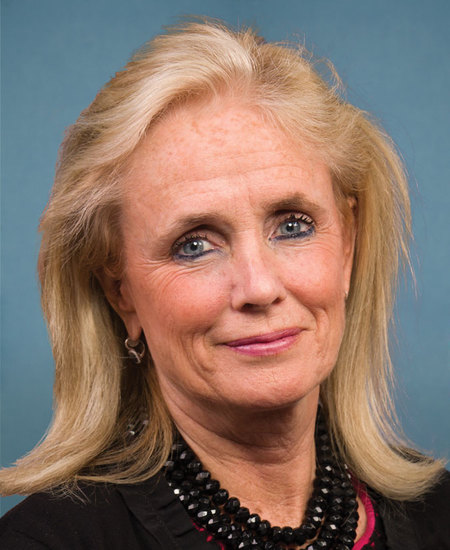
Rep. Debbie Dingell
Sponsored bills
Preventing Future Pandemics Act of 2021 This bill establishes measures to address global public health risks posed by wildlife markets, which are commercial markets that sell or slaughter wildlife for human consumption as food or medicine in communities where alternative nutritional or protein sources are available. Specifically, the bill prohibits importing, exporting, purchasing, or selling live wild animals in the United States for human consumption as food or medicine. The Department of the Interior must hire, train, and deploy at least 50 new U.S. Fish and Wildlife Service law enforcement attachés around the world, and the U.S. Agency for International Development must increase specified activities to address the threats and causes of zoonotic (animal-to-human transmission) disease outbreaks. Additionally, the United States must work with other United Nations member states to urge a global ban on commercial wildlife markets and enforcement of laws to end wildlife trafficking. Further, the President may impose sanctions against a foreign country or foreign nationals that the Department of State has determined are taking certain actions that enable or facilitate commercial wildlife markets. Among other reports required by the bill, the National Academies of Sciences, Engineering, and Medicine must conduct a study and submit a report that includes an evaluation of (1) the impact that consumption of terrestrial wildlife as food or medicine has on the transmission of novel viral and other pathogens, (2) the role of consuming terrestrial wildlife as food or medicine in the transmission of microbes from animals to humans, and (3) the conditions at live wildlife markets that lead to this transmission.
Build America's Libraries Act This bill establishes and provides funds through FY2024 for the Build America's Libraries Fund, from which the Institute of Museum and Library Services (IMLS) must allocate funding to states and, through them, need-based grants to libraries to make long-term improvements to library facilities. The IMLS must also award grants to Indian tribes and organizations that primarily serve and represent Native Hawaiians. Specifically, the bill requires each state that receives an allocation, and each library that receives a grant, to carry out certain activities to improve library facilities. These activities include constructing and renovating library facilities, investing in infrastructure projects to improve internet access and connectivity, improving indoor air quality, and making facilities accessible to individuals with disabilities. The bill also outlines administrative and oversight provisions, including by requiring library projects to use iron and steel products that are produced in the United States.
Research Investment to Spark the Economy Act of 2021 or the RISE Act of 2021 This bill authorizes the Departments of Agriculture, Commerce, Defense, Education, Energy, the Interior, Health and Human Services, and Transportation, National Aeronautics and Space Administration (NASA), National Science Foundation, and Environmental Protection Agency to provide support for research regarding COVID-19 (i.e., coronavirus disease 2019) or research disrupted by the COVID-19 pandemic. Support may be used to provide supplemental funding to extend the duration of a grant to a research institution, national laboratory, or individual that was awarded prior to the enactment of this bill, or to expand the purposes of such a grant as specified; issue awards to research the effects of the current pandemic and potential future pandemics; and provide flexibility on awards to account for facility closures or other limitations during the COVID-19 public health emergency. Agencies must provide the support as rapidly as possible. Provided funds shall remain available through FY2021.
Clean Energy and Sustainability Accelerator Act This bill establishes and capitalizes a Clean Energy and Sustainability Accelerator. The independent, nonprofit accelerator must invest in clean energy technologies and infrastructure to reduce greenhouse gas emissions. The accelerator must make capital available to state, territorial, or local green banks. The banks must be public or nonprofit specialized finance entities that use finance tools to mitigate climate change. The accelerator may also provide technical assistance and funding to states and other political subdivisions that do not have green banks to establish such banks. When investing in projects that mitigate greenhouse gas emissions, the accelerator must prioritize investments that serve climate-impacted communities (e.g., communities of color or low-income communities). In addition, the accelerator must explore the establishment of a program to provide low-interest and zero-interest loans, up to 30 years in length, to any school, metropolitan planning organization, or nonprofit organization seeking financing for the acquisition of zero-emissions vehicle fleets or associated infrastructure. Finally, the accelerator must explore the establishment of an accelerated clean energy transition program to (1) expedite the transition within the power sector to zero-emissions power generation facilities or assets, and (2) invest in local economic development in communities affected by this transition away from carbon-intensive facilities or assets.
This resolution expresses support for the designation of COVID-19 Victims and Survivors Memorial Day to memorialize the lives lost to COVID-19 (i.e., coronavirus disease 2019).
This bill requires the Joint Committee on the Library to obtain, and the Architect of the Capitol to permanently install in the U.S. Capitol or on the U.S. Capitol Grounds, a monument honoring Associate Justice of the Supreme Court Ruth Bader Ginsburg.
Coronavirus Containment Corps Act This bill requires the Centers for Disease Control and Prevention (CDC) to develop, within 21 days, a nationwide contact tracing strategy for COVID-19 (i.e., coronavirus disease 2019) that addresses issues including workforce needs. To implement that strategy, the bill establishes grant programs in the CDC and the Indian Health Service (IHS). It also expands programs in the Department of Labor. The CDC must award grants to state and local health departments to, among other purposes, hire and train individuals for contact tracing positions and related roles. The IHS must award similar grants to tribes and tribal organizations. Additionally, Labor must award grants for states and other jurisdictions to support recruitment and employment of dislocated workers and other individuals in public health roles. Grants and contracts that include contact tracing in their scope of work must comply with prevailing wage requirements that apply to federal service contracts. Employees who work under such grants or contracts must receive similar compensation to that prevailing in the locality where work is performed. The CDC and Labor must report certain information on specified timelines, and the Government Accountability Office must evaluate the activities of grantees.
Black History is American History Act This bill requires entities (e.g., institutions of higher education, libraries, and museums), in order to be eligible for certain grants administered by the Department of Education (ED), to include Black history in their teaching of American history. It also requires Black history to be included in tests administered by the National Assessment of Educational Progress (NAEP). Specifically, the bill mandates the inclusion of Black history as a required component of American history for such entities to be eligible for American History and Civics Academies' competitive grants. These grants support the establishment of (1) Presidential Academies for Teachers of American History and Civics, which offer workshops to teachers of American history and civics to strengthen their knowledge and prepare them to teach in these subjects; and (2) Congressional Academies for Students of American History and Civics, which support high school students in developing an understanding of these subjects. (Currently, Black history is not a required component of American history for either academy.) In addition, ED must give priority to grant applicants that align their activities with programs and resources of the Smithsonian Institution's National Museum of African American History and Culture. The bill also requires the inclusion of Black history in tests administered by the NAEP, which measures student academic achievement in various subjects.
Coronavirus Medicaid Response Act This bill increases the Medicaid federal matching rate, also known as the Federal Medical Assistance Percentage (FMAP), for states and U.S. territories that experience economic downturns (i.e., high unemployment) beginning on or after January 1, 2020, in accordance with specified requirements and limitations. The bill's increase is in addition to previously enacted FMAP increases relating to COVID-19 (i.e., coronavirus disease 2019) but may not result in an FMAP greater than 95%.