

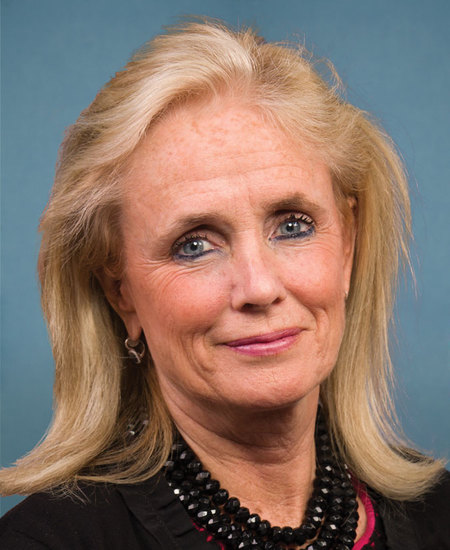
Photo of Debbie Dingell
D United States House · District 6 · Michigan On the 2026 ballot

Rep. Debbie Dingell

Compare
Total votes
2,837
all sessions
Attendance
97%
89 missed
Near the chamber average
With party
98%
of cast votes
Higher than 93% of chamber peers
Bipartisan score
1%
crosses aisle rarely
Lower than 94% of chamber peers
Sponsored
1,806
bills & resolutions
Higher than 93% of chamber peers
Committees
7
assignments
1,806 bills and resolutions

Sponsored bills

Total
1,806
Primary
192
Co-sponsor
1,614
This page
1,806
matching current filters
Co-sponsor HCONRES 80
In committee · Indiana House · Co-sponsor
Recognizing the duty of Congress to meet the needs of working women.

Maddy summaryThis concurrent resolution formally recognizes Congress's duty to protect the rights and economic security of working women, who make up nearly half of the U.S. workforce. The document highlights concerns about wage gaps, workplace discrimination, and recent policy changes that have weakened protections for women, particularly women of color. It calls for Congress to support equal pay, workplace safety, access to healthcare, paid leave, and the right to unionize, while also condemning actions that undermine civil rights enforcement and workplace protections. The resolution serves as a statement of principle rather than a law that creates new legal requirements.

In committee Mar 25, 2026 1 co-sponsor
Co-sponsor HR 8074
In committee · Indiana House · Co-sponsor
Kira Johnson Act

Maddy summaryThe Kira Johnson Act establishes a federal grant program to support community-based organizations in improving maternal health outcomes for populations facing higher rates of maternal mortality and health disparities. It allocates $100 million annually from 2027 to 2031 for grants that fund programs addressing social determinants of health, culturally congruent care, and support for midwifery practices. The bill also creates a separate $5 million annual funding stream for training all maternity care employees on bias reduction, trauma-informed care, and respectful service delivery. Additionally, the legislation requires hospitals and health systems to establish compliance programs that allow patients to report bias and mandates regular public reporting on these efforts. A study by the National Academies and ongoing evaluation by the GAO will assess the effectiveness of these initiatives in improving patient experiences and health outcomes for pregnant and postpartum individuals from racial and ethnic minority groups.

In committee Mar 25, 2026 1 co-sponsor
Co-sponsor HR 8080
In committee · Indiana House · Co-sponsor
Data to Save Moms Act

Maddy summaryThe Data to Save Moms Act aims to improve maternal health outcomes by increasing funding and support for maternal mortality review committees across the United States. The bill provides $10 million annually from 2027 to 2031 to help these committees recruit more diverse community members, including people with personal experiences of maternal mortality or severe health complications, and to address barriers like transportation and compensation that prevent participation. It also requires committees to conduct outreach to racial and ethnic minority communities and publicly report on their review processes and diversity efforts. Additionally, the legislation directs the Health and Human Services Secretary to study maternal health data collection methods, conduct a specific study on American Indian and Alaska Native maternal health outcomes, and award grants to minority-serving institutions for research on maternal mortality disparities.

In committee Mar 25, 2026 1 co-sponsor
Co-sponsor HR 8089
In committee · Indiana House · Co-sponsor
Perinatal Workforce Act

Maddy summaryThe Perinatal Workforce Act directs the Department of Health and Human Services to issue guidance encouraging hospitals, insurers, and maternity care providers to recruit and retain diverse healthcare professionals, including midwives, physician assistants, and perinatal health workers, while incorporating implicit bias and racism training into their practices. The bill authorizes $15 million annually from 2027 to 2031 for grants that establish or expand accredited education programs for perinatal health professionals, prioritizing schools that recruit students from racial and ethnic minority groups and those planning to practice in areas with maternal health disparities. Additionally, the legislation creates a separate grant program for nursing schools to provide scholarships to students pursuing careers in maternal and perinatal health, with similar diversity and training requirements. The act also requires the Secretary of HHS to conduct a study on respectful maternity care practices and mandates periodic reports from the Government Accountability Office on barriers to maternal health education and access to care.

In committee Mar 25, 2026 1 co-sponsor
Co-sponsor HR 8055
In committee · Indiana House · Co-sponsor
Extending WIC for New Moms Act

Extending WIC for New Moms Act This bill amends the Special Supplemental Nutrition Program for Women, Infants, and Children (WIC) to extend the eligibility periods for breastfeeding and postpartum women. Specifically, a state program may elect to certify a breastfeeding woman for up to 24 months (currently 1 year) postpartum. The bill also expands the eligibility period for postpartum women to up to 24 months after termination of pregnancy (currently 6 months). The Department of Agriculture must submit a report to Congress evaluating the effect of these changes to the program on (1) maternal and infant health outcomes, (2) breastfeeding rates, and (3) qualitative evaluations of family experiences under WIC.

In committee Mar 24, 2026 1 co-sponsor
Co-sponsor HR 8027
In committee · Indiana House · Co-sponsor
Advanced Wastewater Treatment Assistance Act of 2026

Maddy summaryThis bill establishes a federal grant program to help states fund advanced wastewater treatment projects, with $1 billion authorized for fiscal years 2026 through 2030. The Environmental Protection Agency will distribute funds based on a formula, requiring states to contribute at least 50 percent of project costs unless the project serves disadvantaged communities, which are exempt from this requirement. At least 49 percent of the funding must go to projects serving disadvantaged communities, rural or tribal facilities, or regional water providers that benefit multiple disadvantaged areas. The legislation also requires the EPA to conduct a study with the National Academies of Sciences, Engineering, and Medicine to evaluate how well advanced wastewater treatment technologies remove emerging contaminants like nanomaterials and certain chemicals.

In committee Mar 20, 2026 1 co-sponsor
Primary HRES 1125
In committee · Indiana House · Lead sponsor
Recognizing the Muslim holy month of Ramadan, commending a month of fasting and spiritual renewal, and extending best wishes to Muslims in the United States and across the globe for a joyous and meaningful observance of Eid al-Fitr.

Maddy summaryThis resolution recognizes the Islamic holy month of Ramadan and extends well wishes to Muslims in the United States and globally for Eid al-Fitr. It formally acknowledges the significance of Ramadan as a period of fasting, spiritual renewal, and reflection for over 2 billion Muslims worldwide. The document highlights the contributions of American Muslims to society, including their roles in the military, government, and various professional fields. This is a symbolic gesture of respect and solidarity rather than a law that changes policy or requires funding.

In committee Mar 19, 2026 0 co-sponsors
Co-sponsor HR 8008
In committee · Indiana House · Co-sponsor
Social Determinants for Moms Act

Maddy summaryThis bill establishes a federal task force to address maternal health disparities by coordinating efforts across multiple government agencies and community stakeholders to reduce preventable maternal deaths and serious health complications. The task force will include representatives from various departments such as Health and Human Services, Housing and Urban Development, and Transportation, along with community leaders, patients, and healthcare providers focused on maternal health. Additionally, the bill authorizes $100 million over five years to provide grants to community organizations for addressing social determinants of maternal health including housing, transportation, nutrition, employment, and environmental conditions. These grants prioritize areas with high rates of maternal mortality and poverty, and recipients must submit annual reports on their activities and outcomes. The legislation defines key terms such as maternal mortality and social determinants of maternal health to guide implementation and reporting requirements.

In committee Mar 19, 2026 1 co-sponsor
Primary HR 8004
In committee · Indiana House · Lead sponsor
Leave No Americans Behind Act of 2026

Maddy summaryThe Leave No Americans Behind Act of 2026 modifies how the U.S. Department of State handles financial arrangements for evacuating American citizens from foreign countries. It removes the ability for the State Department to charge evacuees for repatriation costs and eliminates a specific subsection related to reimbursement procedures. Under this bill, the government would no longer seek to recover evacuation expenses from individuals being rescued or evacuated during crises. The law directly impacts the State Department's budgeting and financial processes for emergency evacuations.

In committee Mar 19, 2026 0 co-sponsors
Co-sponsor HR 7985
In committee · Indiana House · Co-sponsor
CHATBOT Act

Maddy summaryThis bill prohibits AI chatbots from misleading users into believing they are licensed professionals in fields like law, healthcare, finance, accounting, or insurance. It requires companies deploying AI chatbots to avoid generating content that falsely implies the AI has professional credentials or human verification from a licensed practitioner. The Federal Trade Commission would enforce these rules as unfair or deceptive practices, while state attorneys general could also sue for violations and seek damages. Individuals harmed by such violations could file lawsuits to recover actual losses or up to $5,000 per violation, with higher penalties for willful misconduct.

In committee Mar 18, 2026 1 co-sponsor
Showing 161 to 170 of 1,806 bills
Previous 1 … 16 17 18 … 181 Next