

The Jackie Walorski Maternal and Child Home Visiting Reauthorization Act of 2022 This bill reauthorizes through FY2027, increases funding for, and modifies the Maternal, Infant, and Early Childhood Home Visiting Program. This program supports home visits for expectant and new parents who live in communities that are at-risk for poor maternal and child health outcomes. Changes to the program include setting out requirements for allocating program funds; increasing the percentage of funds reserved for tribal entities; establishing a publicly available dashboard that reports program outcomes; requiring activities to reduce unnecessary data collection, reporting, and other administrative requirements of the program; and allowing for virtual home visits (provided certain conditions are met). The bill also reduces funding for the Medicare Improvement Fund.
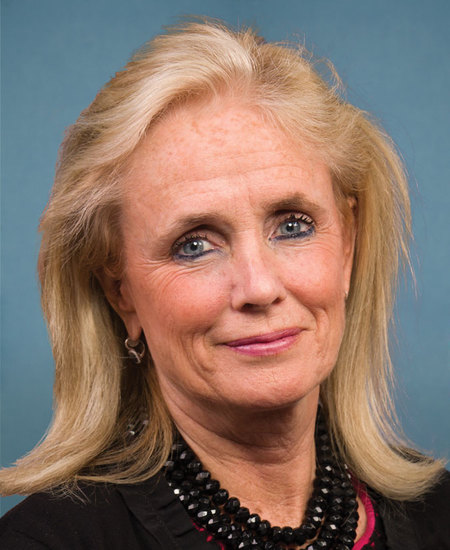
Rep. Debbie Dingell
Sponsored bills
Uyghur Policy Act of 2021 This bill addresses human rights issues concerning the Uyghurs and other minority groups in the Xinjiang Uyghur Autonomous Region in China. The bill authorizes the establishment of a Special Coordinator for Uyghur Issues position within the Department of State. The State Department's Bureau of Educational and Cultural Affairs may, subject to appropriations, make certain funds available to human rights advocates working on behalf of Uyghurs and members of other ethnic and religious minority groups persecuted in China. The funds, if made available, shall be used to facilitate the presence of such human rights advocates at public diplomacy forums to speak on issues related to the human rights and religious freedoms of minority groups persecuted in China. The State Department must ensure that Uyghur language training is available to Foreign Service officers. It must also ensure that a Uyghur-speaking member of the Foreign Service is assigned to U.S. diplomatic and consular missions in China.
Medical Marijuana and Cannabidiol Research Expansion Act This act establishes a new, separate registration process to facilitate research on marijuana. Specifically, the act directs the Drug Enforcement Administration (DEA) to follow procedures specified in the act to register (1) practitioners to conduct marijuana research, and (2) manufacturers to supply marijuana for the research. The act allows certain registered entities (including institutions of higher education, practitioners, and manufacturers) to manufacture, distribute, dispense, or possess marijuana or cannabidiol (CBD) for the purposes of medical research. Additionally, the act directs the DEA to register manufacturers and distributors of CBD or marijuana for the purpose of commercial production of an approved drug that contains marijuana or its derivative. Finally, the act includes various other provisions, including provisions that require the DEA to assess whether there is an adequate and uninterrupted supply of marijuana for research purposes; prohibit the Department of Health and Human Services (HHS) from reinstating the interdisciplinary review process for marijuana research; allow physicians to discuss the potential harms and benefits of marijuana and its derivatives (including CBD) with patients; and require HHS, in coordination with the National Institutes of Health and relevant federal agencies, to report on the therapeutic potential of marijuana for various conditions such as epilepsy, as well as the impact on adolescent brains and on the ability to operate a motor vehicle.
Maddy summaryThis is a commemorative resolution (HRES 1505) that formally recognizes the 50th anniversary of the Consumer Product Safety Commission (CPSC), established by the 1972 Consumer Product Safety Act. It does not create new laws or regulations; instead, it expresses the House's appreciation for the CPSC's historical role in preventing injuries and deaths through safety standards (e.g., reducing refrigerator-related child deaths by 98% and pediatric poisonings by 80%). The resolution acknowledges the CPSC's work under multiple statutes but contains no binding policy changes or new requirements. It serves purely as a ceremonial acknowledgment of the agency's 50 years of service.
Students' Access to Freedom and Educational Rights Act of 2022 This bill expands protections against discrimination and harassment in federally funded education programs or activities. Among other provisions, the bill (1) establishes statutory standards of liability for harassment and relevant remedies under specified statutes; (2) requires the Department of Education to develop a climate survey on K-12 students' experiences with domestic violence, dating violence, sexual assault, sexual harassment, and stalking; and (3) establishes training requirements and a grant program for Title IX coordinators.
Manufacturing.gov Act This bill requires the Department of Commerce to establish a section of the manufacturing.gov website to serve as the primary hub for information relating to federal manufacturing programs. In addition to serving as the primary hub for this information, the hub must also (1) provide the contact information for relevant program offices carrying out federal manufacturing programs; (2) provide an avenue for public input and feedback relating to these programs; and (3) host web pages that focus on topics such as trade, workforce development, and small and medium manufacturers.
Integrity, Notification, and Fairness in Online Retail Marketplaces for Consumers Act or the INFORM Consumers Act This bill requires online marketplaces (e.g., Amazon) to collect and verify certain contact and financial information from third-party sellers whose transactions and related revenues exceed specified thresholds. Subject to certain exceptions, online marketplaces must clearly and conspicuously disclose the contact information of certain high-volume third-party sellers to consumers and must also provide consumers with methods to report suspicious activity on the marketplace. The bill provides the Federal Trade Commission and state attorneys general with the authority to enforce these requirements.
Lymphedema Treatment Act This bill provides for Medicare coverage of lymphedema compression treatment items. Specifically, the bill provides for coverage of standard and custom fitted gradient compression garments and other approved items that are prescribed by a physician or other specified health care professional to treat lymphedema.
Safeguarding America's Future and Environment Act or the SAFE Act The bill requires the development of an integrated national approach to help fish, wildlife, and plants adapt to extreme weather changes and climate change. Specifically, the bill requires the President to establish an interagency National Fish, Wildlife, and Plants Climate Adaptation Strategy Joint Implementation Working Group. The working group must adopt the 2013 National Fish, Wildlife, and Plants Climate Adaptation Strategy, which addresses the effects of extreme weather and climate change on fish, wildlife, and plants. After the Committee on Earth and Environmental Sciences releases a periodic scientific assessment required under the U.S. Global Change Research Program, the working group must use sound science to review and revise the strategy to incorporate new information and advances in the development of strategies to help fish, wildlife, and plants adapt. Each federal agency must integrate the strategy into agency plans, environmental reviews, and programs. The Department of the Interior must establish a National Climate Change and Wildlife Science Center to assess and develop scientific information, tools, strategies, and techniques to support the working group and other interested parties in addressing the effects of extreme weather and climate change. Interior must establish an Advisory Committee on Climate Change and Natural Resource Sciences to advise the working group.
Prevent All Soring Tactics Act of 2022 or the PAST Act of 2022 This bill addresses the practice of soring horses. The soring of horses includes various actions taken on horses' limbs to produce higher gaits that may cause pain, distress, inflammation, or lameness. Specifically, the bill expands soring regulation and enforcement at horse shows, exhibitions, sales, and auctions, including by establishing a new system for inspecting horses for soring. In addition, the bill increases penalties for violations.