

Puppies Assisting Wounded Servicemembers for Veterans Therapy Act or the PAWS for Veterans Therapy Act This bill implements a program and a policy related to service dog therapy for veterans. Specifically, the bill requires the Department of Veterans Affairs (VA) to implement a five-year pilot program to provide canine training to eligible veterans diagnosed with post-traumatic stress disorder as an element of a complementary and integrative health program. Eligible veterans are those who are enrolled in the VA health care system and have been recommended for participation by a qualified mental health care provider or clinical team. The VA must seek to enter agreements containing specified elements with accredited nongovernmental entities that have demonstrated ability to provide canine training. Veterans who participate in the program are authorized to adopt the dog they assisted in training if their health provider determines it is in the best interest of the veteran. The VA must establish processes to document and track the progress of participating veterans with respect to health benefits and improvements. The Government Accountability Office must brief Congress and submit a report on the program. The bill also authorizes the VA to provide service dogs to veterans with mental illnesses, regardless of whether they have a mobility impairment.
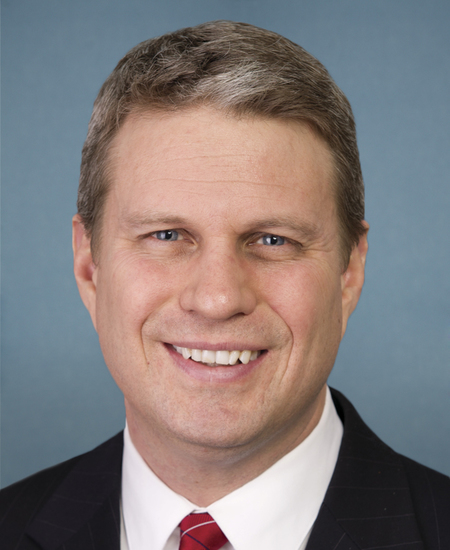
Rep. Bill Huizenga
Sponsored bills
This resolution condemns the President's failure to heed military and intelligence advisors about the speed and nature of the Taliban offense in Afghanistan and urges the President to commit to maintaining the evacuation operation as long as necessary to evacuate any U.S. citizen, lawful permanent resident, or Afghan partner who requests evacuation assistance .
Beaches Environmental Assessment and Coastal Health Act of 2021 or the BEACH Act of 2021 This bill reauthorizes through FY2026 and expands a program that awards grants to state and local governments to monitor the water quality at beaches and notify the public when water is not safe for recreational activities. The bill expands the program to allow the Environmental Protection Agency to award grants for researching and identifying specific sources of contamination at certain coastal recreation waters and taking actions to mitigate those sources.
This resolution expresses that the House of Representatives opposes adverse punishment or discharge that is not honorable for service members whose discharge results from choosing not to receive the COVID-19 vaccine.
Alexander Lofgren Veterans in Parks (VIP) Act This bill makes the America the Beautiful-National Parks and Federal Recreational Lands Pass available, without charge, to members of the Armed Forces, veterans, and Gold Star Families. The pass covers the entrance fee and standard amenity recreation fee for all federal recreational lands and waters.
Social Security Disability Insurance Return to Work Act This bill makes various changes to Social Security Disability Insurance (SSDI), with a particular focus on returning individuals who receive SSDI to employment. Among other changes, the bill limits the amount of time an individual with a disability for which medical improvement is likely or expected may receive SSDI benefits, and it requires the Social Security Administration to establish a process to allow such individuals who return to employment before their benefits expire and whose earnings exceed a specified limit to receive an adjusted SSDI benefit.
Creating Opportunities to Advance Shoreline Treatments Act or the COAST Act This bill authorizes the U.S. Army Corps of Engineers to expand the use of allotted resources for flood control on stream banks and shorelines to include erosion control. Additionally, these resources may be used to prevent damage to areas such as nonhighway roadways, public recreational assets, public lands, and parks.
Steel Industry Preservation Act This bill extends and modifies the production tax credit for steel industry fuel. (Under current law, steel industry fuel is a fuel that is (1) produced through a process of liquefying coal waste sludge and distributing it on coal, and (2) used as a feedstock for the manufacture of coke.) Specifically, the bill modifies the tax credit to (1) extend the credit period and the placed-in-service date for steel industry fuel producing facilities, (2) revise the definition of steel industry fuel to allow blends of coal and petroleum coke or other coke feedstock in the fuel, and (3) specify requirements for treating an owner as producing and selling steel industry fuel. The bill also allows a taxpayer that produces steel industry fuel to elect to accept an increased tax credit in lieu of certain deductions for expenses in connection with the production of steel industry fuel.
Consumer Financial Protection Commission Act This bill removes the Consumer Financial Protection Bureau from the Federal Reserve System, converts the bureau into an independent commission, and modifies its leadership structure. Specifically, the bill eliminates the positions of director and deputy director and establishes a five-person commission appointed by the President and confirmed by the Senate.
Accredited Investor Definition Review Act This bill revises who may be considered an accredited investor for purposes of participating in private offerings of securities. Certain unregistered securities may only be offered to accredited investors. Specifically, the bill allows the Securities and Exchange Commission (SEC) discretion in determining what certifications, designations, or credentials investors must possess for purposes of investor protection, provided that the credentials are at least as broad as the existing regulations. Additionally, the SEC must review these credentials every five years.