

Maddy summaryHR 1818, the Aviation Workforce Development Act, expands tax-advantaged 529 college savings plans to cover costs for aviation maintenance and commercial pilot training. It allows families to use 529 funds for tuition, fees, books, and equipment at qualifying schools - specifically aviation maintenance technician programs under FAA Part 147 rules or commercial pilot courses at FAA-certified flight schools (Part 61 or Part 141). The bill directly affects students pursuing these aviation careers by making their training more affordable through existing tax-advantaged savings accounts. The change applies to distributions made after the law's enactment date.
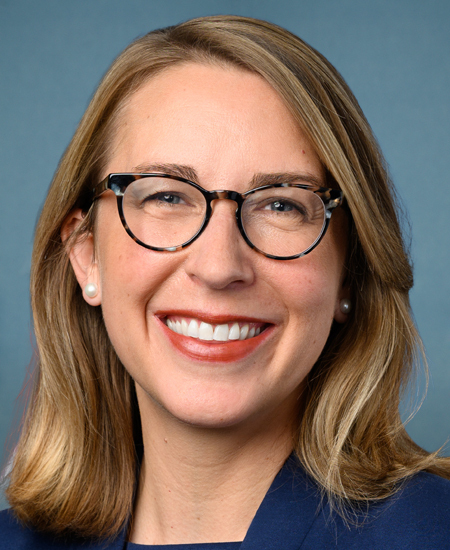
Rep. Hillary J. Scholten
Sponsored bills
Maddy summaryHR 1787 authorizes the U.S. Mint to produce commemorative coins honoring baseball legend Roberto Clemente, including $5 gold, $1 silver, and half-dollar coins, with specific specifications for weight, size, and metal content. The bill requires the coins to feature Clemente's image and commemorative inscriptions, and mandates a surcharge ($35 for gold, $10 for silver, $5 for half-dollar) paid to the Roberto Clemente Foundation for its educational, youth sports, and disaster relief programs. All coins must be minted in 2027, sold at face value plus surcharge and production costs, and will be legal tender. The bill focuses solely on the coin program, not broader policy changes.
Safe Schools Improvement Act This bill requires states to direct their local educational agencies (LEAs) to establish policies that prevent and prohibit bullying and harassment of elementary and secondary school students. In particular, these policies must prohibit bullying and harassment based on race, color, national origin, disability, religion, or sex. Sex includes sexual orientation, gender identity, and sex characteristics (including intersex traits). Further, LEAs must provide (1) students, parents, and educational professionals with annual notice of the conduct prohibited in their disciplinary policies; (2) students and parents with grievance procedures that target such conduct; and (3) the public with annual data on the incidence and frequency of that conduct at the school and LEA level. The Department of Education must conduct and report on an independent biennial evaluation of programs and policies to combat bullying and harassment in elementary and secondary schools. The National Center for Education Statistics must collect state data to determine the incidence and frequency of the conduct prohibited by LEA disciplinary policies.
Maddy summaryHR 641 establishes an Interagency Committee led by the Office of Science and Technology Policy to coordinate federal soil carbon research and monitoring across agencies like Agriculture, Energy, EPA, and NOAA. The committee develops a strategic plan, oversees working groups focused on standardizing measurement methods, data management, and community engagement (especially with historically underserved agricultural groups), and submits annual progress reports to Congress. It aims to improve coordination of existing soil carbon sequestration research efforts and ensure recommendations incorporate input from soil science experts and agricultural communities. The bill does not create new programs or directly affect farmers but streamlines federal research coordination and reporting on soil carbon.
Maddy summaryThis bill (HJRES 63) would rename the Robert E. Lee Memorial, a National Park Service site in Arlington, Virginia, to "Arlington House National Historic Site." It directly affects the National Park Service, which manages the site, and all federal government documents, maps, and records referencing the location. The key provision updates all official references to the site to the new name and repeals two prior resolutions that established the memorial. As a procedural renaming bill, it does not create new policies or funding but changes the site's official designation.
Maddy summaryThe Pell Grant Sustainability Act (HR 1666) requires the federal government to automatically adjust the maximum Pell Grant amount each year based on inflation, starting with $1,060 for the 2024-2025 academic year. This adjustment uses the Consumer Price Index (CPI) to ensure grants keep pace with rising college costs, directly affecting low-income students who rely on Pell Grants to afford higher education. The bill amends the Higher Education Act to mandate this annual inflation-based increase, rounding the final amount to the nearest $5. It aims to reverse the decades-long decline in grant purchasing power, which covered 80% of college costs in 1974-75 but only 31% by 2022-23.
Maddy summaryThe Keep Americans Safe Act (HR 1674) restricts the sale, transfer, and possession of large capacity ammunition feeding devices (LCFDs) - defined as magazines or similar devices holding more than 15 rounds of ammunition - for most individuals. Exceptions allow law enforcement officers (including campus law enforcement), retired officers, and nuclear security personnel to possess LCFDs under specific conditions. The bill requires new LCFDs to have serial numbers and manufacturing dates, permits federal seizure of violative devices, and authorizes federal grant programs to fund buy-back initiatives for LCFDs. It directly affects gun owners and manufacturers while preserving access for covered law enforcement and security personnel.
Maddy summaryHR 1657, the Humane Cosmetics Act of 2025, prohibits cosmetic companies from conducting or contracting animal testing for products sold in the U.S. beginning one year after the law takes effect. It also bans the sale or transport of cosmetics developed using such testing after that date, with limited exemptions (e.g., for foreign regulatory requirements or when no non-animal safety alternatives exist). The bill directly affects cosmetic manufacturers, retailers, and distributors by requiring them to shift to non-animal testing methods. The Food and Drug Administration (FDA) will enforce the law, including reviewing records and imposing civil penalties for violations.
Maddy summaryHR 1659, the Truck Parking Safety Improvement Act, creates a federal grant program to address commercial truck parking shortages on highways. It authorizes $151 million annually (2025-2029) for states, local governments, tribes, and other eligible entities to build or improve public parking facilities for commercial motor vehicles. Projects must be on or near highways, include safety features, and provide free, publicly accessible parking - prohibiting fees for drivers. The bill also requires annual reports to Congress evaluating parking availability and project effectiveness.
Maddy summaryThe PAST Act of 2025 amends the Horse Protection Act to ban harmful practices known as "soring," which deliberately cause pain to horses to exaggerate their gait for shows. It specifically prohibits devices like action devices (e.g., boots causing friction) and weighted shoes on Tennessee Walking Horses, Racking Horses, and Spotted Saddle Horses at events. The bill increases penalties, including escalating disqualifications for repeat offenses (180 days → 1 year → 3 years) and raises fines for violations to $5,000 per offense. It also requires stricter licensing for inspectors and mandates public posting of violation records to help event organizers enforce rules.