

Maddy summaryThis bill prohibits U.S. app stores, hosting services, and distributors from enabling foreign adversary-controlled applications (like TikTok, owned by ByteDance) to operate within U.S. borders. It requires companies to provide users with their data in a machine-readable format before a ban takes effect, and imposes civil penalties of up to $5,000 per affected user for violations. The law directly affects major app platforms, app stores, and internet hosting services, targeting applications owned by entities controlled by designated "foreign adversary" countries (e.g., China). It includes exemptions for companies that divest U.S. operations to non-adversary entities before the ban date.
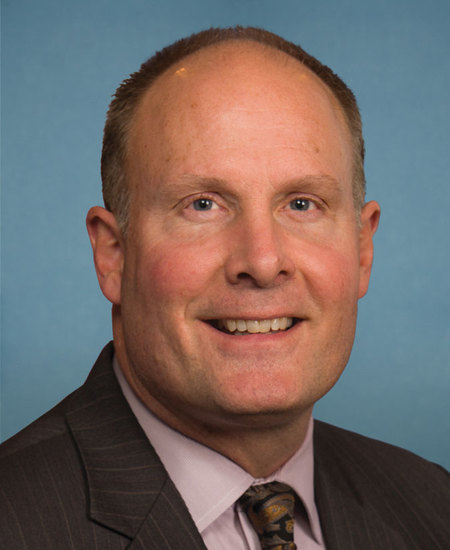
Rep. John R. Moolenaar
Sponsored bills
Maddy summaryThis bill requires NASA and NOAA to establish civilian space cooperation with Taiwan within 90 days, focusing on satellite programs, weather/climate initiatives, and commercial space technology. It directly affects U.S. agencies (NASA, NOAA) and Taiwan’s Space Agency through structured collaboration. Key mechanisms include identifying mutual-benefit projects while complying with U.S. laws like the Taiwan Relations Act and protecting U.S. intellectual property. Agencies must report annually to Congress for five years on progress, challenges, and specific activities conducted. The bill does not alter U.S. policy toward Taiwan but mandates new coordination channels for space-related work.
Maddy summaryHR 6421, the Affordable HOMES Act, repeals federal requirements for energy efficiency standards in manufactured housing. It removes the authority established under the Energy Independence and Security Act of 2007 to set such standards and invalidates a 2022 Department of Energy rule implementing those standards. This bill directly affects manufactured home manufacturers by eliminating a federal regulatory requirement related to energy conservation.
Maddy summaryHR 7590, the "Breaking Beijing’s Hold on Campus Act of 2024," requires students and diplomats from China, Russia, Iran, and North Korea to certify they will not engage in "transnational repression" to suppress U.S. rights. Specifically, visa applicants must pledge they won’t report on students exercising constitutional rights or monitor students with family in those nations for the purpose of suppressing dissent. Violating this certification would immediately terminate their visa status. The bill defines transnational repression broadly as actions intending to intimidate U.S. persons over protected rights, including reporting to foreign governments or engaging in extrajudicial tactics. It directly affects nationals of the four listed countries seeking student or diplomatic visas in the U.S.
Maddy summaryHR 7563, the Food Traceability Enhancement Act, modifies FDA food safety rules to ease requirements for certain businesses. It shortens recordkeeping periods from 2 to 1 year and exempts restaurants, retail food establishments, and warehouses from maintaining or sharing traceability lot code information. The bill mandates 9 pilot projects testing outbreak investigations without lot codes and evaluating low-cost tracing technologies, with specific sector and commodity diversity requirements. It delays compliance for existing traceability rules until 2 years after the pilots conclude, and requires a report on FDA information-sharing barriers with food businesses.
Maddy summaryThis bill amends the H-2B visa program to better align visa numbers with economic needs. It creates an exemption from numerical limits for rural and seasonal workers (defined as areas outside metropolitan statistical areas with seasonal population increases), requires employers to maintain worksite safety plans, and prohibits foreign labor recruiters from charging workers fees. The bill also increases penalties for violations, requires employers to report certain employment events within 3 business days, and establishes stricter eligibility criteria for countries participating in the H-2B program. These changes aim to improve program integrity while protecting both workers and employers.
Maddy summaryHR 7494, the Protect America’s Lands Act, prohibits national securities exchanges from processing transactions involving stocks issued by companies primarily managing land for conservation. It defines "natural asset companies" as those holding rights to ecological performance of specific land areas, with their core purpose being to conserve, restore, or sustainably manage natural assets without causing material harm. The bill directly affects securities exchanges and these specific companies by banning exchange-based trading of their securities. This is a regulatory change to the Securities Exchange Act of 1934, focusing on financial market rules rather than direct land management policies.
Maddy summaryHR 7361, the Flowers for Fallen Heroes Act of 2024, requires the American Battle Monuments Commission to establish a low-cost program allowing the public to order flowers for military gravesites at Commission-managed cemeteries. The bill mandates the Commission to partner with third-party florists (without excess fees) and create a user-friendly website and phone system for ordering by one year after enactment. It also authorizes credit card and electronic payment processing for these orders, with customers responsible for any third-party processing fees, and requires annual reports to Congress detailing program implementation, including order data and florist engagement. This bill directly affects the public seeking to honor fallen service members and the Commission’s operations at 25 overseas military cemeteries.
Maddy summaryThe CHILD Act of 2024 increases the maximum annual tax benefit for dependent care expenses from $5,000 to $10,000 (and doubles the spousal limit from $2,500 to $5,000) under Section 129 of the Internal Revenue Code. It also adds automatic annual cost-of-living adjustments to these limits, calculated using the standard inflation formula, rounded to the nearest $50. This directly affects working parents who claim dependent care expenses on their federal taxes, expanding their tax savings for childcare costs. The changes apply to calendar years beginning after December 31, 2023, and remove an outdated provision (subparagraph D) from the existing tax code.
Maddy summaryThe Uyghur Policy Act of 2023 establishes a U.S. Special Coordinator for Uyghur Issues within the State Department to coordinate policy and advocate for the protection of Uyghur cultural, religious, and linguistic identity in Xinjiang. It authorizes $250,000 annually for Uyghur human rights advocates to speak at public diplomacy events in Muslim-majority countries and mandates Uyghur language training for U.S. diplomats. The bill also directs the U.S. government to support United Nations monitoring of Xinjiang human rights issues and oppose efforts to block discussions of Xinjiang at the UN. These provisions focus on diplomatic advocacy and information-sharing, not direct sanctions or enforcement actions against China.