

Maddy summaryThe Manifest Modernization Act of 2025 updates U.S. customs rules for importers by requiring more detailed public disclosure of shipment information on manifests for vessels, vehicles, and aircraft entering the country. It mandates that public disclosure include the Harmonized Tariff Schedule subheading, country of origin, and the last country the cargo passed through before arrival. This applies to all importers and customs authorities handling manifests for sea, land, or air transport arriving after the 30-day implementation period following the law's passage. The bill directly affects businesses and logistics providers managing international shipments entering the United States.
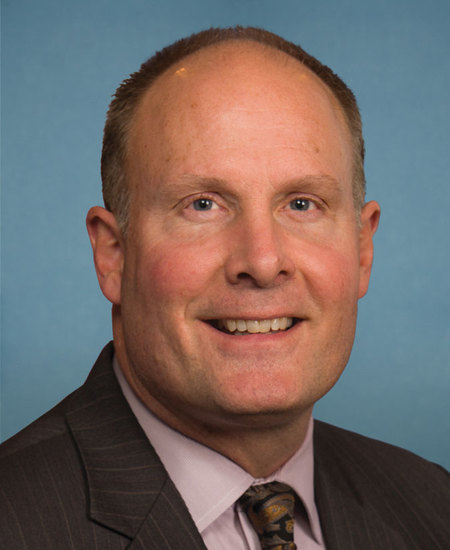
Rep. John R. Moolenaar
Sponsored bills
Maddy summaryHR 2559, the Taiwan Allies Fund Act, authorizes $40 million annually (2026-2028) from existing foreign aid funds to support countries maintaining or strengthening unofficial ties with Taiwan, particularly those facing economic or diplomatic pressure from China. The bill directs funds to help eligible countries diversify supply chains, counter Chinese propaganda, develop health initiatives as alternatives to China's "Health Silk Road," and advance Taiwan's participation in international organizations. Countries receiving funds cannot get more than $5 million per year, and the State Department must coordinate with Taiwan and report annually on fund usage and effectiveness. This is a targeted financial assistance program, not a policy change affecting Taiwan's status or U.S. diplomatic recognition.
Maddy summaryThis bill codifies a "maximum pressure" policy toward Iran, requiring the U.S. to maintain all sanctions until Iran meets specific conditions related to its nuclear program, missile development, support for terrorism, and human rights violations. It expands sanctions on Iran's Revolutionary Guard Corps (IRGC) and entities supporting Iran's ballistic missile program, while prohibiting waivers of sanctions on these entities. The bill mandates regular reports to Congress on Iran's nuclear activities, support for terrorist groups like Hamas and Hezbollah, and human rights abuses within Iran. It also directs the use of frozen Iranian assets to support victims of state-sponsored terrorism and prevents the release of funds that could benefit Iran's terrorist proxies. The bill aims to maintain economic and diplomatic pressure on Iran until it changes its behavior across multiple fronts.
Maddy summaryHR 2552, the RIFLE Act, repeals the federal tax on firearm transfers (Section 5811 of the Internal Revenue Code). This directly affects firearm sellers and purchasers by removing the tax paid when transferring firearms. The bill also updates related tax code references to reflect the repeal and specifies the tax removal applies to transfers after the law's enactment. It clarifies that the repeal does not change how firearms are regulated under the National Firearms Act or involve the Consumer Product Safety Commission.
Sanctioning Russia Act of 2025 This bill imposes penalties on certain persons (individuals and entities) if the President determines that the Russian government or a person acting at Russia's direction is involved with (1) refusing to negotiate a peace agreement with Ukraine; (2) violating a negotiated peace agreement; (3) initiating another invasion of Ukraine; or (4) overthrowing, dismantling, or seeking to subvert the Ukrainian government. If the President makes such a determination, the bill requires certain actions including the President must impose visa- and property-blocking sanctions on specified persons such as the Russian president, certain Russian military commanders, and any foreign person that knowingly provides defense items to the Russian armed forces; the President must increase the rate of duty on all goods and services imported from Russia into the United States to at least 500% relative to the value of such goods and services; the President must increase the rate of duty on all goods and services imported into the United States from countries that knowingly engage in the exchange of Russian-origin uranium and petroleum products to at least 500% relative to the value of such goods and services; the Department of the Treasury must impose property-blocking sanctions on any financial institution organized under Russian law and owned wholly or partly by Russia, and any financial institution that engages in transactions with those entities; and the Department of Commerce must prohibit the export, reexport, or in-country transfer to or in Russia of any U.S.-produced energy or energy product.
Maddy summaryHR 2522 designates a specific area in Washington, D.C. (between 18th Street Northwest and Church Street Northwest, and between 18th Street Northwest and P Street Northwest) as "Jimmy Lai Way" and redesignates the address 1520 18th Street Northwest as 1 Jimmy Lai Way Northwest. The bill requires the General Services Administration to install signs bearing the new name at designated street corners and nearby Federal property. This is a symbolic gesture, with no legal or financial obligations, primarily updating federal references to the location. The bill’s preamble includes congressional findings on Jimmy Lai’s detention but does not alter U.S. policy toward Hong Kong.
Maddy summaryThe DETERRENT Act requires higher education institutions receiving federal funding to disclose foreign gifts and contracts meeting certain value thresholds ($50,000 or more for regular foreign sources, all for "foreign countries of concern" or "foreign entities of concern"). Institutions must report details including the foreign source's identity, purpose, and financial value, with all disclosures made public through a searchable database. The bill prohibits contracts with designated "foreign countries of concern" or "foreign entities of concern" without a specific waiver, and includes enforcement mechanisms with fines for non-compliance. Institutions must also maintain policies requiring faculty and staff to disclose foreign connections that meet certain criteria.
Maddy summaryHR 1995, the Securing American Agriculture Act, requires the Secretary of Agriculture to annually assess U.S. dependency on critical agricultural inputs that could be exploited by China, such as fertilizers, feed, veterinary drugs, seeds, and equipment. The assessment must detail current domestic production, supply chain vulnerabilities, and recommend ways to reduce reliance on China, including legislative changes to encourage domestic production. It protects confidential business data by prohibiting the use of submitted information for purposes beyond aggregate reporting and ensuring no identifiable details are disclosed. The bill directly affects the Department of Agriculture, which must report these findings to Congress annually, without mandating new regulations or actions.
Maddy summaryThe SHORT Act (HR 2395) redefines federal firearm definitions to exclude antique and collector firearms from being classified as firearms, and removes distinctions between short-barreled rifles and shotguns in federal regulations. It prevents state laws from imposing taxes or registration requirements on short-barreled rifles and shotguns, requiring state rules to align with federal compliance instead. The bill also mandates the federal government to destroy specific records related to these firearms within one year of enactment.
Maddy summaryHR 2398, the Rural Veterinary Workforce Act, amends federal tax law to exempt certain student loan repayment or forgiveness assistance from income tax for veterinarians working in rural areas. It specifically expands existing tax exclusions to include programs under the National Agricultural Research, Extension, and Teaching Policy Act (7 U.S.C. 3151a) and similar state-level programs designed to increase rural veterinary access. This change directly affects veterinarians participating in qualifying loan repayment or forgiveness programs in states prioritizing rural veterinary services. The policy change modifies IRS tax treatment to reduce the financial burden on veterinarians serving underserved rural communities.