

Maddy summaryThe Advanced AI Security Readiness Act requires the National Security Agency to develop an AI Security Playbook to protect advanced AI systems that pose national security risks if stolen. The playbook must identify vulnerabilities in AI infrastructure, critical components (like models or training insights) that could be exploited, and strategies to prevent cyber threats from nation-state actors. It mandates both a classified version for government use and an unclassified version for sharing security best practices with private sector AI developers. The NSA must submit an initial report within 90 days and a final report within 270 days after the bill's enactment to Congress.
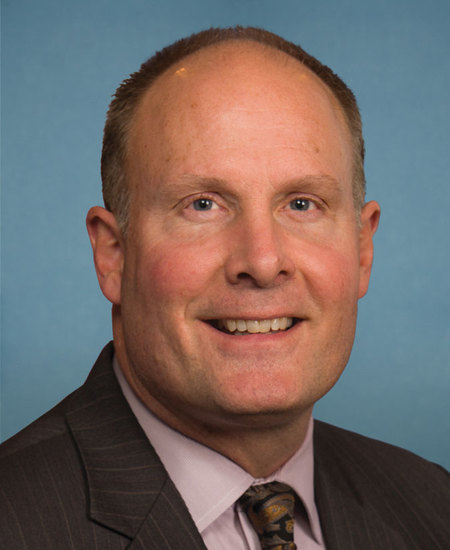
Rep. John R. Moolenaar
Sponsored bills
Maddy summaryHR 3880, the Clear the ROADS Act, requires states to prohibit non-government individuals from recklessly blocking highways in ways that endanger public safety. If a state fails to meet this requirement, the federal government would withhold 10% of that state's annual highway funding starting October 1 each year. The bill directs the Transportation Secretary to issue rules within 180 days to define how states must comply. This affects all states receiving federal highway funds, directly targeting reckless road obstructions by private individuals.
Maddy summaryThe Patriots Over Politics Act (HR 3619) allows veterans discharged between August 2021 and January 2023 solely for refusing a COVID-19 vaccine to transfer their earned educational benefits to eligible dependents. Veterans must initiate the transfer within 90 days of the bill’s enactment. Dependents can use the transferred benefits only after the veteran completed at least six years of military service - a requirement already met by these veterans prior to separation. This provision directly affects veterans separated for vaccine refusal during the specified period, providing a pathway to pass on unused education benefits.
Maddy summaryHRES 481 is a symbolic resolution condemning recent antisemitic attacks in the U.S., specifically referencing the June 1, 2025, Boulder, Colorado, assault on a Jewish community gathering and other incidents like the May 2025 Washington, D.C., embassy shooting. It formally recognizes a pattern of violence targeting Jewish individuals and institutions, including attacks during religious events. The resolution calls on law enforcement to thoroughly investigate and prosecute such incidents and urges elected officials to publicly oppose antisemitism and politically motivated violence. As a non-binding resolution, it does not create new laws or allocate funding but serves to affirm congressional stance against antisemitism.
Maddy summaryHRES 483 is a House resolution recognizing the 250th anniversary of the U.S. Army's founding on June 14, 1775. It expresses appreciation for the Army's service over 250 years, honors soldiers' valor and core values, and calls for public observance through ceremonies and activities. The resolution has no policy impact or funding provisions - it is purely commemorative. It was introduced by 30 bipartisan House members and referred to the Armed Services Committee.
Maddy summaryThis bill imposes increasing tariffs on Chinese-made drones (starting at 30% and rising to 50%+ over four years) and creates a fund using these tariff revenues. The fund provides grants to first responders (60% of funds), farmers/ranchers (20%), and critical infrastructure providers (20%) to purchase secure drones made outside China. It also requires certification that drones don’t contain Chinese components for importation after 2031. The bill directly affects drone importers, first responders, farmers, and infrastructure providers by reshaping drone procurement and supply chains.
Maddy summaryThis bill amends a definition in existing law to expand restrictions on foreign talent recruitment. Starting January 1, 2026, territories controlled by "countries of concern" (like special administrative regions) will be treated as part of those countries for these restrictions. It directly affects researchers and institutions receiving federal research funding who may interact with entities in those territories. The change clarifies the scope of existing rules without altering the core policy on foreign influence prevention.
Maddy summaryHR 649, the Whole Milk for Healthy Kids Act of 2025, amends the National School Lunch Act to allow schools participating in the program to offer students both organic and non-organic whole milk, in addition to reduced-fat, low-fat, and fat-free options. Key provisions include clarifying that milk fat in whole milk should not count toward saturated fat limits for meal compliance, prohibiting schools from purchasing milk from Chinese state-owned enterprises, and ensuring schools cannot be barred from offering the full range of milk types listed. The bill directly affects public and private schools serving the National School Lunch Program by expanding their milk options for students. It focuses on concrete policy changes to dietary offerings and sourcing restrictions within the school nutrition program.
Maddy summaryHRES 470 is a non-binding House resolution commemorating the events of June 4, 1989, in Beijing and condemning the Chinese government's ongoing human rights practices. It expresses support for victims' families, calls for an independent UN investigation into the 1989 events, and urges China to cease censorship, uphold Hong Kong's autonomy under the Joint Declaration, and allow peaceful remembrance of the anniversary. The resolution has no legal force but serves as a symbolic expression of congressional concern regarding human rights in China and Hong Kong.
Maddy summaryThis resolution (HR 3737) expresses congressional findings about the 1989 Tiananmen Square protests and their suppression, citing Chinese government actions including censorship, restrictions on education, and suppression of commemorative events. It states U.S. policy to mark the anniversary, address Chinese censorship, support individuals jailed for commemorating the events (like Jimmy Lai), and use existing sanctions authorities to hold accountable officials involved in censorship or transnational repression. The bill also directs the Librarian of Congress to collaborate with organizations on exhibits showcasing the protests' history and survivors' stories. It does not create new laws but references existing U.S. sanctions authorities (like Section 7031(c) of the 2024 Appropriations Act) to address the cited issues.