

Maddy summaryThe Voter Choice Act establishes a federal program to assist states and local governments in transitioning to ranked choice voting systems for elections. Under this bill, the Election Assistance Commission would provide technical support and financial grants to help jurisdictions acquire necessary equipment, design ballots, and create educational materials for voters. Grants awarded through this program are capped at 50 percent of project costs and must be distributed across a diverse range of geographic areas and population types. The legislation authorizes $40 million in funding for fiscal year 2027 to support these transition efforts.
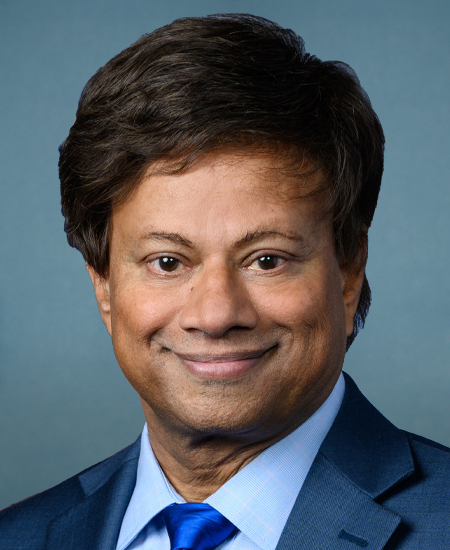
Rep. Shri Thanedar
Sponsored bills
Maddy summaryThe Find Our Families Act of 2026 requires the Department of Homeland Security to create a public online system that allows families to locate individuals detained by Customs and Border Protection or Immigration and Customs Enforcement. This system must provide search results within eight hours of detention, display information in multiple languages, and include specific details such as names, dates of birth, and facility locations, while excluding data for minors. The bill also mandates that families be notified within five hours if a detainee is transferred for medical care and establishes new reporting requirements for CBP arrests, including details on the circumstances of the arrest and the number of agents involved. Additionally, the legislation creates a process for families to report errors in detainee information and imposes penalties on employees or contractors who fail to comply with these data-sharing and reporting obligations.
Maddy summaryThe DHS Surveillance Technology Moratorium Act of 2026 temporarily halts the Department of Homeland Security from using funds to start, renew, or expand contracts for surveillance tools used in immigration enforcement, such as facial recognition and predictive analytics. This pause applies to agencies like U.S. Immigration and Customs Enforcement and Customs and Border Protection, though existing contracts can continue until a review is complete. The bill mandates an independent audit within 180 days to examine data collection practices, privacy impacts, and the accuracy of these technologies, followed by a public report detailing their use and capabilities. The funding ban remains in effect until the audit is finished, a public report is released, and the department demonstrates it has implemented necessary safeguards to protect civil liberties. Once these conditions are met, the moratorium lifts, but the department must submit annual reports on its continued use of these technologies and any related privacy complaints.
Maddy summaryThe DHS CANDOR Act establishes a new public communications policy for the Department of Homeland Security to ensure all official information is accurate, objective, and reliable. It requires the department to create standards that prevent misleading or partisan statements and mandates rapid correction of any errors. The legislation also sets specific rules for using personal social media accounts, requiring employees to avoid representing personal views as official positions and prohibiting the sharing of non-public information. Additionally, the bill mandates annual training for all personnel on public communications ethics and requires the Inspector General to audit compliance with these new guidelines.
Maddy summaryThe Department of Homeland Security Accountability Act of 2026 requires the Secretary of Homeland Security to report any serious injury or death occurring in DHS custody or resulting from DHS actions within 72 hours to Congress and local representatives. These notifications must include detailed information such as the date and location of the incident, the nationality of the individual involved, specific use of force tactics, and whether medical assistance was provided. The bill also mandates that the Department conduct independent investigations for these incidents, which must include reviewing video footage, placing involved employees on administrative leave, and ensuring autopsies and medical reviews are performed. All investigation reports must be submitted to Congress within seven days of completion, and video recordings of the individuals involved must be preserved for at least five years.
Maddy summaryThis bill establishes a new Office for Civil Rights and Civil Liberties within the Department of Homeland Security, led by an Officer who reports directly to the department head. The Office is tasked with overseeing compliance with civil rights laws, reviewing potential abuses or profiling by employees, and integrating these protections into all department policies and programs. It grants the Officer authority to investigate complaints, issue public reports on findings, and coordinate with other officials to ensure diverse communities are engaged effectively. Additionally, the legislation requires each major department unit to have its own civil rights officer and mandates annual reporting to Congress on the Office's activities and progress.
Maddy summaryThe Fresh Bucks for Fresh Produce Act establishes a five-year pilot program where the Department of Agriculture provides grants to states to offer monthly $60 payments to low-income households for purchasing fresh fruits and vegetables. To qualify, households must earn 80 percent or less of the area median income, though those already receiving SNAP benefits can enroll with minimal paperwork. The funds can only be used at specific retailers like farmers markets and grocery stores to buy fresh produce, and states must use these grants to cover administrative costs and support local community organizations. The bill requires states to prioritize food-insecure areas and ensures geographic diversity by awarding grants to at least one state in each major U.S. region. Additionally, the program mandates a study to collect data on participant outcomes and barriers to access, with final results and recommendations for expansion due within five years.
Maddy summaryThis resolution formally acknowledges Michigan's contributions to the United States as the nation celebrates the 250th anniversary of the Declaration of Independence. It recognizes that Michigan became the 26th state in 1837 and highlights the lasting impact its residents have had on the country's success. The measure encourages all citizens to reflect on the ideals of the Founding Fathers and the fight for independence. As a commemorative action, the bill does not create new laws or change existing policies but serves to honor historical events and state achievements.
Maddy summaryHRES 1405 is a non-binding resolution that encourages the U.S. House of Representatives to recognize June as LGBTQIA+ Pride Month. The document acknowledges the historical significance of events like the Stonewall Inn uprising and highlights the ongoing struggle for equality faced by lesbian, gay, bisexual, transgender, queer, intersex, and asexual individuals. It includes a detailed list of historical milestones and legislative achievements related to LGBTQIA+ rights to provide context for the celebration. Because this measure is a resolution of recognition rather than a law, it does not create new legal obligations or change federal policy.
Maddy summaryThe VA Coaching into Care Act establishes a three-year pilot program creating a toll-free hotline to support friends, family members, and caregivers of veterans. Staffed by VA-employed psychologists and social workers, the hotline offers advice on how to discuss mental health with veterans and provides referrals to appropriate care services. The Department of Veterans Affairs will promote this service through service organizations, medical facilities, and its website, and must submit a final report on the program's usage and effectiveness before it ends.