

Maddy summaryThe DHS Acquisition Documentation Integrity Act requires the Department of Homeland Security to maintain complete, accurate, and risk-tailored documentation for all major acquisition programs, which are defined as projects costing at least $300 million over their life cycle. Under this bill, agencies must prepare detailed cost estimates, performance analyses, and logistics plans that are verified against independent data and approved according to departmental policy. The law also mandates that the Under Secretary for Management submit a detailed breach report to Congress within 30 days if a program faces a cost overrun of more than 15 percent, a delay of over 180 days, or a failure to meet key performance thresholds. These reports must include explanations of causes, updated baselines, and remediation plans, with additional scrutiny required if cost overruns exceed 20 percent or delays surpass 12 months.
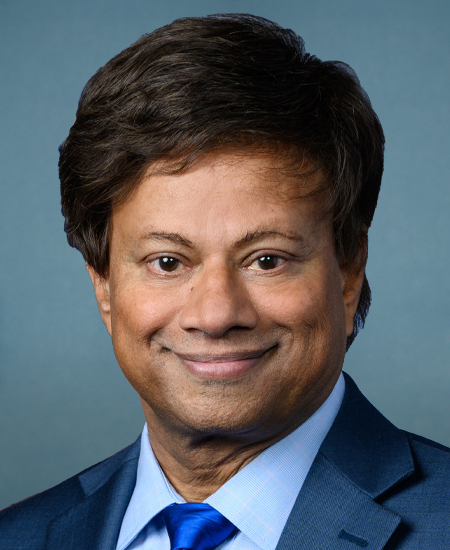
Rep. Shri Thanedar
Sponsored bills
Maddy summaryThis resolution condemns all forms of hate, including racism, antisemitism, transphobia, and xenophobia, while highlighting recent statistics on hate crimes affecting various communities. It calls for comprehensive federal and state policies to prevent hate crimes through education and intervention, as well as support for victims through legal aid and mental health resources. The measure also advocates for funding programs that are culturally accessible to vulnerable groups, such as immigrants and LGBTQIA+ individuals, and reaffirms the government's commitment to maintaining an inclusive democracy.
Maddy summaryThis bill establishes financial liability for private detention centers and their employees if they cause the wrongful death of a person held there. It allows families of deceased individuals to sue in federal court for at least $5 million in statutory damages plus economic and punitive damages. The law removes the ability of detention staff to use immunity defenses to avoid responsibility and holds the facility itself responsible for the actions of its workers. These rules apply specifically to private companies contracted by the federal government to detain people accused of breaking civil, criminal, or immigration laws.
Maddy summaryThe Inclusive Democracy Act of 2026 mandates that individuals with criminal convictions retain their right to vote in federal elections and requires prisons, jails, and probation offices to notify incarcerated or supervised individuals of this right. The bill establishes specific procedures for voter registration and absentee voting within carceral settings, including expedited transmission of forms and the ability to use either a prison address or a last known address for registration. It also prohibits states from rejecting ballots or registration applications based on late mailing dates or electronic submission methods and ensures that election materials and nonpartisan voter registration services can be distributed inside correctional facilities.
Maddy summaryThis bill, titled the Ensuring Kids Have Access to Medically Necessary Dental Care Act, modifies the Children's Health Insurance Program to expand dental coverage for low-income children and pregnant women. It mandates that states remove any lifetime or annual dollar limits on dental benefits for eligible participants and requires states to offer dental-only supplemental coverage instead of allowing them to opt out. The changes take effect six months after the law is enacted, ensuring that these specific groups receive consistent access to necessary dental services without financial caps.
Maddy summaryThis bill amends Medicare to cover dental and oral health services for the first time, affecting all current and future Medicare beneficiaries. It defines covered services to include routine cleanings, fillings, extractions, root canals, crowns, dentures, and emergency care. For most individuals, federal payment for these services will gradually increase from 0% to 80% over an eight-year period, while low-income individuals eligible for prescription drug subsidies will receive 80% coverage immediately. The legislation also establishes frequency limits, such as two cleanings and exams per year and a five-year limit on full dentures, and requires the U.S. Preventive Services Task Force to include at least one oral health professional.
Maddy summaryThe Medicaid Dental Benefit Act of 2026 mandates that Medicaid programs cover a range of dental and oral health services for adults starting in 2027, including dentures, implants, and treatments for pain and emergencies. To help states afford this expansion, the bill provides 100 percent federal funding for these specific services for a 12-quarter period beginning in 2027, while allowing states the option to add extra dental benefits if they choose. In addition to expanding coverage, the legislation requires the federal government to develop standardized quality measures to track adult oral health outcomes and report on disparities based on race, ethnicity, and other demographics. The bill also directs the creation of an outreach program to help eligible adults find care and establishes a timeline for a comprehensive report on access barriers and reimbursement issues.
This bill designates the facility of the United States Postal Service located at 324 Washington Avenue, Suite 1 in Grand Haven, Michigan, as the "Ell Thomas Simantz Post Office Building".
Maddy summaryThis concurrent resolution formally recognizes the persistent wage gap between Black women and white, non-Hispanic men in the United States. It highlights data showing that Black women earn significantly less than their male counterparts and reaffirms Congress's support for existing laws that prohibit pay discrimination based on sex or race. The document does not create new laws or change policy but serves as a symbolic statement to raise awareness about the economic disparities faced by Black women.