

Maddy summaryThe Baby Bonus Act (HR 6234) creates a new $2,000 payment for eligible parents of children born on or after January 1, 2026, with annual inflation adjustments. It establishes the Office of Baby Assistance within the Social Security Administration to manage applications, verify eligibility (requiring U.S. residency and citizenship/qualified alien status), and prevent fraud. Payments are tax-exempt and not counted toward eligibility for other federal or state benefits, with applications due within one year of birth or fetal death after 20 weeks gestation. The bill includes specific provisions for surrogacy, adoption, and custody arrangements to determine payment recipients.
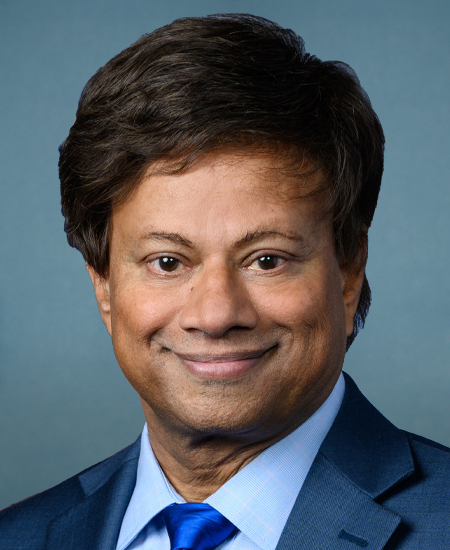
Rep. Shri Thanedar
Sponsored bills
Maddy summaryHR 6181, the John Lewis Every Child Deserves a Family Act, prohibits child welfare agencies receiving federal funds from discriminating against children, youth, or prospective foster/adoptive parents based on religion, sex (including sexual orientation and gender identity), or marital status. It directly affects LGBTQ youth in foster care - overrepresented at 30% of the system - who face higher risks of trauma, group home placements, and suicide attempts compared to non-LGBTQ peers. Key provisions require agencies to collect data on sexual orientation and gender identity, establish a National Resource Center for LGBTQ youth support, provide cultural competency training, and eliminate discriminatory practices. The law aims to improve safety, permanency, and placement stability by expanding access to family-based care and ensuring equitable services for all children in the system.
Maddy summaryHR 6172, the Ending Forced Arbitration of Race Discrimination Act of 2025, prevents companies from requiring employees or consumers to use private arbitration to resolve race discrimination claims. It makes any pre-dispute arbitration agreement unenforceable for disputes involving alleged race, color, or national origin discrimination under federal, tribal, state, or local law. The bill ensures courts - not arbitrators - determine if this law applies to a case, giving people the choice to pursue claims in court instead of forced arbitration. It directly affects individuals alleging race discrimination who would otherwise be barred from court by such agreements. The law applies to claims arising on or after its enactment date.
Maddy summaryThis bill (HR 6015) ensures existing labor agreements between the Department of Veterans Affairs (VA) and employee unions remain in full effect through their scheduled terms. It also cancels two executive orders (14251 and 14343) that previously excluded VA from standard federal labor-management programs. The bill directly affects VA employees and their unions by preserving current collective bargaining rights and requiring VA to follow standard federal labor rules. It does not change veterans' benefits or healthcare access; it only modifies VA's internal labor relations procedures. This is a procedural bill focused on labor-management processes, not direct policy changes for veterans.
Maddy summaryHR 3965, the PEARL Act, requires U.S. Customs and Border Protection (CBP) to establish a 3-year pilot program adopting dogs from local animal shelters to train as support dogs for CBP’s existing Support Canine Program. The program must begin within 60 days of the bill’s enactment and will terminate three years after its start date. This bill directly affects CBP by creating a new mechanism to source and train support dogs from animal shelters, rather than purchasing or acquiring them through other means. The legislation focuses solely on implementing this specific pilot program with no additional policy changes.
Maddy summaryThis bill allows Inspector General (IG) offices to continue operating during government funding gaps. It permits IGs to spend funds at the previous year's funding rate to cover basic operations and oversee programs that remain active when Congress hasn't passed new appropriations. The law directly affects federal IGs and the agencies they monitor, ensuring oversight continues without interruption during shutdowns. It amends existing law to provide this authority without requiring new appropriations.
Maddy summaryThis bill amends federal law to expand appeal rights for certain postal employees to the Merit Systems Protection Board (MSPB). It specifically applies to postal workers in supervisory, professional, technical, clerical, administrative, or managerial roles who are not represented by a union under Section 1203 of federal labor law. The key change clarifies that these employees can now directly appeal personnel decisions (like discipline or termination) to the MSPB, rather than relying solely on internal postal processes. This modifies eligibility criteria for MSPB appeals under Title 39 of the U.S. Code.
Maddy summaryThis bill establishes fairer pay and retirement benefits for federal firefighters. It requires that overtime hours worked during a firefighter's regular schedule be included in retirement calculations, improving retirement payouts. The bill also sets a maximum 60-hour regular workweek for federal firefighters, to be defined by the Office of Personnel Management within one year. These changes directly affect federal firefighters by addressing pay disparities with municipal firefighters and enhancing recruitment and retention.
Maddy summaryHRES 581 is a procedural resolution that establishes rules for the House to consider H.R. 185, the Epstein Files Transparency Act. It waives all points of order against the bill, adopts a specific amendment (the full text of the Epstein Files Transparency Act), and limits debate to one hour equally divided between the Judiciary Committee's chair and ranking minority member. The resolution also requires the Attorney General to release unclassified DOJ records related to Jeffrey Epstein within 30 days, with limited exceptions for privacy or national security.
Maddy summaryThe Housing Financial Literacy Act of 2025 modifies mortgage insurance premiums for first-time homebuyers who complete approved financial literacy counseling programs. It requires that such counseling be completed before signing a mortgage application or sales agreement. The bill reduces the mortgage insurance premium by 25 basis points (0.25%) below the standard rate established by the Secretary of Housing and Urban Development. This change directly affects first-time homebuyers who participate in qualifying housing counseling programs.