

Maddy summaryHR 7060, the "No Political Enemies Act," prohibits federal officials from targeting individuals or domestic entities for exercising constitutionally protected speech or assembly. It creates an affirmative defense for defendants who show government enforcement actions were "substantially motivated" by such protected activity (Section 4), allows civil lawsuits for injunctions against politically motivated actions (Section 6), and enables damage claims if officials knowingly targeted protected speech (Section 7). The bill also requires the Justice Department to submit quarterly reports on sensitive investigations to Congress (Section 10) and bans federal funding for enforcement actions based on protected speech (Section 9). It directly affects government officials who initiate enforcement actions and covers individuals or organizations engaging in protected expression.
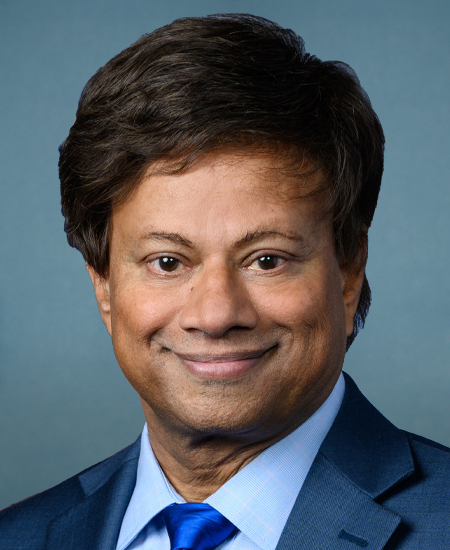
Rep. Shri Thanedar
Sponsored bills
Maddy summaryThe Returning Home Act establishes a federal grant program to provide rental assistance and housing support for individuals recently released from prison, jail, juvenile facilities, or halfway houses. It allocates $100 million annually to fund 24 months of rental assistance, family stipends for household support, and services like housing counseling, case management, and help with security deposits. The program prioritizes people at risk of homelessness after incarceration, requiring grantees to use at least 60% of funds for direct rental payments and 15% for landlord incentives. It explicitly replaces "offender" language with "individual" throughout to focus on people reentering communities, not criminal labels.
Maddy summaryThis bill prohibits naming any federal building, land, or asset after a sitting president and requires reverting any existing names given to such property during the current presidency back to their prior designations. It applies to all federal property, preventing the executive branch from using federal funds or authority to rename locations for personal recognition during a president's term. The law would take effect immediately upon enactment, restoring previous names for any property renamed under this practice.
Maddy summaryHR 926, the Fort Pillow National Battlefield Park Study Act, directs the Secretary of the Interior to conduct a special resource study of Fort Pillow Historic State Park in Tennessee. The study will evaluate the site's national significance and determine if designating it as a National Battlefield Park is suitable and feasible. This bill does not change the park's current status as a state park (established 1971) or its existing National Register and National Historic Landmark designations. The study is prompted by the historical importance of the 1864 Fort Pillow Massacre, particularly its impact on U.S. Colored Troops during the Civil War, as detailed in congressional findings. The bill itself is procedural, focusing solely on authorizing the study to inform potential future designation.
Maddy summaryHR 7046, the Qualified Immunity Abolition Act of 2026, removes qualified immunity as a defense in civil rights lawsuits against law enforcement officers. It directly affects federal, state, and local law enforcement officers by eliminating their ability to avoid liability in cases where they allegedly violated constitutional rights. The bill amends Section 1983 of federal law to prohibit using four specific defenses: claiming good faith, believing conduct was lawful, arguing rights weren't clearly established, or asserting the law was unclear at the time. This change means officers can no longer dismiss lawsuits based on these arguments after the bill's enactment. The law applies to all civil actions pending or filed after the effective date.
Maddy summaryThis bill establishes minimum salary and wage standards for paraprofessionals and education support staff in public schools. It requires states to set a minimum annual salary of $45,000 for full-time staff (increasing with inflation after 2030) and a minimum hourly wage of $30 for part-time staff (also inflation-adjusted). The federal government will provide $25 billion in FY2026, with annual funding increases, to help states implement these standards through grants. States must ensure all local schools meet these minimums within 4 years of receiving funds, with 98% of grant money allocated directly to schools for salary increases or professional development.
Maddy summaryThis bill requires companies to use non-animal testing methods for products regulated by the FDA, EPA, USDA, or Consumer Product Safety Commission when such methods are available and accepted by the agency. It bans submission of new animal test data for these products unless specific exceptions apply (like historical data or foreign regulatory needs). Companies must minimize animal use and suffering if non-animal methods aren't feasible, and agencies must publish annual reports tracking animal use and waivers. Violations could result in civil penalties up to $10,000 per instance.
Maddy summaryHR 6271, the Food Bank Emergency Support Act of 2025, appropriates $462.5 million to prevent cuts to food assistance benefits during funding shortfalls or government shutdowns. The funds are specifically designated under the Food and Nutrition Act of 2008 to maintain existing benefit levels for programs like SNAP (Supplemental Nutrition Assistance Program) and food bank commodity distributions. It ensures these services continue without interruption, including barring furloughs for personnel involved in food distribution during emergencies. The bill directly supports food banks, grocery retailers distributing benefits, and millions of low-income households relying on these services. It takes effect as if enacted on September 30, 2025.
Maddy summaryHR 6277, the SAWMILL Act, creates a loan guarantee program to support rural sawmills and wood-processing facilities. It provides guaranteed loans to eligible entities (like sawmill owners in rural areas) seeking to establish, expand, or improve operations within 250 miles of federal lands identified for ecological restoration involving vegetation removal. The program aims to reduce the cost of these restoration projects by ensuring local mills process the removed vegetation. The Department of Agriculture will offer up to $220 million in total loan guarantees under this program, with specific conditions set by the Secretary.
Maddy summaryHR 6088, the *Restoring Food Security for American Families and Farmers Act of 2025*, repeals specific sections (10101-10108) from a prior reconciliation law. This action revives previous provisions related to food security programs that were modified by those repealed sections. The bill directly affects federal food assistance and agricultural support programs by restoring their prior legal framework. It does not create new policies but reverses recent changes to existing food security measures.