

Maddy summaryHRES 1058 is a non-binding House resolution recognizing the federal government’s duty to develop a Transgender Bill of Rights. It calls for specific policy changes, including amending civil rights laws to explicitly prohibit discrimination based on gender identity in employment, housing, and public accommodations; protecting access to gender-affirming medical care; and streamlining legal recognition of gender identity on federal documents like passports and voter registration. The resolution also proposes expanding protections for transgender and nonbinary individuals in healthcare, education, immigration, and correctional facilities, while emphasizing community-led policy development. As a resolution, it does not create new law but sets a framework for future legislative action.
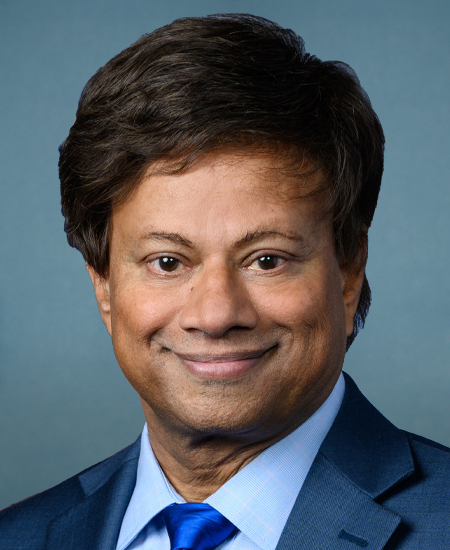
Rep. Shri Thanedar
Sponsored bills
Maddy summaryHR 7497 establishes a new grant program to fund trauma-informed mental health support in schools, authorizing $50 million annually from 2027-2031. It directly affects students, teachers, school staff, and community mental health providers by requiring grantees to develop collaborative services between schools and local mental health systems. Key provisions include funding evidence-based staff training on trauma-informed practices, creating school-community partnerships, and ensuring culturally competent services for students - including those with disabilities. The bill mandates that funds supplement, not replace, existing resources and requires grantees to coordinate with agencies like child welfare and juvenile justice through formal interagency agreements.
Maddy summaryThe WORK to Save Lives Act requires the Occupational Safety and Health Administration (OSHA) to issue two types of guidance within 270 days of enactment. For private employers (excluding the U.S. Postal Service), OSHA must provide non-mandatory guidance on acquiring naloxone kits and offering annual employee training for opioid overdose emergencies. For all federal agencies (including the Veterans Health Administration), OSHA must issue mandatory regulations requiring agencies to maintain naloxone kits and provide annual employee training on their use. The bill directly affects private businesses and federal workplaces by establishing specific, time-bound requirements for opioid overdose response preparedness.
Maddy summaryThe Patient Debt Relief Act (HR 7478) requires Medicare-participating hospitals to implement new financial assistance and debt collection standards starting January 1, 2028. It prohibits hospitals from garnishing wages, placing home liens, or selling medical debt to collectors without offering income-based repayment plans (capping payments at 4% of monthly income) and providing clear eligibility information with bills. Hospitals failing to comply face civil penalties up to $1 million per violation, with annual audits and a public portal for patients to report noncompliance. The bill also creates a $100 million grant program to discharge medical debt for individuals meeting income thresholds (5% of income or household income ≤400% of poverty line). These changes directly affect hospitals and patients burdened by medical debt, aiming to standardize fair collection practices.
Maddy summaryThis bill requires U.S. Immigration and Customs Enforcement (ICE) and Customs and Border Protection (CBP) to visibly display license plates on all vehicles used for civil immigration enforcement activities, funded by federal money. It directly affects ICE and CBP operations by mandating that these vehicles show license plates at all times, making their presence more transparent to the public. The key provision ties federal funding for such vehicles to this transparency requirement, ensuring compliance with the rule. The bill aims to increase public awareness of enforcement vehicle locations during civil immigration activities.
Safe Vehicle Access for Survivors Act This bill requires providers of connected vehicle services, upon the request of a domestic violence survivor, to terminate or disable an identified domestic abuser’s access to a vehicle’s connected capabilities and data. Specifically, within two business days of receiving a request from a survivor, a covered provider must, if technically feasible (1) terminate or disable the connected vehicle account associated with the identified abuser or the relevant vehicle, or the vehicle’s connected capabilities; or (2) instruct the survivor on how to terminate or disable connected services directly. Covered providers may not make the termination of connected vehicle services or accounts contingent on any requirement other than the provision of specified information by the survivor. For example, a provider may not require a survivor to pay a fee or extend their contract with the provider. Under the bill, an abuser is an individual identified by a survivor who committed or allegedly committed certain acts against the survivor, including domestic violence, sexual assault, stalking, and sex trafficking. A survivor is an adult against whom such an act was committed. Further, a covered provider is a vehicle manufacturer, affiliate, or entity acting on behalf of a manufacturer that provides a connected vehicle service. Connected vehicle service is any capability that enables a person to remotely access data from or send commands to a vehicle. Finally, the Federal Communications Commission must prescribe regulations governing how covered providers address survivors’ requests related to connected vehicles.
Maddy summaryThe USMCA Travel and Tourism Resiliency Act (HR 7454) directs the U.S. Trade Representative to advocate for a new Travel and Tourism Trade Working Group under the USMCA during the next joint review. This group, co-chaired by the U.S., Canada, and Mexico, would include U.S. agencies like Commerce and Homeland Security and seek input from the travel industry to boost tourism competitiveness and exports. It requires annual meetings and regular congressional briefings, aiming to support an industry that generated $214 billion in U.S. tourism exports in 2024. The bill directly affects U.S. government agencies and the travel sector, focusing on enhancing cross-border tourism cooperation.
Maddy summaryThis bill imposes a hiring freeze on U.S. Immigration and Customs Enforcement (ICE), prohibiting the use of federal funds to hire new employees or transfer existing federal workers to ICE. The freeze begins upon the bill's enactment and automatically ends when Congress passes a specific law overriding it. It directly affects ICE's staffing capabilities by halting new appointments and transfers using federal funding. The measure is procedural, focusing solely on restricting hiring authority without altering immigration enforcement policies.
Maddy summaryHR 7391, the Community Health Center Drug Pricing Protection Act, requires that Federally Qualified Health Centers (FQHCs) pay the discounted 340B ceiling price for covered drugs **at the time of purchase**, not later through rebates or adjustments. This directly affects FQHCs, which rely on 340B discounts to provide affordable care to low-income patients. The bill amends the Public Health Service Act to prohibit manufacturers from entering agreements where FQHCs initially pay more than the ceiling price, with later reimbursement. It takes effect immediately upon enactment for all new drug purchases and applies to existing agreements starting then.
Maddy summaryThis bill requires the federal government to publicly disclose detailed information about grants awarded to nonprofit organizations for security improvements. It mandates two types of reports: (1) a pre-grant report 7 days before distributing funds, listing recipient names, addresses, grant amounts, and whether they're in high-risk urban areas; and (2) an annual report 90 days after each fiscal year, showing state-level application data, grant expenditures, and program operations. The reports are submitted to specific congressional committees and directly affect nonprofit organizations receiving these grants, as well as the federal administrators managing the program. The law focuses on making grant distribution more transparent by requiring specific, publicly available data points.