

Love Lives On Act of 2025 This bill extends entitlement for various benefit programs and services for surviving spouses of deceased members of the Armed Forces or veterans. The bill provides that the remarriage of a surviving spouse must not bar the furnishing of dependency and indemnity compensation or special pension benefits to such spouse. Additionally, the Department of Defense may not terminate the payment of an annuity for a surviving spouse under the Survivor Benefit Plan solely because the surviving spouse remarries. The bill also expands the definition of a dependent under TRICARE to include a remarried widow or widower whose subsequent marriage has ended due to death, divorce, or annulment.
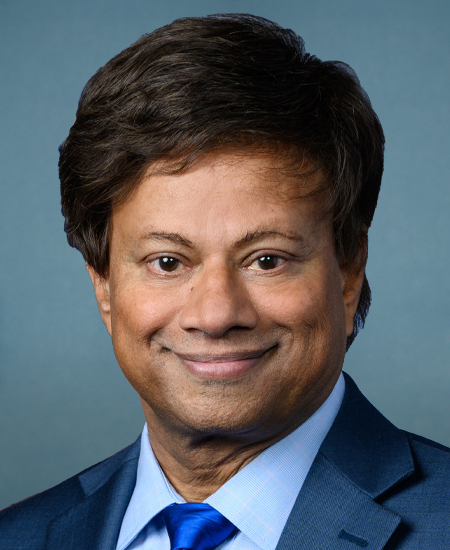
Rep. Shri Thanedar
Sponsored bills
Maddy summaryThis bill establishes a new annual wealth tax on individuals with net assets exceeding $50 million, requiring them to pay a percentage of their total asset value each year. The tax applies a 2 percent rate to assets between $50 million and $1 billion, with a higher rate of 3 percent or 6 percent on assets above $1 billion depending on whether a universal health insurance program is enacted. Married couples are taxed as a single unit, and certain assets like primary residences and small personal items are excluded from the calculation. The legislation also mandates enhanced reporting requirements for asset values, requires the IRS to audit at least 30 percent of taxpayers subject to this tax annually, and authorizes $100 billion in funding over ten years to support enforcement and administration of the new tax system.
Maddy summaryThis resolution formally recognizes the 1971 atrocities in East Pakistan as genocide and calls on the U.S. President to officially label the events as crimes against humanity and war crimes. It specifically highlights the targeted persecution of Hindu religious minorities, who were systematically killed, raped, and expelled by Pakistani military forces and allied Islamist groups. The bill does not impose new laws or sanctions but serves as a congressional statement to preserve historical memory and condemn the documented violence against civilians. It also affirms that entire ethnic or religious groups are not responsible for the actions of their individual members.
Maddy summaryHR 7522, the Improving Access to Nutrition Act of 2026, removes work requirements from the Supplemental Nutrition Assistance Program (SNAP). It directly affects approximately 6.1 million SNAP recipients currently subject to these requirements, including people with health issues, Black Americans disproportionately impacted by such rules, families with children, and individuals experiencing homelessness. The bill amends the Food and Nutrition Act of 2008 by striking subsection (o) and related provisions that mandate work requirements for SNAP eligibility. This change would eliminate a barrier that studies show reduces participation without reducing poverty and increases administrative burdens. The bill does not create new benefits but removes an existing eligibility requirement affecting vulnerable populations.
Maddy summaryHR 7251, the "Prohibit Partisan Park Passes Act," amends federal law to prevent the use of living political figures on National Park Service and federal recreational lands passes. The bill specifically prohibits including images of current or former elected officials or other living political figures on these passes. This change directly affects the National Park Service, which issues the passes, and ensures the design remains neutral. The law modifies existing regulations under the Federal Lands Recreation Enhancement Act to remove partisan imagery from these commonly used visitor passes.
Maddy summaryThis bill, known as the Keep Innovators in America Act, modifies immigration rules for international students in the United States. It allows students on F-1 visas to work in their field of study after completing their degree requirements, provided the Department of Homeland Security approves the terms. The legislation also permits these students to maintain their student status while their family petitions for permanent residency are pending or approved. These changes aim to extend work opportunities for international graduates without altering their primary student visa classification.
Maddy summaryThis bill requires the Department of Homeland Security to release specific documents and materials related to two types of incidents: any officer-involved shootings that occurred on or after January 20, 2025, and any deaths of individuals in DHS custody during the same period. The law mandates that the DHS Secretary provide these records to congressional committees within 30 days of the bill's enactment. Required materials include video footage from body cameras and other recording devices, written reports, witness statements, internal communications, training records, and any disciplinary actions taken against involved officers. The bill also specifies that documents should be provided in unredacted form whenever possible, with written justifications required for any redactions made under legal authority.
Maddy summaryThe Energy Bills Relief Act aims to lower household energy costs and accelerate the development of low-cost, clean energy by modifying federal tax credits, expanding weatherization programs, and streamlining permitting processes. Key provisions include restoring tax incentives for renewable energy projects, increasing funding for low-income heating assistance, and requiring federal agencies to treat wind, solar, and storage projects with the same procedural fairness as oil and gas projects. The bill also establishes new incentives for upgrading the electricity grid, such as tax credits for transmission lines and grants for wildfire prevention measures, while creating mechanisms to ensure utilities serve public interests and protect consumers from price volatility.
Maddy summaryThe Feeding Families Not Fear Act of 2026 reverses specific provisions from the One Big Beautiful Bill Act of 2025 by restoring funding and benefits that were previously cut. It directly affects low-income families and individuals who rely on the Supplemental Nutrition Assistance Program (SNAP) by reinstating benefits that were reduced under earlier legislation. The bill achieves this by repealing two sections that increased funding for immigration and customs enforcement and another section that modified SNAP benefits under the Food and Nutrition Act of 2008. By removing these changes, the legislation returns SNAP provisions to their previous state as if the 2025 law had not been enacted.
Maddy summaryThis bill requires the Department of Veterans Affairs (VA) to cover abortion care, counseling, and related medication as part of standard hospital and medical services for eligible veterans and certain dependents. It amends VA healthcare law to explicitly include these services under existing coverage for veterans qualifying under section 1703 and dependents eligible under section 1781(a). The policy directly affects veterans and their dependents enrolled in VA healthcare programs by expanding covered benefits to include abortion-related care. This is a concrete policy change to VA healthcare benefits, not a broader abortion law.