

Maddy summaryThe PREPARE Act establishes a new pre-disaster mitigation loan program for small businesses through the Small Business Administration (SBA). It authorizes $25 million annually from 2024 to 2028 to provide loans of up to $500,000 per business, enabling small businesses to fund projects that protect their property and operations from disaster damage (e.g., flood barriers or structural reinforcements). The SBA must conduct targeted outreach to businesses in economically distressed areas, offer technical assistance, and require borrowers to maintain insurance during loan terms. Annual reports will track program outcomes, including project types, cost savings avoided, and regional impacts, to evaluate effectiveness.
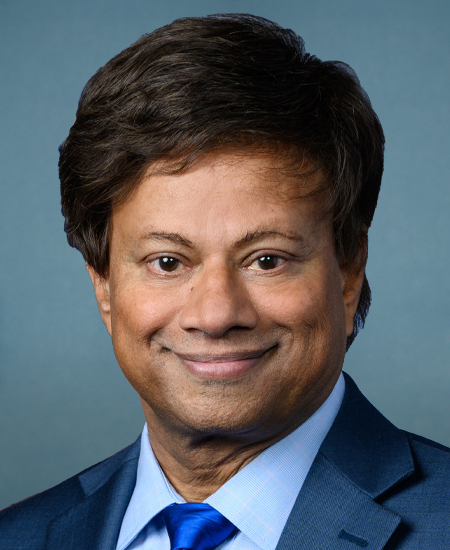
Rep. Shri Thanedar
Sponsored bills
Maddy summaryThe Child Care for Working Families Act establishes a federal entitlement program providing subsidized child care for working families with children under age 6 who are not yet in kindergarten. It creates a sliding fee scale where families at or below 85% of State median income pay no copayment, while higher-income families pay up to 7% of their income based on income thresholds. The bill requires states to develop quality rating systems for child care providers and ensures providers receive sufficient funding to meet quality standards, including wages equivalent to elementary educators. It prioritizes access for underserved populations including children with disabilities, infants and toddlers, children experiencing homelessness, and families in low-income communities. The program is funded with $20 billion for fiscal year 2024 and subsequent years through 2029.
Forced Arbitration Injustice Repeal Act of 2023 or the FAIR Act of 2023 This bill prohibits a predispute arbitration agreement from being valid or enforceable if it requires arbitration of an employment, consumer, antitrust, or civil rights dispute.
Maddy summaryThe RAP Act of 2023 (HR 2952) would prevent prosecutors and plaintiffs from using a defendant’s creative or artistic works - such as poems, songs, art, or films - as evidence in court, unless specific exceptions apply. It requires the government to prove by clear evidence that the work was meant literally (not figuratively), directly relates to the specific facts of the case, is relevant to disputed facts, and has unique value beyond other evidence. If admitted, courts must redact the work to limit its presentation and provide jury instructions about its restricted use. This bill directly affects defendants in both criminal and civil cases who create artistic expression, aiming to protect their creative works from being misused in legal proceedings.
Maddy summaryThe Combating Child Labor Act strengthens penalties for employers violating child labor laws under the Fair Labor Standards Act. It increases criminal fines to $500,000 or up to 10 years in prison for willful violations causing death or serious injury to children under 18, and raises civil penalties for such violations up to $700,000 per incident. The bill also requires the Department of Labor to publish an annual report detailing child labor violations, including employer names, types of violations, and trends by industry or region. This report will help track enforcement efforts and identify high-risk areas, directly affecting employers who violate child labor rules and the Department of Labor’s oversight role.
Water Infrastructure Sustainability and Efficiency Act or the WISE Act This bill requires each state to use a certain percentage of funds it receives for capitalization of its clean water state revolving fund for projects to address green infrastructure, water or energy efficiency improvements, or other environmentally innovative activities.
Maddy summaryThis bill would remove time limits for filing civil and criminal cases related to child sexual abuse, exploitation, and sex trafficking, directly helping survivors who have been unable to seek justice due to expired statutes of limitations. It requires states to eliminate all civil and criminal statutes of limitations for these crimes and to revive previously time-barred civil claims, with a minimum of two years or until the victim turns 55 - whichever is longer. The bill also provides federal grants to states that adopt these reforms, with funding increasing based on how many changes they implement (e.g., 40% for states achieving all three key reforms).
Raise the Age Act of 2023 This bill establishes new restrictions on the sale or transfer of certain semiautomatic firearms to individuals under 21 years of age. Specifically, this bill makes it unlawful for a licensed gun dealer, importer, manufacturer, or collector to sell or deliver a semiautomatic center-fire rifle or semiautomatic center-fire shotgun that has (or has the capacity to accept) an ammunition feeding device with a capacity of more than five rounds to an individual who the licensee knows or has reasonable cause to believe is under age 21. The prohibition does not apply if the individual under age 21 is a full-time law enforcement officer or active-duty member of the Armed Forces. The bill also requires the Federal Bureau of Investigation to report on the operation of its public access line, including a description of information sharing protocols and recommendations for improving such protocols.
Maddy summaryHR 2370, the Access to AEDs Act, authorizes $25 million in federal funding (2024-2028) to help public elementary and secondary schools improve access to automated external defibrillators (AEDs) and CPR training. The bill directs the Secretary of Health and Human Services to award grants to school districts and partners for developing AED programs, training staff and students, purchasing and maintaining AEDs, and creating cardiac emergency response plans. It specifically targets schools to address sudden cardiac arrest (SCA), which is a leading cause of death among student athletes and youth, with 90% of SCA victims dying without immediate CPR and defibrillation. The law requires grantees to report on their activities and establishes a clearinghouse to collect data on school AED access and costs.
Maddy summaryThe Young Americans Financial Literacy Act would create federal grants to fund centers of excellence that develop and deliver research-based financial education programs for young people aged 8-24. These programs would teach essential money management skills like budgeting, saving, debt management, and financial decision-making, with a focus on accessibility through digital and traditional methods. The bill authorizes $27.5 million to $55 million annually (through 2025) for these centers, prioritizing programs serving at-risk youth, families, and communities facing financial challenges. Centers must use evidence-based approaches, address unique needs (e.g., student loans, predatory lending), and report annually to Congress on their outcomes.