

Maddy summaryHR 6616, the College Athlete Right to Organize Act, redefines college athletes receiving athletic scholarships or stipends as "employees" under labor law, granting them the right to form unions and negotiate collectively with their schools and athletic conferences. The bill amends the National Labor Relations Act to allow multi-school bargaining units within athletic conferences (e.g., all teams in the Big Ten), enabling athletes to collectively address terms like pay, safety, and working conditions. It directly affects scholarship athletes at both public and private universities who compete in intercollegiate sports, excluding only non-compensated athletes. The bill explicitly states it will not change tax treatment of scholarships or eligibility for federal financial aid.
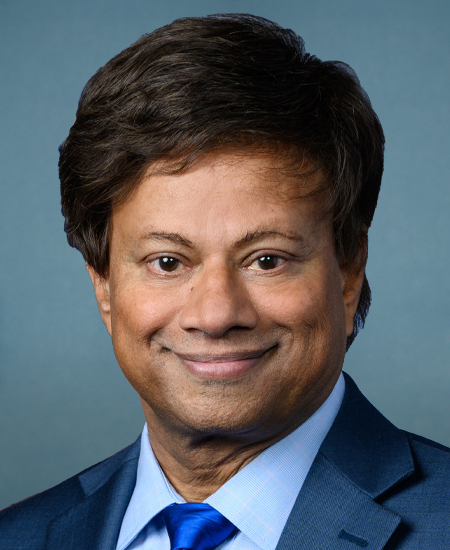
Rep. Shri Thanedar
Sponsored bills
Maddy summaryThe Workers POWER Act (HR 6634) strengthens federal labor enforcement by expanding staffing and resources for the Department of Labor's Wage and Hour Division and Occupational Safety and Health Administration (OSHA). It creates new paid student positions (5 in Washington, DC, plus 2 per regional office), establishes child labor fellowships (5 per agency), and increases student loan repayment benefits for eligible employees. The bill also authorizes performance-based bonuses, retention incentives, and $250 million annually in grants to states to improve their labor enforcement capacity. These changes directly affect Department of Labor enforcement staff and state/local labor agencies working to address wage theft, child labor, and workplace safety violations.
Maddy summaryHR 6592, the Fight Book Bans Act, provides federal grants to reimburse public school districts for legal costs when they choose to keep instructional or library materials after parental objections. It directly affects school districts (covered local educational agencies) that select materials for students and handle challenges to their removal. The bill authorizes up to $100,000 per case in grants to cover attorney fees and court costs, provided the district didn’t remove the materials and wasn’t reimbursed by the state. Funding of $15 million is authorized for fiscal years 2024-2028. The grants are strictly for legal challenges to decisions not to remove materials, not for the content of the materials themselves.
Maddy summaryHRES 907 is a non-binding House resolution condemning rising antisemitism in the U.S., citing increased hate crimes (25% rise in 2022 per FBI data) and campus incidents (41% increase from 2021-2022 per ADL). It calls on all Americans, including campus leaders and government agencies, to combat antisemitism and urges implementation of the U.S. National Strategy to Counter Antisemitism. The resolution specifically requests increased funding for the Nonprofit Security Grant Program to strengthen safety protections for Jewish communities. It directly affects Jewish Americans, campus communities, and government agencies responsible for hate crime prevention and community safety.
Maddy summaryThis bill (HR 6553) waives all costs for U.S. government-led evacuations of American citizens from Israel, Gaza, the West Bank, and nearby countries (like Cyprus) between October 7 and November 17, 2023. It directly affects U.S. citizens endangered by the Hamas-led attacks on October 7 and subsequent conflict. The key mechanism amends existing law to require the State Department to cover all expenses related to these evacuations through government-coordinated transport, eliminating repayment obligations for affected citizens. This policy change applies specifically to evacuations during that defined period following the October 7 attacks.
Maddy summaryHR 6527, the JUST Act of 2023, strengthens civil rights accountability within the USDA by requiring corrective actions for employees found to have engaged in discriminatory practices, retaliation, or misconduct (such as denying service receipts or delaying applications). It establishes a new Assistant Secretary for Civil Rights position to oversee compliance, creates an independent Civil Rights Ombudsperson office to assist program participants, and grants the Assistant Secretary authority to provide equitable relief - such as restoring denied benefits - to individuals who faced discrimination. The bill directly affects USDA employees, program applicants, and participants (including farmers and ranchers) by streamlining complaint resolution and shifting the burden of proof to the USDA in appeals. These changes aim to improve transparency and fairness in USDA program access.
Maddy summaryHR 6318, the Public Housing for the 21st Century Act of 2023, requires the Department of Housing and Urban Development (HUD) to identify and share best practices for developing mixed-income public housing. It directs HUD to create training and technical assistance for state and local governments, public housing agencies, and housing finance agencies on using local tools - like tax incentives, public land, and cross-subsidizing market-rate units - to increase affordable housing for extremely low-, very low-, low-, and moderate-income households. The bill focuses on maximizing the use of existing Federal subsidies to target the most vulnerable residents while ensuring developments maintain affordability and avoid displacing neighboring communities. This law does not create new funding but aims to improve how current resources are applied to expand affordable housing supply.
Maddy summaryHRES 793 is a resolution passed by the U.S. House of Representatives calling on Hamas to immediately release all 199 hostages taken during Hamas' October 7, 2023 attack on Israel. The resolution condemns Hamas for the attack, the taking of hostages, and threats against hostages, while stating that holding hostages violates international humanitarian law under the Geneva Conventions. It demands the immediate release of all hostages and expresses sympathy for victims and their families. As a symbolic resolution, it does not create legal obligations but formally expresses the House's position.
Maddy summaryHRES 114 is a resolution proposing to expel Representative George Santos from the U.S. House of Representatives, citing constitutional authority under Article I, Section 5, Clause 2. It directly targets Santos, who was a sitting member of the House at the time of introduction. The resolution follows the House's constitutional power to expel members for misconduct, though it does not specify the alleged violations. This procedural resolution was referred to the Committee on Ethics for review.
Maddy summaryHR 6451, the Mental Health Justice Act of 2023, provides $250 million in federal grants to states, tribes, and localities to hire mental health professionals as first responders for specific emergencies. It directs these professionals to replace police in situations involving mental health crises, substance use, or intellectual/developmental disabilities - such as when a 911 caller describes a mental health emergency or a first responder identifies someone needing mental health support. The bill requires grantees to train responders in de-escalation techniques, link individuals to community-based services (not incarceration), and report on outcomes like reduced arrests or use of force. It also mandates data collection on demographics and prevents funneling people into institutional settings, with annual reports to Congress on program effectiveness.