

Maddy summaryThe Connected Vehicle Security Act of 2026 restricts the importation, sale, and manufacture of vehicles and related technology from specific countries, including China, Russia, Iran, and North Korea, to address national security concerns. The law defines prohibited items as connected vehicles, their software, and hardware components and sets different effective dates, with vehicle bans starting in 2027 and hardware restrictions beginning in 2030. A government official can grant exceptions for specific items after reviewing security risks and notifying Congress, while the agency must publish annual reports on enforcement actions and compliance.
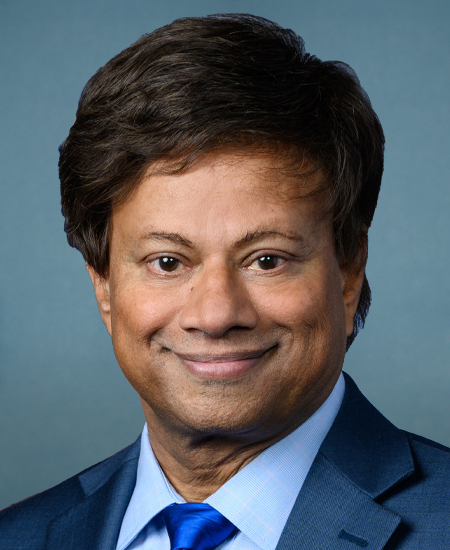
Rep. Shri Thanedar
Sponsored bills
Maddy summaryThis resolution formally designates May 10, 2026, as National Asian American, Native Hawaiian, and Pacific Islander Mental Health Day to raise awareness about mental health within these communities. The text highlights that many individuals in this diverse group face barriers to care, including high costs, language differences, and cultural stigma, which result in low rates of treatment utilization. While the measure itself is symbolic and does not create new laws or funding, it encourages federal, state, and local agencies to develop policies that improve access to culturally and linguistically appropriate mental health services.
Maddy summaryThis bill proposes a constitutional amendment to limit the tenure of Supreme Court justices to a maximum of 18 years. It would apply to all current justices, terminating their terms if they have already served 18 years or more, and would require the Chief Justice to be replaced according to existing laws if their term ends. The amendment aims to address concerns about judicial longevity by establishing a fixed term for all justices on the nation's highest court.
Maddy summaryThis House Resolution formally recognizes the contributions of elementary and secondary school teachers in the United States. It thanks educators for their dedication to students and communities during National Teacher Appreciation Week. The measure encourages parents, administrators, and officials to acknowledge the profession during the designated week in May.
Maddy summaryThis bill requires the Government Accountability Office to evaluate how well the Transportation Security Administration follows non-discrimination rules during passenger screenings. The report, due within 90 days of enactment and then every year, will be sent to specific congressional committees to highlight any areas needing improvement. It directly affects the TSA by mandating regular oversight of its security practices to ensure they do not discriminate against travelers. The legislation aims to increase transparency and accountability without changing the actual security procedures themselves.
Maddy summaryH.R. 1243 is a House resolution that formally recognizes May as Asian American, Native Hawaiian, and Pacific Islander Heritage Month to celebrate the contributions of these communities to U.S. history. The bill highlights the diverse populations, historical milestones, and significant achievements of Asian Americans, Native Hawaiians, and Pacific Islanders in government, the military, and society. It also acknowledges the ongoing challenges faced by these groups, including a rise in hate crimes and historical discrimination. As a commemorative resolution, the measure does not create new laws or funding but serves to express official congressional appreciation and awareness.
Maddy summaryThe CHARTER Act aims to ensure that public funds for charter schools are not used to generate profits for for-profit companies. It directly affects charter schools receiving federal money by prohibiting them from contracting with for-profit entities to run, manage, or oversee their daily operations. While the bill allows schools to hire for-profit vendors for specific services like food, supplies, and transportation, it strictly bans contracts where a for-profit company controls the school or takes a cut of its revenue. These rules will only apply to new or renewed contracts made after the law is passed, with full enforcement beginning three years later.
Maddy summaryThis bill, titled the Protecting Human Rights and Public Health in Foreign Assistance Act, aims to cancel specific regulations issued by the Department of State. It directly affects the federal government by prohibiting any department or agency from enforcing, implementing, or proposing rules related to protecting life, combating discriminatory equity ideology, and combating gender ideology in foreign aid programs. The legislation treats these cancelled rules as if they never existed, effectively nullifying their impact on future foreign assistance policies.
Maddy summaryThis bill, known as the Lowering Utility Bills Act, aims to reduce electricity and natural gas costs by regulating how utility companies calculate their profits and what expenses they can pass on to customers. It requires transmission providers and investor-owned utilities to determine a reasonable profit range based on historical stock market returns from academics, large financial institutions, and major global banks, then generally limits their authorized profit to the lowest point in that range. Additionally, the legislation bans utilities from recovering specific costs in customer rates, including lobbying fees, political contributions, executive travel, and entertainment expenses. The bill also mandates that utilities prioritize lower-cost grid technologies in their planning and requires them to publicly justify any decision to use a higher profit rate than the standard minimum.
Maddy summaryThis resolution officially designates the week of April 24 through April 30 as the annual "National Reentry Week" to raise awareness about the challenges formerly incarcerated individuals face when returning to society. The bill highlights the need for better support systems, such as access to housing, education, job training, and mental health services, to help reduce recidivism rates. It encourages the Department of Justice and the Bureau of Prisons to coordinate reentry efforts and engage in related events during this designated week. While the measure does not change laws or allocate funding, it serves to focus national attention on policies that promote successful reintegration and public safety.