

Maddy summaryHRES 1242 is a congressional resolution calling for equal prioritization of mental health care alongside physical health to address the U.S. suicide and drug overdose crises. It urges enforcement of existing mental health parity laws in insurance coverage and aims to reduce stigma through public awareness. The resolution supports the 2024 National Strategy for Suicide Prevention and recommends increased funding for mental health workforce development, medication-assisted treatment, culturally appropriate services, and school-based mental health resources. As a non-binding resolution, it expresses congressional support for these measures without creating new laws.
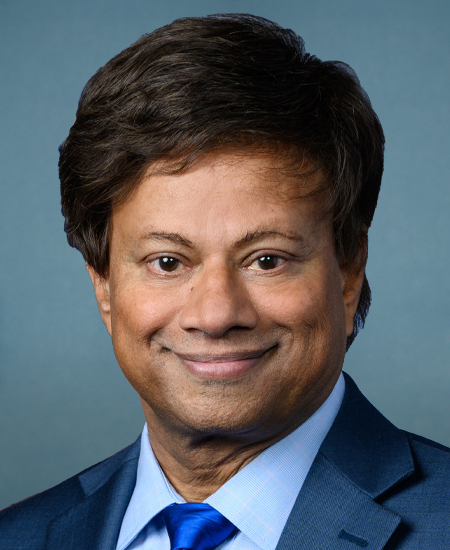
Rep. Shri Thanedar
Sponsored bills
Maddy summaryThis bill reauthorizes the National Alzheimer's Project Act through 2035 (extending the previous deadline of 2025) and adds new requirements to promote healthy aging and reduce Alzheimer’s risk factors. It mandates the program to provide information on healthy behaviors that may lower cognitive decline risk and expands the advisory group to include representatives from agencies like the Department of Justice, FEMA, and Social Security Administration, plus experts with diverse clinical trial experience. The bill directly affects Alzheimer’s research, care programs, and the federal advisory group overseeing national efforts. Key changes include requiring annual evaluations instead of initial ones and adding a focus on reducing health disparities in Alzheimer’s initiatives.
Maddy summaryThis bill requires federal agencies to write contracting notices for small businesses in clear, concise language that follows existing federal plain language guidelines. It directly affects small businesses seeking government contracts by mandating that notices published on the government-wide online portal include key terms to help them quickly identify and understand opportunities. Key provisions include requiring notices to be accessible to small business concerns and directing the Small Business Administration to issue implementing rules within 90 days of enactment. The bill does not create new funding requirements but aims to reduce confusion in federal contracting communications.
Maddy summaryThis resolution (HRES 616) condemns the Taliban's ongoing human rights abuses in Afghanistan, specifically targeting women, girls, religious minorities (including Hazaras and Sikhs), and ethnic groups. It expresses support for Afghans who assisted U.S. missions and calls for the U.S. government to halt Taliban violence and address systemic repression. Key mechanisms include urging the State Department to assess potential crimes against humanity, developing strategies to support human rights defenders, and expediting refugee processing for Afghans with Special Immigrant Visas. The resolution does not impose new legal requirements but formalizes congressional stance and policy guidance. It directly affects U.S. foreign policy implementation toward Afghanistan.
Maddy summaryHR 8422 creates new federal programs to address mental health needs after major disasters. It authorizes FEMA to deploy mobile mental health crisis units for up to two years post-disaster, staffed by trained professionals providing culturally appropriate care like crisis counseling. The bill also establishes $44 million annually in grants for states and tribal governments to fund mental health services, prioritizing areas with the highest unmet needs. Additionally, it requires FEMA to research how disasters impact mental health disorders across different communities, including racial and socioeconomic groups.
Maddy summaryHR 8376, the Latino Youth Mental Health Empowerment Act, aims to address mental health disparities affecting Hispanic and Latino youth by requiring a national awareness campaign and two key studies. The bill mandates a $5 million campaign (2025-2029) to combat stigma and increase access to culturally competent mental health resources for youth, parents, and school staff through materials, workshops, and screenings. It also requires a study on mental health barriers and suicide rates (with a report to Congress within one year) and a separate study on the shortage of Hispanic/Latino mental health professionals, both requiring disaggregated data by race, ethnicity, and other factors. The bill directly targets Hispanic and Latino youth - facing higher rates of depression, suicide contemplation, and lower treatment access - by focusing on outreach, service improvements, and workforce development.
Maddy summaryThis bill directs the U.S. Department of Health and Human Services to issue guidance to states within one year on using Medicaid and CHIP programs to boost the pediatric mental health workforce. It requires states to implement strategies focused on recruiting and retaining pediatric mental health providers (including in rural/underserved areas and for racial/ethnic minorities), improving care for limited English proficiency patients, expanding telehealth services, and offering incentives like better reimbursement or student loan repayment. The guidance must cover specific approaches such as integrated care models and training for providers. States must report on implementing these strategies to Congress within two years. The bill directly affects states administering Medicaid/CHIP and pediatric mental health providers serving children.
Maddy summaryThe Public Service Freedom to Negotiate Act of 2024 establishes federal minimum standards for collective bargaining rights for public employees and supervisory employees. The Federal Labor Relations Authority will determine if each state's laws "substantially provide" for these rights, and if not, federal standards will apply to that state. These standards include the right to self-organization, collective bargaining, recognition of labor organizations, and procedures for resolving disputes. The bill preserves existing collective bargaining agreements and excludes certain employee categories like emergency services workers from some provisions.
Maddy summaryHRES 1228 is a ceremonial resolution passed by the U.S. House of Representatives to formally recognize May as Asian American, Native Hawaiian, and Pacific Islander (AANHPI) Heritage Month. It celebrates the historical contributions of AANHPI communities to the United States, citing their diverse cultural impact and key milestones like the completion of the transcontinental railroad. The resolution does not create new laws or policies but encourages the public to observe the month through educational programs and events. It directly affects all Americans by promoting awareness of AANHPI history and achievements, while acknowledging ongoing challenges like anti-Asian hate crimes.
Maddy summaryThe Rights for the TSA Workforce Act of 2024 would transition Transportation Security Administration (TSA) employees, particularly screening agents, from TSA-specific personnel rules to the standard federal government personnel system under Title 5 of the U.S. Code by December 31, 2024. The bill prohibits changes to current personnel policies for covered employees until the transition date and ensures no reduction in pay or benefits during the conversion process. It preserves certain benefits like law enforcement availability pay for Federal air marshals and maintains collective bargaining rights for screening agents. The bill also requires various reports to Congress on recruitment, implementation, diversity, and workplace safety to be submitted within specified timeframes.