

Maddy summaryHR 7190 would end immigration detention and electronic monitoring by requiring the immediate release of all detained noncitizens on their own recognizance within six months and repealing all federal laws authorizing detention. It prohibits using federal funds for detention facilities, ankle monitors, or immigration enforcement activities after specific deadlines (six months for monitors, two years for detention contracts). Instead, it establishes a new grant program to fund community-based wrap-around services - including housing, healthcare, mental health support, legal aid, and job training - provided voluntarily by non-profit organizations without surveillance or data sharing with federal agencies. The bill directly affects noncitizens currently held in detention or under electronic monitoring.
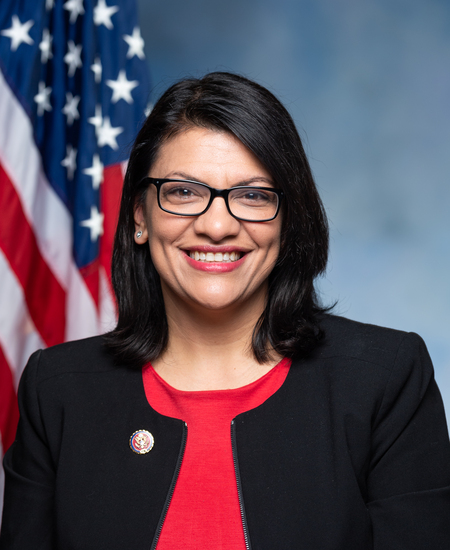
Rep. Rashida Tlaib
Sponsored bills
Maddy summaryThis bill requires the Department of Homeland Security to publicly share flight details within 72 hours for aircraft used by ICE, CBP, or the Coast Guard in immigration enforcement operations involving detention, deportation, or transporting individuals in custody. It mandates disclosure of specific data including departure/arrival times, airport codes, aircraft registration, number of detainees, and demographic information (nationality, age, family status, and restraints used). Private aircraft operators working directly with immigration enforcement agencies can no longer claim privacy for these flights, ending their eligibility to withhold such information. The law applies specifically to federally funded flights for immigration enforcement, not general aviation.
Maddy summaryThe MOLD Act (HR 7188) establishes uniform health and safety standards for military housing managed by private contractors, directly affecting approximately 700,000 service members and their families living in privatized housing across 78 developments. It requires the Defense Secretary to set enforceable limits on indoor humidity (below 50%), mandate third-party inspections after tenant complaints or unit turnover, and hold contractors fully responsible for mold remediation, relocation costs, and property damage. The bill also mandates public reporting of complaints, inspection results, and remediation timelines, and requires contractors to use certified professionals for mold assessments. These provisions aim to reduce mold-related health risks and improve accountability in privatized military housing.
Maddy summaryHR 7173, the Follow the Science Act, restricts political appointees from influencing National Institutes of Health (NIH) operations and grant decisions. It prohibits most political appointees (defined broadly as those in policy-making roles) from being employed by NIH or participating in grant reviews, funding selections, or policy implementation. The bill requires the NIH Director to report on past political appointee involvement in these activities to Congress within 30 days of enactment. These changes aim to ensure NIH decisions are based on scientific merit rather than political influence, with limited exceptions for other federal agencies.
Maddy summaryHR 7166, the Stop Online Ammunition Sales Act of 2026, requires all ammunition sales to occur in person with identity verification, directly affecting licensed ammunition dealers and unlicensed buyers. The bill mandates that dealers verify a buyer’s identity using a photo ID during every transaction and prohibits online or remote sales. It also creates new recordkeeping rules requiring dealers to report multiple sales of over 1,000 ammunition rounds to an unlicensed person within 5 business days. These provisions update existing federal firearms laws to apply specifically to ammunition transactions.
Maddy summaryHR 7138 disallows tax deductions for mortgage interest and depreciation on single-family homes (1-4 units) owned by large investment entities with over $100 million in assets, while imposing a 100% excise tax on sales or transfers of such properties. The bill directly affects institutional landlords (e.g., large real estate investment firms), excluding government entities, nonprofits, and federally assisted housing. Revenue from the tax will fund low-income housing programs via the Housing Trust Fund. It also prohibits Fannie Mae, Freddie Mac, and Ginnie Mae from purchasing or guaranteeing mortgages for these properties. The provisions apply 18 months after enactment.
Maddy summaryThe PATH to Education Act creates federal grants to help public transportation providers partner with educational institutions like community colleges, Head Start programs, and career schools to improve transit access for students. Grant funds can be used for adding bus stops or routes near campuses, increasing service frequency, or adjusting schedules to help students and Head Start participants commute. The bill allocates $1 million in 2027, rising to $5 million by 2031, with priority given to projects involving schools where over 25% of students receive Pell Grants. This policy directly affects transit agencies and eligible schools by funding concrete transit improvements to support education access.
Maddy summaryHRES 1004 is a symbolic House resolution honoring Dr. Martin Luther King, Jr.'s legacy by celebrating diversity and condemning hate. It specifically calls for the House to celebrate his 97th birthday on January 19, 2026, and to condemn harassment, discrimination, or prejudice targeting Black Americans, Indigenous people, Jewish, Asian-American/Pacific Islander, Muslim, Hispanic/Latino communities, and LGBTQ+ individuals. The resolution affirms Dr. King’s teachings on unity and equality but does not create new laws or impose obligations on any entity. As a ceremonial resolution, it has no legal effect and directly affects no individuals or groups.
Maddy summaryHR 7101, the "No Delay in Representation Act," requires the House of Representatives to seat members elected in special elections within five legislative days of certification of results. It mandates that newly elected members be sworn in and seated as House Members by this deadline, overriding any existing rules or laws that might delay the process. If a member declines the oath during this period, the Speaker must administer it on a mutually agreed date. This bill directly affects individuals elected to fill House vacancies through special elections, ensuring faster integration into the legislative body.
Maddy summaryThis bill requires federal agencies that use or fund complex AI systems (called "covered algorithms") to establish civil rights offices staffed by experts. These offices must monitor and report on potential bias in algorithms affecting programs like benefits, housing, or loans, particularly regarding traits like race, gender, or disability. Agencies must submit detailed reports every two years starting one year after the bill passes, outlining risks, mitigation steps, stakeholder engagement, and recommendations. The law also creates an interagency working group to coordinate efforts across agencies. It directly affects any federal agency using or overseeing such AI systems, aiming to prevent unfair outcomes through transparency and accountability.