

Medicare Negotiation and Competitive Licensing Act of 2021 This bill establishes several requirements relating to the prices of prescription drugs. Specifically, the bill requires the Centers for Medicare & Medicaid Services (CMS) to negotiate with pharmaceutical companies regarding prices for drugs covered under Medicare. (Current law prohibits the CMS from doing so.) If the CMS is unable to negotiate the price of a drug, such drug is subject to competitive licensing in order to further its sale under health insurance programs, notwithstanding existing government-granted exclusivities. The negotiated prices also apply to other federal health care programs, private health insurance, and the uninsured; pharmacies that charge more than the negotiated price for uninsured individuals are subject to civil penalties. Manufacturers must also comply with specified reporting requirements relating to prices and licensing, subject to civil penalties. The bill also institutes an excise tax on drugs for which the price spikes beyond a certain limit, subject to specified exemptions, as well as on drugs for which the price exceeds the negotiated price.
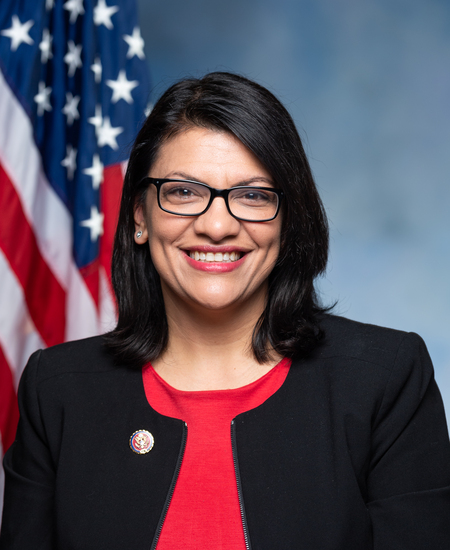
Rep. Rashida Tlaib
Sponsored bills
Protecting Access to Lifesaving Screenings Act of 2021 or the PALS Act This bill makes a series of changes relating to health insurance coverage of screening mammography. Specifically, the bill requires that any provision of law referring to current recommendations of the U.S. Preventive Services Task Force (USPSTF) with respect to breast cancer screening mammography be administered as if (1) the provision referred to USPSTF recommendations last issued before 2009; and (2) those recommendations applied to any screening mammography modality, including any digital modality of such a procedure. This requirement shall also apply to the Veterans Health Administration's policy on mammography screening for veterans. In addition, the bill preserves Medicare coverage for screening mammography, without a requirement for coinsurance, and expands the definition of screening mammography to include any digital modality of such a procedure. Further, the Centers for Medicare & Medicaid Services may not decrease the frequency with which screening mammography may be paid by Medicare for a woman over 39 years of age. In 2009, the USPSTF updated its guidelines to recommend against routine screening mammography for women between 40 to 49 years of age and to recommend biennial, instead of annual, screening mammography for most women between 50 to 74 years of age. In 2015, through the appropriations process, a three-year moratorium was placed on implementing the guidelines; the moratorium was subsequently renewed until January 1, 2023.
Improving Medicare Coverage Act This bill temporarily expands eligibility for Medicare. It also temporarily establishes a premium and cost-sharing assistance program for low-income beneficiaries. Specifically, the bill lowers the age of eligibility for Medicare from 65 to 60. The Centers for Medicare & Medicaid Services must establish procedures to provide for automatic enrollment of qualifying individuals. Enrollment must be completed within 11 months of the bill's enactment. The bill also establishes a program under Medicare to assist low-income Medicare beneficiaries with premiums, coinsurance, deductibles, and other costs. Currently, such assistance is provided through Medicare Savings Programs, which are administered by state Medicaid programs. The bill also establishes a related special enrollment period under Medicare, expands eligibility for assistance to beneficiaries with income up to 200% of the federal poverty line, and provides for joint eligibility determinations with respect to the bill's program and the low-income subsidy program under the Medicare prescription drug benefit. The bill's provisions generally take effect six months after the bill's enactment and terminate five years later.
This resolution expresses support for historically Black colleges and universities (HBCUs) and recognizes National HBCU Conference Week.
Prohibition of Medicaid Funding for Conversion Therapy Act This bill prohibits state Medicaid programs from covering conversion therapy. The bill defines conversion therapy as any practice or treatment that seeks to change a person's sexual orientation or gender identity in exchange for monetary compensation.
Puppies Assisting Wounded Servicemembers for Veterans Therapy Act or the PAWS for Veterans Therapy Act This bill implements a program and a policy related to service dog therapy for veterans. Specifically, the bill requires the Department of Veterans Affairs (VA) to implement a five-year pilot program to provide canine training to eligible veterans diagnosed with post-traumatic stress disorder as an element of a complementary and integrative health program. Eligible veterans are those who are enrolled in the VA health care system and have been recommended for participation by a qualified mental health care provider or clinical team. The VA must seek to enter agreements containing specified elements with accredited nongovernmental entities that have demonstrated ability to provide canine training. Veterans who participate in the program are authorized to adopt the dog they assisted in training if their health provider determines it is in the best interest of the veteran. The VA must establish processes to document and track the progress of participating veterans with respect to health benefits and improvements. The Government Accountability Office must brief Congress and submit a report on the program. The bill also authorizes the VA to provide service dogs to veterans with mental illnesses, regardless of whether they have a mobility impairment.
No Federal Funding for Confederate Symbols Act This bill prohibits federal funds from being used for the creation, maintenance, or display of any Confederate symbol on federal public land or other federal property. An exception to such prohibition is provided (1) if the use of such funds is necessary to allow for the removal of the Confederate symbol to address public safety; or (2) in the case of a Confederate symbol created, maintained, or displayed in a museum or educational exhibit.
This resolution expresses the sense of the House of Representatives that policies concerning medication abortions should be grounded in science, be based on a review of medical evidence, and ensure equitable access for patients.
Child Suicide Prevention and Lethal Means Safety Act This bill requires the Department of Health and Human Services (HHS) to establish grant programs and set up a website to reduce suicide rates among youth and young adults (those under age 26), including by addressing the use of firearms in suicides and suicide attempts. Specifically, HHS must award grants to states, Indian tribes, health departments, hospitals, or other organizations to train health care providers on lethal means safety (e.g., safe storage of firearms), relevant laws concerning the use and possession of firearms, and other suicide prevention and intervention strategies for youth and young adults. Grantees may use a portion of funds to make secure gun storage or safety devices available to residences with an individual under age 26 who is at risk of suicide. In addition, HHS must award grants to health professional schools to integrate content into their curricula and continuing education programs about suicide prevention strategies and interventions to reduce suicide rates among youth and young adults. The bill also requires HHS to develop and maintain a website that contains information for individuals under age 26, their families, health care providers, and health professional schools concerning suicide prevention and the use of firearms in suicide attempts.
Migratory Bird Protection Act of 2021 This bill prohibits the incidental taking (e.g., capturing or killing) of migratory birds by commercial activities unless the activity is authorized under a permit or is identified as posing de minimis risk to migratory birds. The U.S. Fish and Wildlife Service (USFWS) must regulate such incidental taking, including by (1) issuing general permits for certain industries, (2) creating a mitigation fee for any incidental taking of migratory birds, and (3) identifying categories of de minimis risk activities that are exempt from liability for the taking of migratory birds. In addition, the USFWS must establish and maintain a research program (1) to evaluate the impacts of commercial activities on birds, (2) to evaluate the effectiveness of best management practices and technologies to avoid or minimize such impacts, and (3) to develop new or improved best management practices and technologies.