

Maddy summaryHR 7686 amends Section 10638 of the Research and Development, Competition, and Innovation Act to clarify the definition of "foreign country" for restrictions on "malign foreign talent recruitment." The bill adds "of concern" after "foreign country" in the definition and revises the description of programs/positions affected to include those "whether directly or indirectly provided." This clarification directly affects federal research programs and positions subject to the existing talent recruitment restrictions. The change streamlines the definition without altering the scope of the underlying restriction policy.
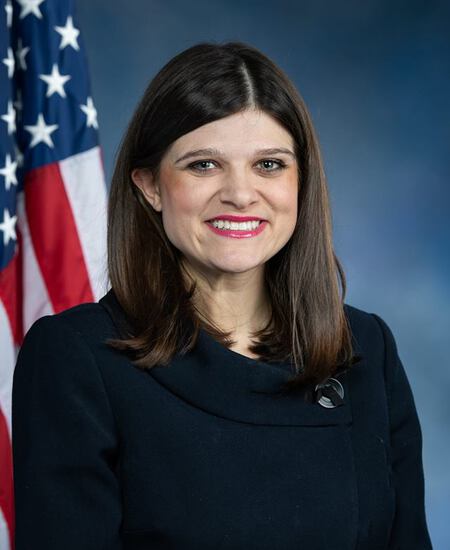
Rep. Haley M. Stevens
Sponsored bills
Maddy summaryHRES 1429 is a non-binding House resolution that congratulates Michigan athletes who competed in the 2024 Paris Olympics and Paralympics. It specifically honors 20 athletes, including basketball player Devin Booker and track and field athlete Grant Fisher, by naming them in the resolution. The resolution does not create new laws or policies but serves as a symbolic gesture recognizing their achievements and the values of the Olympic movement.
Maddy summaryHRES 1159 is a symbolic resolution (not a law) recognizing the existing partnership between the U.S. Department of Agriculture (USDA) and NASA. It highlights how the agencies share data - like NASA’s satellite soil moisture monitoring and USDA’s ground-based research - to improve agricultural practices, resource conservation, and food security. The resolution encourages them to strengthen collaboration, including STEM education efforts, to support farmers and ranchers who produce food, fuel, and fiber. It does not create new policies or funding but formally acknowledges their mutual benefits and urges continued cooperation.
Maddy summaryThis non-binding House resolution expresses the House's support for keeping guns out of schools by stating federal funds should not be used to arm school personnel or provide them firearm training. It references existing laws like the STOP School Violence Act (2018) and research showing arming staff does not improve safety, citing data on failed interventions and disproportionate impacts on students of color. The resolution affirms current policy guidance without creating new legal requirements. It serves as a formal statement of the House's position based on evidence and existing legislative frameworks.
Maddy summaryHR 9274, the SHAWL Act, establishes two new Smithsonian museums: the National Museum of the American Latino and the American Women’s History Museum. It authorizes both museums to be located within the National Mall’s "Reserve" area, overriding prior restrictions, and requires federal agencies managing potential sites to transfer jurisdiction to the Smithsonian after notifying congressional committees. The bill mandates that both museums accurately represent diverse cultures, histories, and viewpoints within Latino and women’s communities through exhibits and programs, requiring input from a broad range of community experts. It also requires the Smithsonian to submit biennial reports to Congress detailing compliance with these representation requirements.
Maddy summaryThe NO BAN Act (HR 9244) prohibits U.S. immigration authorities from denying visas or entry based on national origin, religion, or sex. It amends immigration law to explicitly ban such discrimination in visa decisions and tightens restrictions on the president’s power to suspend entry of certain groups under Section 212(f). The bill requires specific evidence, narrow tailoring, time limits, and congressional notification for any entry restriction, while mandating public reports on visa denials and waivers. It directly affects nonimmigrant visa applicants (e.g., students, workers) and federal agencies administering immigration policy.
Maddy summaryHR 9253, the National Gun Violence Research Act, repeals longstanding restrictions that blocked federal funding for gun violence research, including the 1996 Dickey Amendment. It establishes a National Gun Violence Research Program to support scientific studies on gun-related injury and death, with $200 million authorized over six years (2025-2030). The program directs agencies like the CDC, NIH, and National Institute of Justice to fund research, train researchers, develop safety standards, and share gun trace data with researchers through new protocols. This bill directly affects federal research institutions and public health agencies by enabling evidence-based study of gun violence causes and prevention strategies.
Maddy summaryThis bill names a U.S. Postal Service facility at 24837 Goddard Road in Taylor, Michigan, as the "Technical Sergeant E. Huston James Memorial Post Office Building" to honor a military veteran. It updates all official references (laws, maps, documents) to the location to reflect this new name. The bill has no policy or funding impact - it solely commemorates Technical Sergeant E. Huston James.
Maddy summaryThe National Quantum Initiative Reauthorization Act (HR 6213) reauthorizes and expands federal efforts to advance quantum information science, engineering, and technology in the United States. It establishes new programs including National Quantum Centers, Quantum Testbeds, and a Quantum Reskilling and Workforce Coordination Hub to develop domestic talent and infrastructure. The bill creates an International Quantum Cooperation Strategy to build partnerships with allies while restricting collaboration with "foreign countries of concern" as defined in the legislation. It provides funding for research, workforce development, and commercialization of quantum technologies across government agencies, universities, and industry. The act aims to strengthen U.S. leadership in quantum technology through coordinated federal investment and international collaboration.
Maddy summaryH.J. Res. 193 proposes a constitutional amendment to eliminate legal immunity for federal officials, including the President, from criminal prosecution for actions taken while performing official duties. It also prohibits the President from granting a pardon to themselves. The amendment would apply to all federal officers (such as the President, Vice President, and members of Congress) except for Congress members acting in their legislative role as defined in the Constitution. If ratified by 38 states, this change would become part of the U.S. Constitution, requiring no further congressional action.