

Maddy summaryHR 5130, the "Finish It Act," requires the Department of Defense to use stored border wall construction materials (valued at approximately $300 million) for building permanent barriers along the U.S.-Mexico border within 30 days of the bill's enactment. It mandates that states receiving materials certify they will use them exclusively for border barriers, with penalties for unused materials (requiring repayment of the original cost) and imposes a 1% budget cut for every two days of delay in implementation. The bill also demands a detailed report from the Department of Defense within 90 days, including internal communications about storage costs and contracts with private landowners. This legislation directly affects the Department of Defense and border states, focusing on redirecting existing resources rather than creating new funding or construction.
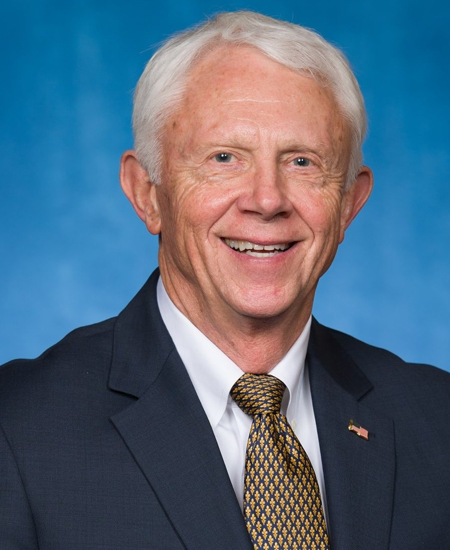
Rep. Jack Bergman
Sponsored bills
Maddy summaryThis is a ceremonial resolution (HRES 622), not a substantive bill. It expresses the U.S. House of Representatives' gratitude and congratulations to the U.S. Coast Guard for its maritime border security efforts in fiscal year 2022. The resolution cites specific achievements like interdicting over 330,000 pounds of narcotics, 12,500 illegal immigrants, and 6,300 vessel boardings. It has no policy impact or legal effect - it solely serves to honor the Coast Guard's service.
Maddy summaryHR 4962, the JETSET Costs Act of 2023, requires the Secretary of Transportation and their executive staff to use commercial airlines instead of Department of Transportation (DOT) aircraft unless the DOT flight is at least 5% cheaper. The bill mandates DOT to calculate actual full flight costs (not different rates for outsiders) for fair comparisons and prohibits personal or political travel on DOT aircraft. It also requires the DOT Inspector General to annually report all such trips with cost justifications to Congress. These provisions aim to ensure taxpayer savings by prioritizing cost-effective commercial travel for official executive trips.
Maddy summaryThe ACES Act of 2023 requires ByteDance (TikTok's Chinese parent company) to divest all U.S. assets related to TikTok - including user data collected in the United States - within 90 days of enactment, with possible 30-day extensions. It mandates weekly compliance reports to CFIUS, a final data destruction certification, and prohibits U.S. app stores or internet services from supporting TikTok operations after a 45-day grace period. The bill directly affects ByteDance and TikTok, forcing separation of U.S. operations from Chinese ownership to address national security concerns. CFIUS oversees verification, including facility inspections and audits, to ensure full compliance with the divestment requirements.
Maddy summaryThis bill designates the Department of Veterans Affairs clinic in Indian River, Michigan, as the "Pfc. Justin T. Paton Department of Veterans Affairs Clinic" for all official references. It does not change the clinic's services, operations, or eligibility for veterans. The bill simply updates the facility's name to honor Pfc. Justin T. Paton, a veteran, in recognition of his service.
Maddy summaryHRES 628 would terminate the Office of Diversity and Inclusion within the U.S. House of Representatives. The bill specifically eliminates the office and amends House Rules (including Rule II and Rule X) to remove all references to it. This resolution would end the office's existence and its role in overseeing diversity and inclusion initiatives for House staff and operations. The change applies solely to the House's internal structure and does not affect other legislative functions or external policies.
Maddy summaryHR 3399, the Soo Locks Security and Economic Reporting Act of 2023, requires the Secretary of Transportation to submit a report within one year of enactment assessing security risks and economic impacts if the Soo Locks in Sault Ste. Marie, Michigan, fail. The report must detail current security measures, supply chain vulnerabilities, potential threats, and costed recommendations for strengthening locks and minimizing disruption. This directly affects the regional economy around the Soo Locks and U.S. supply chains reliant on the waterway. The bill mandates a factual assessment to inform future decisions, without making new laws or funding changes.
Build the Wall and Fight Fentanyl Act of 2023 This bill establishes accounts to fund the construction of physical barriers along the U.S. southern border and to provide grants to address fentanyl abuse. These accounts shall be funded from the sale of assets belonging to cartels that have been seized by the Drug Enforcement Administration, U.S. Immigration and Customs Enforcement, or U.S. Customs and Border Protection. The bill defines cartel as (1) an organization with operations in Mexico and the United States designated as a significant transnational criminal organization; (2) certain named organizations, such as the Sinaloa Cartel and the Juarez Cartel; and (3) other organizations as designated by the President.
Maddy summaryThis bill authorizes the U.S. President to sell up to two nuclear-powered attack submarines (Virginia-class) from the U.S. Navy inventory to Australia over a 15-year period to support the AUKUS security partnership. It requires Australia to cover all costs, including repairs performed at U.S. shipyards, and mandates detailed certifications to Congress on national security impacts, U.S. industrial capacity, and Australia's ability to operate the submarines. The bill also requires annual reports for 15 years on submarine transfers, defense service exports, and production schedules. This directly affects Australia's naval capabilities and U.S.-Australia defense cooperation under the AUKUS framework.
Maddy summaryHR 4517, the Ensuring Voluntary Actions are Compensated Act of 2023 (EVAC Act), requires the Secretary of State to create a plan within 120 days to reimburse U.S. citizens, lawful permanent residents, and eligible Afghan allies for personal expenses paid to evacuate during August 1-November 1, 2021. The plan must detail eligibility, reimbursement limits, claim processes, required documentation, and processing timelines for those who used personal funds to evacuate. It mandates consultation with the Defense Secretary and relevant NGOs/veteran groups, and includes cost estimates and a list of consulted organizations. The bill directly affects individuals and entities who covered evacuation costs during this specific period, aiming to provide financial compensation for voluntary evacuation efforts.