

Maddy summaryThis bill allows the VA to provide a single headstone or marker for groups of eligible veterans buried together in group interments, instead of individual markers. It sets a 7-year expiration for this provision, ending seven years after the bill's enactment. The bill also extends the deadline for burying spouses and dependent children of veterans or active-duty service members at national cemeteries from October 1, 2024, to October 1, 2031. These changes directly affect veterans buried in group interments and their families seeking burial benefits at VA national cemeteries.
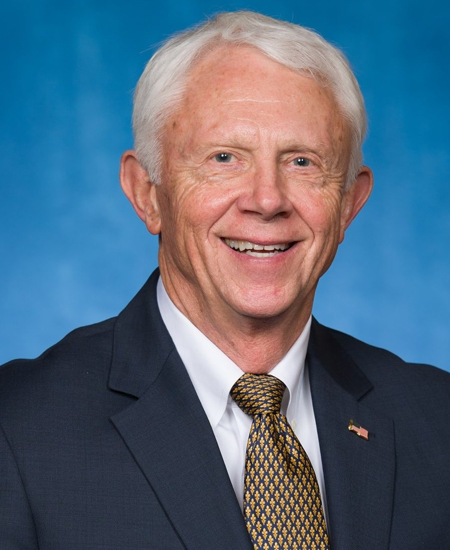
Rep. Jack Bergman
Sponsored bills
Maddy summaryThe SAVE Act (HR 8281) requires U.S. citizens to provide documentary proof of citizenship when registering to vote in federal elections. It defines acceptable proof as documents like passports, REAL ID-compliant IDs, military IDs, or birth certificates, and mandates that states verify citizenship using information from government agencies like DHS and Social Security. States must establish processes for voters without required documentation to provide an attestation under penalty of perjury. The law also requires states to remove noncitizens from voter rolls when verified evidence shows they're not citizens. This bill directly affects all applicants registering to vote in federal elections and state election officials who must implement these requirements.
Maddy summaryHRES 1365 is a non-binding House resolution calling for the immediate termination of Kimberly Cheatle as U.S. Secret Service Director. It directly addresses the Secret Service Director and the executive branch, though it has no legal force to remove her from office. The resolution’s sole provision is a formal request for her termination, reflecting the sponsors' position on her leadership. As a symbolic gesture, it does not change her employment status or require any action from the President or Secret Service.
Maddy summaryThis bill amends a section of law governing Department of Veterans Affairs (VA) employee compensation to clarify that disputes over whether an employee received the correct pay amount under existing rules are not considered "adjustment of compensation" under the statute. It specifically excludes grievances challenging pay accuracy from the definition of "establishment, determination, or adjustment of employee compensation." The change directly affects VA employees covered under Section 7421(b) who might file such pay-related grievances. The bill makes a technical clarification to streamline how these disputes are categorized within VA's compensation process.
Maddy summaryHJRES 164 is a congressional resolution seeking to block a rule issued by the Department of Commerce regarding firearms license requirements. It directly targets the rule published in the Federal Register (89 Fed. Reg. 34680), which would have revised licensing procedures for firearms dealers. If passed, the resolution would prevent this rule from taking effect by invoking the congressional disapproval process under federal law. The bill does not create new regulations but aims to halt an existing rule affecting gun license applicants and dealers.
Maddy summaryHRES 1355 is a non-binding resolution supporting the designation of July 10 as Journeyman Lineworkers Recognition Day. It honors lineworkers who maintain electrical infrastructure under hazardous conditions, including during disasters, and commemorates Henry Miller, the first president of the International Brotherhood of Electrical Workers, who died on July 10, 1896, while troubleshooting an electrical outage. The resolution encourages public recognition of these workers' contributions but does not create new laws or policies.
Maddy summaryHR 8903, the UPRISERS Act, would revoke the student visas of international students on F, J, or M visas who are convicted of assaulting a police officer or participating in riot-related violence. It specifically targets offenses like inciting riots, organizing riots, committing violence during riots, or aiding others in such activities. The bill amends immigration law to make these convictions grounds for visa revocation and deportation. This policy directly affects international students holding these specific visa types who face criminal charges for the listed violent acts.
Maddy summaryHJRES 170 is a resolution seeking congressional disapproval of a federal rule that would have required new housing projects financed by the Department of Housing and Urban Development (HUD) or the Department of Agriculture (USDA) to meet specific energy efficiency standards. The rule, published in April 2024, aimed to set these standards for new construction in federally subsidized housing. If passed, this resolution would block the rule under the Congressional Review Act, making it legally void. It directly affects developers and builders of HUD- and USDA-financed housing by removing the requirement to comply with these energy standards.
Maddy summaryThe Conscience Protection Act of 2024 would strengthen protections for health care providers, facilities, and organizations that refuse to participate in or provide coverage for abortions, assisted suicide, or other procedures conflicting with their religious or moral beliefs. It creates a private right of action allowing individuals or entities to sue when their conscience rights are violated, and requires the Department of Health and Human Services to enforce existing conscience protections through the Office for Civil Rights. The bill prohibits discrimination against health care entities that decline to provide or facilitate these services, while ensuring these protections don't interfere with emergency care requirements under existing law. It also establishes clearer enforcement mechanisms, including the ability to terminate federal funding for non-compliance with conscience protections.
Maddy summaryHR 8823, the Clear the ROADS Act of 2024, requires states to take steps to prevent reckless highway obstructions that endanger public safety. It directly affects states receiving federal highway funds by threatening a 10% reduction in those funds if they fail to certify they've made "reasonable efforts" to prohibit non-government individuals from recklessly blocking traffic on federal-aid highways. The bill mandates that the Transportation Secretary issue implementing regulations within 180 days and begins withholding funds starting October 1, 2025, or after a state's next legislative session. This policy change links federal funding to state enforcement against specific types of roadway blockages, without specifying penalties or enforcement methods for individuals.