

Maddy summaryThis bill allows livestock producers and their employees to take black vultures (Coragyps atratus) that are harming or threatening livestock, bypassing the usual protections under the Migratory Bird Treaty Act. It directly affects ranchers and farm workers in areas where black vultures cause livestock deaths or injuries. The key provision requires annual reporting to the U.S. Fish and Wildlife Service about any vultures taken, using a simplified form similar to existing reporting for permitted bird take. This creates a specific, limited exception to federal bird protections for livestock protection, with no new restrictions on vulture populations.
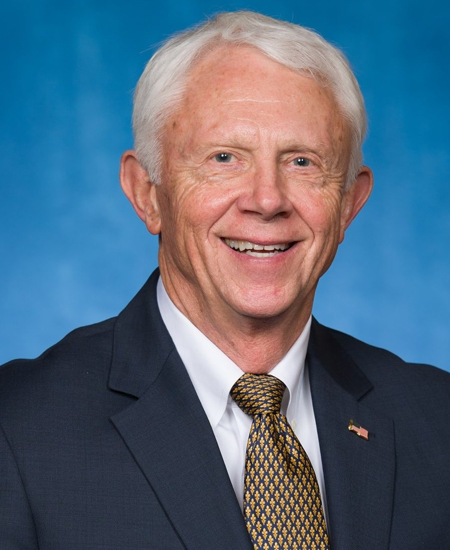
Rep. Jack Bergman
Sponsored bills
Maddy summaryHR 6751 authorizes the U.S. Mint to produce commemorative coins honoring Roberto Clemente, a Hall of Fame baseball player and humanitarian, including 50,000 $5 gold coins, 400,000 $1 silver coins, and 750,000 half-dollar coins. The coins must feature Clemente's image and inscriptions like "Roberto Clemente" and "2027," with all sales including a surcharge ($5-$35 per coin) paid to the Roberto Clemente Foundation. The foundation, which supports youth sports, education, and disaster relief programs, will use these funds for its mission, while the U.S. Treasury must recover all production costs. The coins will be sold exclusively in 2027, with no net cost to the government.
Maddy summaryThe Complete the Mission Act of 2024 improves veterans' access to healthcare through the Veterans Community Care Program. It establishes specific standards for when veterans can receive community care (30 minutes driving time for primary care within 20 days, 60 minutes for specialty care within 28 days), requires the VA to notify veterans of eligibility within two business days, and mandates consideration of veteran preferences and caregiver needs. The bill also requires VA to discuss telehealth options, implement value-based reimbursement models for community care providers, create an online self-service module for appointment requests and appeals, and establish standardized screening for mental health treatment programs with specific criteria for priority admission.
Maddy summaryThe Working Dog Commemorative Coin Act (HR 807) directs the U.S. Treasury to mint three types of commemorative coins honoring working dogs' service: $5 gold coins, $1 silver coins, and half-dollar coins with specific weight and composition requirements. Each coin will carry a surcharge ($35 for $5 coins, $10 for $1 coins, $5 for half-dollars) that will be paid directly to America's VetDogs to support their programs providing service dogs for veterans, the disabled, and others. The coins will be issued in 2027 with designs reflecting working dogs' roles in military, detection, therapy, and assistance work. The legislation specifies that all surcharge revenue must fund America's VetDogs' operations without creating new government programs. This is a commemorative measure focused on honoring working dogs' contributions through coin sales, with all surcharge funds going to a specific nonprofit organization.
Maddy summaryThis bill establishes a Truth and Healing Commission to investigate the history and impacts of U.S. Indian Boarding School policies on Native American communities, including cultural, emotional, and physical effects on survivors, descendants, and tribal communities. The Commission will document these impacts through research, public meetings, and testimony, working with two advisory committees focused on Native American perspectives and Federal agency coordination. The Commission will operate for six years, with annual reports to Congress and a final report containing recommendations for Federal action. The bill also includes provisions for managing burial sites related to boarding schools and ensures the Native American Graves Protection and Repatriation Act applies to remains found on Federal lands related to these schools.
Maddy summaryHRES 1594 is a symbolic House resolution supporting the designation of "National Rural Health Day," observed annually on the third Thursday of November. It recognizes rural health care providers and the communities they serve, highlighting challenges like hospital closures, workforce shortages, and access barriers in rural areas. The resolution expresses the House's commitment to improving rural health care accessibility and affordability but does not create new laws or allocate funding. It is a non-binding gesture aligning with an existing observance since 2011, organized by the National Rural Health Association.
Maddy summaryThis bill enhances the existing American Battlefield Protection Program by expanding eligibility for grants to include Tribes, nonprofit organizations, and educational institutions, alongside States and local governments. It clarifies that eligible sites must be identified in the 1993 Civil War battlefield report or 2007 Revolutionary War/War of 1812 report, excluding sites already within National Park boundaries. The bill also requires the Secretary to submit updated battlefield condition reports to Congress every 10 years, starting two years after enactment, tracking preservation efforts and battlefield changes. These changes streamline program administration and ensure ongoing assessment of historic battlefield sites.
Maddy summaryThis resolution (HRES 554) affirms U.S. policy support for religious and ethnic minority survivors of ISIS genocide in Iraq, including Yezidis, Assyrians, Chaldeans, and others. It calls for U.S. policy to prioritize the safe return of displaced communities to ancestral areas like Sinjar and the Nineveh Plain, restoration of destroyed religious sites and homes, and economic revitalization of these regions. The resolution urges the Iraqi government and international donors to allocate specific funding for these efforts and ensure minority representation in decision-making, referencing Iraq's Constitution on minority rights. As a non-binding resolution, it does not create new laws but formally states U.S. policy direction on this issue.
Maddy summaryHR 10176 authorizes the Bay Mills Indian Community in Michigan to transfer, lease, or sell its own land (not held in trust by the U.S. government) without needing federal approval. It specifically excludes land held in trust by the U.S. for the tribe. The bill clarifies that the federal government will not be liable for losses from these transactions unless it directly participates. This change streamlines the tribe's management of its non-trust properties.
Maddy summary# Summary of Veterans' Affairs Bill This comprehensive legislation (likely the 2024 version of the "Senator Elizabeth Dole 21st Century Veterans Healthcare and Benefits Improvement Act") addresses multiple aspects of veterans' benefits and services across several key areas: ## Key Provisions 1. **Healthcare Modernization** - Requires machine-readable format for disability benefit questionnaires - Mandates modernization of electronic health record systems - Improves telehealth access for homeless veterans - Establishes new standards for health information technology 2. **Disability Benefits** - Modernizes disability benefit questionnaires - Implements automatic processing for certain temporary disability ratings - Prohibits non-licensed health care professionals from performing medical disability examinations - Requires provision of agent/attorney contact information to health care professionals 3. **Homelessness Support** - Increases per diem payments for homeless veterans' services - Authorizes use of funds for food, shelter, transportation, and communication technology - Creates a strategic plan for homeless veteran services - Expands access to telehealth services for homeless veterans 4. **Native American Veteran Housing** - Expands direct housing loans for Native American veterans - Creates a Native community development financial institution relending program - Requires adequate personnel dedicated to Native American veteran housing - Expands outreach programs for Native American veterans 5. **Burial and Memorial Affairs** - Expands burial allowances for veterans who die at home while receiving hospice care - Updates definitions of surviving spouse 6. **Employment and Training** - Improves reemployment rights for veterans - Creates Warrior Training Advancement Course - Establishes pilot program for veterans in conservation and resource management positions 7. **Transparency and Accountability** - Requires 90-day notice before implementing policy changes - Improves transparency of educational institutions serving veterans - Establishes new reporting requirements for various programs The bill contains numerous technical corrections, updates to existing statutes, and new provisions designed to improve veterans' access to benefits, healthcare, housing, and employment opportunities, with particular attention to underserved veteran populations including Native American veterans, homeless veterans, and veterans with disabilities.