

Maddy summaryHR 46, the Rural Broadband Window of Opportunity Act, requires the Federal Communications Commission (FCC) to prioritize processing applications for the Rural Digital Opportunity Fund (RDOF) Phase II auction. It specifically directs the FCC to give faster review to applications proposing to build broadband infrastructure in geographic areas with the shortest construction seasons, such as regions with long, snowy winters. This policy change directly affects service providers competing for RDOF funding to expand rural broadband access. The bill aims to address seasonal challenges by streamlining the application process for projects in areas where weather limits construction time.
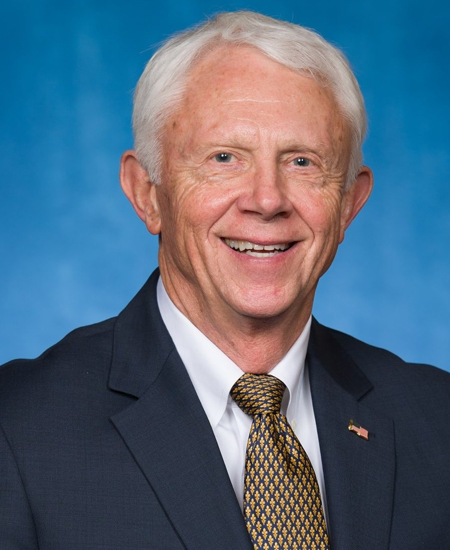
Rep. Jack Bergman
Sponsored bills
Maddy summaryHR 44, the Rural 340B Access Act of 2025, would expand eligibility for the federal 340B drug discount program to include specific rural emergency hospitals. It directly affects rural emergency hospitals owned or operated by state/local governments, non-profits with governmental powers, or private non-profits with contracts to serve low-income patients. The bill amends the law to formally add these hospitals as "covered entities" under the 340B program, allowing them to purchase discounted drugs. This change would enable these facilities to access the same drug discounts previously available to other safety-net providers.
Maddy summaryHR 45 (FIND Act) requires federal government contractors to certify they do not discriminate against firearm businesses (including manufacturers, dealers, and trade associations) in their policies or practices. The bill mandates that contractors and subcontractors (for contracts over 10% of the prime contract value) certify they have no discriminatory policies and will not adopt them during the contract term. Violations could lead to contract termination and potential debarment. This applies to all federal procurement contracts awarded after the bill's enactment, excluding sole-source contracts. The law aims to ensure firearm businesses are treated equally in government contracting without restricting legitimate business criteria like creditworthiness or legal compliance.
Maddy summaryHR 47, the VOICE Restoration Act, would restore the Victims of Immigration Crime Engagement Office (VOICE) within ICE, which was terminated in 2021. The bill requires VOICE to provide direct assistance to victims and witnesses of crimes committed by undocumented immigrants, including a toll-free hotline, local contacts, referrals to social services, and updates on the immigration status of the offender. It mandates quarterly reports to Congress and the President analyzing the impact of crimes by undocumented immigrants on victims. This bill directly affects victims of such crimes, their families, and legal representatives seeking support. The legislation focuses on restoring specific victim services previously provided by VOICE, not broader immigration policy changes.
Maddy summaryThis bill requires Congress to approve major federal regulations before they take effect. It would mandate that agencies submit detailed reports including cost-benefit analyses, economic impact assessments, and other information to Congress before implementing significant regulations. Major rules - defined as those with at least $100 million annual economic impact or significant effects on costs, competition, or employment - would need a joint resolution of approval from Congress within 70 session days. Nonmajor rules would follow a less stringent disapproval process. The bill aims to increase legislative oversight of the regulatory process, requiring Congress to formally review and approve rules that significantly impact the economy or public regulations.
Maddy summaryThis bill, HR 1097 (Everett Alvarez, Jr. Congressional Gold Medal Act of 2023), authorizes the award of a Congressional Gold Medal to Everett Alvarez, Jr., in recognition of his service as a U.S. Navy pilot and Vietnam War prisoner of war. It directly honors Alvarez, who was the first U.S. pilot shot down in the Vietnam War, spent over 8.5 years in captivity, and later served in the Peace Corps and Veterans Administration. The bill’s key mechanism is directing the U.S. Mint to strike a gold medal bearing his name and image, with bronze duplicates available for sale to cover costs. It does not create new policies or affect any group beyond the honoree.
Maddy summaryThe Save Our Sequoias Act establishes a coordinated approach to protect giant sequoia groves in California from wildfires, insects, and drought. It creates a Giant Sequoia Lands Coalition including federal agencies, state governments, and the Tule River Indian Tribe to assess grove health, develop protection projects, and recommend forest management activities. The bill streamlines implementation of certain projects through categorical exclusion from environmental reviews, authorizes $10-40 million annually for conservation efforts, and establishes a fund for philanthropic support of sequoia protection.
Maddy summaryThis bill would prevent states from having different tobacco product rules than federal law, except for age-based sales, advertising, and fire safety regulations. It creates a federal "marketing order" system where FDA approval would override state restrictions on tobacco products like sales, advertising, or use. The bill also requires the FDA to report within 90 days on pending tobacco product applications to Congress. It directly affects states with stricter tobacco laws and tobacco companies operating across multiple states.
Maddy summaryThe Pharmacists Fight Back Act (HR 9096) sets new rules for Pharmacy Benefits Managers (PBMs) working with federal health care programs like Medicare Part D and Medicaid. It requires PBMs to reimburse in-network pharmacies at a rate covering the drug's actual cost plus a small fee (capped at $25), and to reduce patient cost-sharing by at least 80% of rebates received from drug manufacturers. The bill bans PBMs from steering patients to specific pharmacies, charging patients more than pharmacies are paid, or using rebates to lower pharmacy payments after claims are processed. It also mandates public reporting of drug pricing data to improve transparency, ensuring patients and pharmacies receive fairer treatment under federal health programs.
Maddy summaryThe PROVE IT Act of 2024 directs the U.S. Energy Secretary to study and publicly report on the greenhouse gas emissions intensity of key U.S. manufactured products (like steel, aluminum, lithium batteries, and critical minerals) compared to those produced in "covered countries" (including the EU, China, and major trading partners). It requires a transparent methodology for calculating emissions data, identifies gaps in existing data, and establishes a public online database showing U.S. emissions advantages for these products. The bill also mandates an annual report on foreign countries using forced labor or human rights abuses in the production of critical minerals or rare earths. Importantly, it clarifies the study does not create new taxes, fees, or mandatory reporting requirements.