

John R. Lewis Voting Rights Advancement Act of 2021 This bill establishes new criteria for determining which states and political subdivisions must obtain preclearance before changes to voting practices may take effect. Preclearance is the process of receiving preapproval from the Department of Justice (DOJ) or the U.S. District Court for the District of Columbia before making legal changes that would affect voting rights. A state and all of its political subdivisions shall be subject to preclearance of voting practice changes for a 10-year period if 15 or more voting rights violations occurred in the state during the previous 25 years; 10 or more violations occurred during the previous 25 years, at least 1 of which was committed by the state itself; or 3 or more violations occurred during the previous 25 years and the state administers the elections. A political subdivision as a separate unit shall also be subject to preclearance for a 10-year period if three or more voting rights violations occurred there during the previous 25 years. States and political subdivisions that meet certain thresholds regarding minority groups must preclear covered practices before implementation, such as changes to methods of election and redistricting. Further, states and political subdivisions must notify the public of changes to voting practices. Next, the bill authorizes DOJ to require states or political subdivisions to provide certain documents or answers to questions for enforcing voting rights. The bill also outlines factors courts must consider when hearing challenges to voting practices, such as the extent of any history of official voting discrimination in the state or political subdivision.
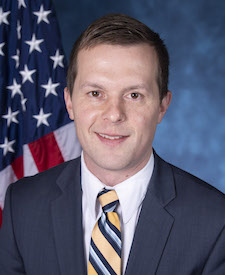
Rep. Jared F. Golden
Sponsored bills
This resolution celebrates the contributions of small businesses in every U.S. community and supports the designation of National Small Business Week. Further, it supports efforts to provide small businesses with aid and assistance through certain programs and initiatives.
Improving Veterans Access to Congressional Services Act of 2021 This bill requires the Department of Veterans Affairs (VA) to permit a Member of Congress (upon request) to use a VA facility to meet with constituents. The VA and the General Services Administration must jointly identify available spaces in VA facilities for such purposes. The VA must prescribe regulations regarding such use of a VA facility by a Member of Congress.
Communities Helping Invest through Property and Improvements Needed for Veterans Act or the CHIP IN for Veterans Act This bill extends from 5 to 10 years the Department of Veterans Affairs (VA) pilot program under which the VA may accept donations of property or facilities from specified entities (e.g., state or local authorities).
Harlem Hellfighters Congressional Gold Medal Act This bill provides for the award of a Congressional Gold Medal to the 369th Infantry Regiment, commonly known as the Harlem Hellfighters, in recognition of their bravery and outstanding service during World War I.
Beaches Environmental Assessment and Coastal Health Act of 2021 or the BEACH Act of 2021 This bill reauthorizes through FY2026 and expands a program that awards grants to state and local governments to monitor the water quality at beaches and notify the public when water is not safe for recreational activities. The bill expands the program to allow the Environmental Protection Agency to award grants for researching and identifying specific sources of contamination at certain coastal recreation waters and taking actions to mitigate those sources.
Leadership in Global Tech Standards Act of 2021 This bill requires the Small Business Administration (SBA) to establish a program that supports the participation of U.S. small businesses in meetings and proceedings of standards development organizations to develop voluntary technical standards. To carry out this program, the SBA must award grants to small businesses for the reasonable costs of participation in standards development organizations. These grants may only be awarded to small businesses that (1) demonstrate technical expertise in key emerging technologies and technical standards (e.g., artificial intelligence), (2) commit personnel with such expertise to regular participation in global bodies responsible for developing standards for those technologies, (3) agree to coordinate between the public and private sectors to ensure protection of national security interests in the setting of global standards, and (4) provide a plan detailing the relationship between the above activities and the proposed standards to be adopted.
This resolution condemns the Chinese Communist Party and its violation of the human rights of the people of China.
Onward to Opportunity Act This bill requires the Department of Defense to implement a pilot grant program at five military installations to provide enhanced support and funding to eligible entities to supplement the Transition Assistance Program (TAP) in providing job opportunities for industry-recognized certifications, job placement assistance, and related employment services to service members participating in TAP and their spouses.
Recognizing the Role of Direct Support Professionals Act This bill requires the Office of Management and Budget to establish a separate category within the Standard Occupational Classification system for direct support professionals (i.e., individuals who provide services to promote independence in individuals with a disability) for data reporting purposes.