

Federal Firefighters Fairness Act of 2022 This bill makes it easier for federally employed firefighters who contract certain illnesses to qualify for federal workers' compensation. Specifically, the bill provides that chronic obstructive pulmonary disease, mesothelioma, and specified other cancers of those employed in fire protection activities for at least five years are presumed to be proximately caused by such employment for purposes of a disability or death claim under the federal workers' compensation program. This presumption also applies to federal employees employed in fire protection activities for at least five years who experience a sudden cardiac event or stroke within 24 hours of performing a fire protection activity. The bill also requires the Department of Labor to conduct a review to determine whether breast cancer, gynecological cancer, and rhabdomyolysis should be included under the presumption and to conduct periodic reviews to determine whether other diseases should be included. In addition, a person may petition Labor to include another disease under the presumption. An employee in fire protection activities is a firefighter, paramedic, emergency medical technician, rescue worker, ambulance personnel, or hazardous material worker who (1) is trained in fire suppression; (2) has the legal authority and responsibility to engage in fire suppression; (3) is engaged in the prevention, control, and extinguishing of fires or response to emergency situations where life, property, or the environment is at risk, including the prevention, control, suppression, or management of wildland fires; and (4) performs such activities as a primary responsibility.
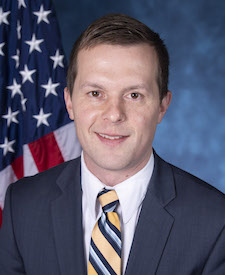
Rep. Jared F. Golden
Sponsored bills
Reparations for Ukraine through Sovereign nation Support and Integration Act or the RUSSIA Act This bill directs the President to seek to enter into an agreement with other countries that have frozen the assets of Russia's central bank to (1) transfer the frozen assets into a single account at an international financial institution, and (2) distribute such assets to provide for the reconstruction of Ukraine after the cessation of hostilities in Ukraine.
Aviator Cancer Examination Study Act or the ACES Act This bill requires the Department of Veterans Affairs to seek to enter into an agreement with the National Academies of Sciences, Engineering, and Medicine to study the incidence and mortality of cancer among individuals who served in the regular or reserve components of the Navy, Air Force, or Marine Corps as air crew members of a fixed-wing aircraft or personnel supporting generation of such an aircraft.
Childhood Cancer Survivorship, Treatment, Access, and Research Reauthorization Act of 2022 or the Childhood Cancer STAR Reauthorization Act This bill reauthorizes through FY2028 and modifies pediatric cancer research and related programs, including to expand collection of and access to relevant biospecimens and to support the transition of pediatric cancer survivors to primary care.
This resolution celebrates the contributions of small businesses in every U.S. community and supports the designation of National Small Business Week. Further, it supports efforts to provide small businesses with aid and assistance through certain programs and initiatives.
21st Century Dyslexia Act This bill addresses the education of children with disabilities, with a particular focus on children with dyslexia. Currently, dyslexia is listed as one of the disabilities under the definition of specific learning disability in the Individuals with Disabilities Education Act (IDEA). This bill instead removes dyslexia from the definition of specific learning disability and establishes a stand-alone definition for dyslexia within IDEA. Specifically, the bill defines dyslexia for purposes of IDEA as an unexpected difficulty in reading for an individual who has the intelligence to be a much better reader, most commonly caused by a difficulty in the phonological processing (the appreciation of the individual sounds of spoken language), which affects the ability of an individual to speak, read, and spell. Additionally, the bill requires a local educational agency or other agency, in determining eligibility for or providing an accommodation or service under IDEA, to provide equal access to (1) children from low-income families or from families with low socioeconomic status, and (2) other children.
Small Business Development Centers Improvement Act of 2022 This bill reauthorizes the Small Business Development Center Program through FY2025 and otherwise revises the program. Specifically, the bill (1) generally prohibits entities other than institutions of higher education from receiving new grants under the program; (2) allows centers to collect fees related to private partnerships or cosponsorships; (3) authorizes centers to market their services directly to small businesses; and (4) modifies or establishes provisions related to program funding, operations, data collection, and reporting.
Guidance Clarity Act of 2021 This bill requires federal agencies to state on the first page of guidance documents that such guidance (1) does not have the force and effect of law, and (2) is intended only to provide clarity to the public about existing legal requirements or agency policies. The Office of Management and Budget must issue guidance to implement this requirement.
This resolution temporarily establishes in the House of Representatives the Select Committee on Older Americans, which is comprised of 12 Members appointed by the Speaker (6 of whom shall be appointed on the recommendation of the minority leader). The select committee must serve as a bipartisan forum to bring awareness to, and advance recommendations to address, economic, health, housing, and other issues facing older adults. The recommendations may not, however, address Medicare or Social Security. The select committee must submit a final report that details its activities within two years after the appointment of its members and terminates on the date it submits the final report.
DHS Rural and Remote Hiring and Retention Strategy Act of 2022 This bill requires the Office of the Chief Human Capital Officer of the Department of Homeland Security (DHS), U.S. Immigration and Customs Enforcement (ICE), and U.S. Customs and Border Protection (CBP) to issue a strategy and implementation plan to improve the hiring and retention of individuals by ICE and CBP in rural or remote areas. DHS must periodically report to Congress and the Government Accountability Office (GAO) on the extent that the strategy and implementation plan has improved hiring and retention. After receiving each DHS report, the GAO must submit to Congress an assessment of the effectiveness of the actions described in the DHS report.