

Maddy summaryHR 3234 would allow immigration officers to immediately send back certain individuals attempting to cross the U.S.-Mexico border without proper documents or using fraud, during a 2-year period starting when the bill becomes law. These individuals would be expelled to Mexico by default, unless Mexico refuses to accept them or national security concerns arise, in which case they could be sent to their country of origin or another willing nation. The bill requires officials to refer individuals fearing persecution or torture to an asylum officer for review before expulsion, with specific exceptions for those deemed threats to national security or public safety. It does not apply to people who entered legally but later became deportable, and it includes a process for prioritizing vulnerable individuals like those with medical needs.
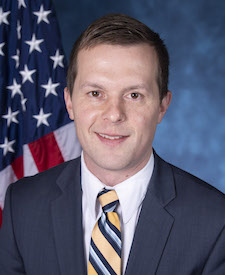
Rep. Jared F. Golden
Sponsored bills
Maddy summaryHR 3213, the Rural Education Investment Act, creates grants to establish teaching residency programs in rural school districts. It defines "rural local educational agencies" as schools meeting criteria under existing federal programs (Small, Rural School Achievement or Rural and Low-Income School Programs). The bill requires that a minimum percentage of grant funds - based on the proportion of K-12 students in rural areas - must be awarded to partnerships involving these rural schools. This directly affects rural school districts and their higher education partners seeking to train and retain teachers.
Maddy summaryHR 3238, the Affordable Housing Credit Improvement Act of 2023, updates the Low-Income Housing Tax Credit (LIHTC) program to increase the availability of affordable housing across the United States. The bill makes several key changes including increasing state funding formulas, modifying tenant eligibility rules to better serve vulnerable populations (such as domestic violence victims and students), and expanding credit eligibility for projects in rural and Native American communities. Specific provisions raise the credit for properties serving extremely low-income households, clarify rules around tenant income increases, and require housing providers to protect victims of domestic violence. The bill also updates terminology from "low-income" to "affordable" throughout the tax code and enhances program transparency through data sharing requirements. These changes aim to make the LIHTC program more effective at creating and preserving affordable housing units for low-income households nationwide.
Maddy summaryThe Invest to Protect Act of 2023 establishes a federal grant program for local law enforcement agencies with fewer than 200 officers (including counties, municipalities, and tribal governments) to fund training and support services. Grants cover de-escalation training, mental health resources, evidence-based safety training (such as handling domestic violence or mental health crises), and recruitment/retention incentives like signing bonuses, retention bonuses (up to 20% of salary), and stipends for graduate education in mental health or social work. The bill requires a streamlined grant application process (under two hours), public disclosure of bonus amounts, and annual audits to prevent misuse of funds.
Maddy summaryHR 676, the Coastal Communities Ocean Acidification Act of 2023, amends the 2009 Federal Ocean Acidification Research and Monitoring Act to improve collaboration on ocean acidification efforts. It requires the federal Advisory Board to establish ongoing input mechanisms with coastal stakeholders, fishery councils, indigenous knowledge groups, and non-Federal experts, and mandates two Indian Tribe representatives on the Board. The bill also updates definitions to specifically include "Indian Tribe" and strengthens coordination with Tribal organizations for vulnerability assessments and research planning. These changes directly affect coastal communities, fisheries, Tribal nations, and local governments managing ocean acidification impacts. The law focuses on integrating diverse stakeholder input into federal research and monitoring activities.
Maddy summaryThe SAFE Banking Act of 2023 would protect banks and financial institutions that provide services to state-legal marijuana businesses and hemp-related businesses by preventing federal regulators from taking adverse actions against them solely for serving these businesses. It clarifies that income from state-legal marijuana businesses can be considered for mortgage applications, and requires regulators to update guidance on suspicious activity reports related to these businesses. The bill does not require financial institutions to serve these businesses, but ensures they won't face penalties for doing so. It extends similar protections to hemp-related businesses, which have faced banking challenges despite being federally legal under the 2018 Farm Bill.
Rebuilding Rural Roads Act This bill modifies the definition of rural area that is used for the Rural Surface Transportation Grant Program. For the purposes of the program, the bill defines rural area as an area outside an urbanized area that has a population of over 20,000. (Current law requires a rural area to be outside of an urbanized area with a population of over 200,000.) The grant program supports projects that improve and expand the surface transportation infrastructure in rural areas to increase connectivity, improve the safety and reliability of the movement of people and freight, generate regional economic growth, and improve quality of life. Eligible applicants for the grant program include states, regional transportation planning organizations, local governments, and tribal governments.
Maddy summaryThe Postal Police Reform Act of 2023 updates federal law to explicitly include "Postal Service police officers" alongside Postal Inspectors as authorized personnel for enforcing regulations on U.S. Postal Service property. It clarifies that the Postmaster General can establish and post rules for protecting postal property, with violations punishable by fines or up to 30 days in jail. This change directly affects USPS police officers (by formalizing their role), the Postmaster General (by expanding regulatory authority), and anyone on postal property who must follow posted rules. The bill makes existing enforcement procedures more explicit without altering penalties or creating new requirements.
Maddy summaryThis bill protects living organ donors from insurance discrimination by prohibiting life, disability, and long-term care insurers from denying coverage, raising premiums, or altering policy terms solely because someone donated an organ while alive. It also updates the Family and Medical Leave Act to include recovery from organ donation surgery as a qualifying health condition, allowing donors to take protected leave for this purpose. Additionally, the bill requires the Health and Human Services Secretary to update public educational materials about living donation benefits, risks, and insurance protections within six months of enactment. These changes directly affect living organ donors, insurers, employers, and healthcare systems by ensuring fair access to insurance and workplace leave.
Maddy summaryHR 2955, the Stop Institutional Child Abuse Act, establishes a Federal Work Group to improve data collection and best practices for youth in residential programs (like therapeutic schools, treatment centers, and group homes). The Work Group, composed of federal agency representatives and diverse stakeholders, must develop national data standards, create risk assessment tools, and issue biennial reports with recommendations to enhance safety, reduce restraints, and expand community-based alternatives. It directly affects youth with mental health, substance use, or disability needs placed in these facilities, as well as agencies overseeing them. The bill also mandates a National Academies study to examine funding, oversight, and barriers to community care. These mechanisms aim to standardize data tracking and promote less restrictive, trauma-informed care for youth in residential programs.