

Maddy summaryThe Autism Family Caregivers Act of 2025 creates a 5-year pilot program funding grants to community organizations for free, evidence-based skills training for family caregivers of children (ages 0-9) with autism spectrum disorder or other developmental disabilities or delays. The program requires training in communication, social engagement, daily living skills, and caregiver self-care strategies, with emphasis on cultural competence and coordination with local health, education, and community services. Grants must support at least 25 organizations across 15+ states, using $10 million annually (2026-2030), and mandate stakeholder committees including caregivers and local providers. It directly affects families caring for young children with these conditions by expanding access to structured support, while requiring programs to supplement - rather than replace - existing Medicaid, education, or insurance-covered services.
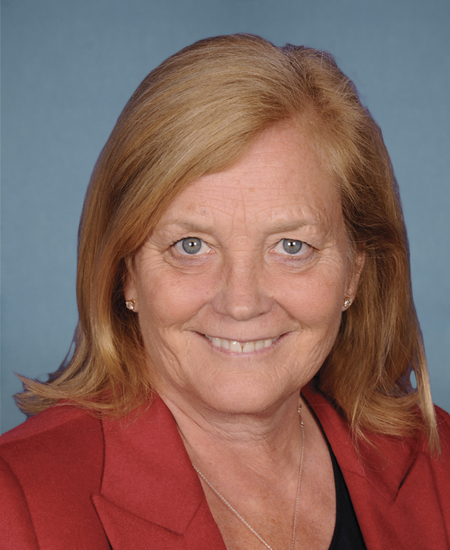
Rep. Chellie Pingree
Sponsored bills
Maddy summaryHR 4047, the Coastal Communities Ocean Acidification Act of 2025, amends the 2009 Federal Ocean Acidification Research and Monitoring Act to improve collaboration on ocean acidification issues. The bill requires the National Oceanic and Atmospheric Administration (NOAA) to establish ongoing input mechanisms for affected industries, coastal stakeholders, fishery councils, Indigenous groups (including Indian Tribes and Native Hawaiian organizations), and non-Federal scientists. It mandates specific tribal representation on the Advisory Board, directs NOAA to coordinate with tribes on vulnerability assessments and research planning, and prioritizes underserved coastal communities in resource allocation. These changes aim to integrate community and tribal knowledge into federal research and management efforts related to ocean acidification impacts on coastal economies and ecosystems.
Maddy summaryThe Wall Street Tax Act of 2025 imposes a transaction tax on securities trading in the U.S. market, starting at 0.02% for trades after December 2025 and gradually increasing to 0.1% after 2029. It applies to most stock, bond, and derivative transactions occurring on U.S. exchanges or involving U.S. persons, with the tax paid by exchanges, brokers, or the relevant parties (purchaser/seller) depending on the transaction type. The bill exempts initial security issuances and short-term debt (under 100 days) from taxation. This directly affects investors, brokers, and financial institutions conducting covered transactions in the U.S. market.
Maddy summaryHR 4011, the Community Paramedicine Act of 2025, creates a federal grant program to fund community paramedicine programs in rural areas. It provides grants to eligible entities - such as emergency medical services agencies, local governments, or Tribal organizations - to hire personnel, purchase equipment, cover training costs, and conduct outreach. The bill specifically reserves 15% of annual funding for programs serving Tribal communities and limits grants to $750,000 per entity (or $1.5 million for joint applications) over a maximum 5-year period. These programs aim to reduce unnecessary emergency room visits by using specially trained paramedics to address health issues and improve access to primary care for underserved populations.
Maddy summaryThis bill requires U.S. Immigration and Customs Enforcement (ICE) agents to visibly identify themselves during enforcement operations in the United States by not wearing facial coverings and wearing garments showing their name and agency affiliation. It directly affects ICE agents conducting activities like arrests, raids, or investigations. Exceptions exist for imminent threats or safety gear, but supervisors must review and document such uses within 48 hours. The bill also mandates annual reports to Congress on disciplinary actions and complaints related to violations.
Maddy summaryHR 3946, the FIGHT Act of 2025, amends the Animal Welfare Act to specifically prohibit gambling on animal fighting events and restrict the interstate transport of roosters used in such ventures. It defines "rooster" as male chickens over six months old and makes it unlawful to sponsor, exhibit, attend (for those under 16), or gamble on animal fighting events - whether in-person or broadcast. The bill creates a civil enforcement mechanism allowing any person to file a lawsuit to stop violations after providing 60 days' notice to authorities, with potential fines up to $5,000 per violation. It also establishes seizure of property used to facilitate violations and clarifies that state laws on animal fighting remain in effect unless directly conflicting with federal provisions.
Maddy summaryThis bill requires colleges receiving federal work-study funds to notify eligible students about potential eligibility for the SNAP food assistance program. It specifically targets students participating in federal work-study or receiving Pell Grants, mandating that institutions send email notifications with state-specific SNAP eligibility details and a document confirming their work-study status to overcome a key ineligibility barrier. The notifications, developed jointly by the Education and Agriculture Departments, include application contacts and guidance for schools on identifying eligible students. The policy change directly enables more college students to access nutrition assistance by clarifying their SNAP eligibility through institutional outreach.
Maddy summaryThis bill amends the Food and Nutrition Act to allow federally recognized tribes and tribal organizations to directly manage the Food Distribution Program on Indian Reservations (FDPIR) through self-determination contracts or self-governance agreements. It requires tribes to purchase domestically produced food that maintains similar nutritional value and package size to current FDPIR offerings, while respecting foods of Tribal significance. The Secretary must consult tribes on participation processes and submit annual reports to Congress on program activities. The bill also terminates a prior demonstration program and ensures tribal agreements follow the Indian Self-Determination Act’s rules, with interpretations favoring tribal interests. This directly affects tribal communities managing their own food distribution systems on reservations.
Improving Access to Medicare Coverage Act of 2025 This bill deems an individual receiving outpatient observation services in a hospital as an inpatient for purposes of satisfying the three-day inpatient hospital-stay requirement with respect to Medicare coverage of skilled nursing facility (SNF) services. (Generally, individuals must have been an inpatient at a hospital for at least three days in order to qualify for SNF services. An individual's time spent under observation at a hospital for purposes of determining whether the individual should be admitted does not count towards this requirement.)
Maddy summaryThe Domestic Workers Bill of Rights Act (HR 3971) would establish key labor protections for domestic workers, including nannies, housekeepers, and caregivers who work in private homes. The bill requires written agreements for workers employed 8+ hours per week, provides earned sick days (1 hour for every 30 hours worked), mandates fair scheduling practices with 72-hour notice for schedule changes, and extends overtime protections to live-in domestic employees. It also prohibits unfair wage deductions, guarantees meal and rest breaks, and ensures privacy protections including no monitoring in private living spaces. The bill directly affects approximately 2.2 million domestic workers across the U.S., who are disproportionately women of color and immigrants. Enforcement would be handled by the Department of Labor through new complaint resolution mechanisms and oversight.