

Maddy summaryHR 5133, the Patients’ Right to Know Their Medication Act of 2025, requires drug manufacturers to provide standardized printed patient medication information (PMI) with each prescription dispensed in non-hospital settings. This PMI must include clear, plain-language details on drug name, usage instructions, warnings, side effects, storage, disposal, and interactions - formatted consistently with readable text and graphics. The bill directly affects patients receiving prescriptions, ensuring they get accessible, non-promotional printed information to improve safety and reduce errors. The FDA would establish regulations within one year of enactment, mandating that manufacturers include this standardized PMI on prescription drug packaging.
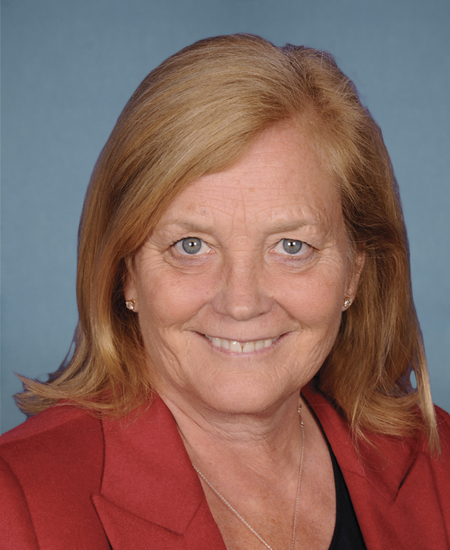
Rep. Chellie Pingree
Sponsored bills
Maddy summaryThis bill prohibits Members of Congress, their spouses, and dependent children from owning or trading certain investments, including stocks, commodities, and derivatives (referred to as "covered investments"). It requires affected individuals to divest these investments within 90-180 days, with specific exemptions for Treasury bonds, diversified mutual funds, small business interests, and family trusts meeting strict conditions. Violations incur penalties of 10% of the investment's value plus disgorgement of profits, paid directly to the U.S. Treasury. The law applies to all covered individuals during federal service, with exceptions for investments acquired through inheritance or occupational trading (e.g., a spouse’s finance job).
Maddy summaryHR 5027, the Ban Harmful Food Dyes Act, prohibits the use of 11 specific artificial food dyes (including Red 40, Yellow 5, Blue 1, and Titanium Dioxide) in all food products starting January 1, 2027. The bill directly affects food manufacturers and the products they sell, such as candies, beverages, and processed foods containing these dyes. It reclassifies the listed dyes as "adulterated" under existing food safety law, meaning they cannot be legally added to food after the 2027 deadline. The law also bans any additives substantially similar to the listed dyes, creating a clear deadline for industry compliance.
Maddy summaryHR 5009, the Fine Arts Protection Act of 2025, requires the Comptroller General to conduct a comprehensive review of the General Services Administration’s (GSA) Fine Arts Program within one year of the bill’s enactment. The review will survey every artwork in the GSA’s public collection - including New Deal-era pieces - estimate its economic value, assess management practices, staffing, funding, and compare GSA’s approach to other art collections. The Comptroller General must then submit a report to Congress within two years, detailing findings and recommending whether the GSA should continue managing the collection. This bill directly affects the GSA’s Fine Arts Program and provides Congress with data to inform future decisions about the collection’s preservation.
Maddy summaryThis bill (HJRES 115) terminates a presidential emergency declaration made on August 11, 2025, which claimed a "crime emergency" in Washington, D.C. It directly affects the District of Columbia by ending federal restrictions that prevented D.C. from using $1 billion in locally-raised funds for public safety, law enforcement, fire services, and schools. The resolution cites that the emergency declaration was legally flawed - section 740 of the DC Home Rule Act does not permit federalizing the Metropolitan Police Department - and notes that D.C. violent crime has reached a 30-year low. The bill formally ends the emergency under the DC Home Rule Act, restoring D.C.'s authority over its own budget and public safety resources.
Maddy summaryHR 4966 prohibits grocery stores from selling items at "grossly excessive prices," defined as 120% or more above the average market price over the previous six months (with exceptions for unavoidable cost increases like supply chain issues). It bans using facial recognition or personal data to set different prices for individual customers (e.g., adjusting prices based on shopping history) and requires clear signage if facial recognition is used. Stores over 10,000 square feet must replace electronic shelf labels with physical price tags. The Federal Trade Commission enforces these rules, allowing consumers to seek $3,000 per violation or actual damages, with penalties for willful violations.
Maddy summaryThis bill would change how Social Security cost-of-living adjustments are calculated by creating a new Consumer Price Index for Elderly Consumers (CPI-E) that tracks spending patterns specific to seniors aged 62 and older. It would also modify tax calculations for high earners by applying declining percentages of income above the Social Security tax cap (from 86% in 2026 down to 0% after 2031) for both wages and self-employment income. Additionally, the bill would adjust benefit calculations to include "surplus earnings" above the tax cap for individuals with high lifetime earnings. These changes would primarily affect Social Security beneficiaries and high-earning workers, particularly those becoming eligible for benefits after 2025.
Maddy summaryHRES 638 designates the week of August 3-9, 2025, as "National Farmers Market Week" to recognize the role of farmers markets in U.S. communities. The resolution highlights that farmers markets generated $1.7 billion in farmer income in 2020, grew from 1,755 to 8,771 nationwide between 1994 and 2019, and support local economies, sustainable farming, and food access. It does not create new laws or funding but formally supports the designation and acknowledges how these markets connect urban and rural communities while aiding farmers and consumers. This commemorative resolution directly affects farmers markets, their operators, and communities that rely on them for economic and social engagement.
Maddy summaryHR 4874 creates a federal grant program to fund supportive services for residents in affordable housing properties assisted by federal programs like low-income housing tax credits, Section 8 housing, and supportive housing for seniors or people with disabilities. Eligible non-profits managing such properties can receive 5-year grants to provide voluntary services including health access, educational programs, financial literacy, housing stability support, and assistance with public benefits. Grantees must use at least 25% of funds for staff salaries and training, while no more than 75% can cover direct resident services like mentoring or home modifications. The program aims to improve resident outcomes by connecting them to community resources without requiring participation in any service.
Maddy summaryThe Ending Homelessness Act of 2025 would expand housing assistance to reduce homelessness through several key provisions. It would allocate 500,000 additional housing choice vouchers in 2025, increasing to 1 million annually by 2028 for extremely low-income families and individuals receiving supplemental security income. The bill prohibits housing discrimination based on source of income (including housing vouchers and Social Security benefits), provides $1 billion annually for emergency relief grants targeting high-need areas, and establishes a permanent entitlement program for housing vouchers starting in 2029. It also repeals certain ineligibility criteria for housing assistance and makes faith-based and private nonprofit organizations eligible for funding.