

Safe Line Speeds in COVID-19 Act This bill directs the Food Safety and Inspection Service of the Department of Agriculture (USDA), for the duration of the COVID-19 (i.e., coronavirus disease 2019) emergency period, to suspend any waivers and not issue new waivers related to line speeds in meat and poultry establishments and inspection staffing requirements for such establishments. Additionally, the implementation of, and conversion to, the New Swine Slaughter Inspection System must be suspended. No funds made available to USDA during the COVID-19 emergency period shall be used to develop, propose, finalize, issue, amend, or implement any policy, regulation, directive, constituent update, or any other agency program that would increase line speeds at meat and poultry establishments. Upon termination of the COVID-19 emergency period, the Government Accountability Office shall conduct a review of actions taken by specific federal agencies, including USDA, in response to the COVID-19 pandemic to determine the effectiveness of such actions in protecting animal, food, and worker safety.
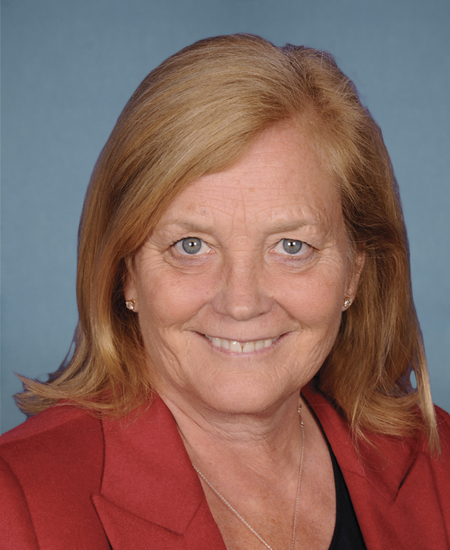
Rep. Chellie Pingree
Sponsored bills
Improving Access to Nutrition Act of 20 21 This bill repeals certain work requirements for the Supplemental Nutrition Assistance Program (SNAP, formerly known as the food stamp program). The requirements apply to able-bodied adults who are ages 18-49 and have no dependent children. Individuals who do not meet certain work requirements are generally prohibited from receiving more than 3 months of SNAP benefits over a 36-month period. Under current law, some of the work requirements under SNAP are temporarily suspended due to COVID-19 (i.e., coronavirus disease 2019).
Mental Health Services for Students Act of 2021 This bill provides specific statutory authority for the Project AWARE (Advancing Wellness and Resiliency in Education) State Educational Agency Grant Program that is administered by the Substance Abuse and Mental Health Services Administration. The program supports school-based mental health services, including screening, treatment, and outreach programs.
Suicide Training and Awareness Nationally Delivered for Universal Prevention Act of 20 21 or the STANDUP Act of 2021 This bill requires state, tribal, and local educational agencies that receive grant funding for priority mental-health needs, including through the Project AWARE State Education Agency Grant Program, to establish and implement evidence-based suicide awareness and prevention training policies. In addition, the Substance Abuse and Mental Health Services Administration, in coordination with the Department of Education and Bureau of Indian Education, must provide educational agencies with best practices for these trainings.
Healthy Maternity and Obstetric Medicine Act or the Healthy MOM Act This bill expands health insurance coverage availability for pregnant individuals. It requires health insurers, health insurance exchanges, and group health plans to offer a special enrollment period to pregnant individuals. The special enrollment period offered by an insurer or exchange must begin when the pregnancy is reported to the insurer or exchange. The special enrollment period offered by a group health plan must begin when the pregnancy is reported to the plan or is confirmed by a health care provider. The bill also makes pregnancy a qualifying life event for the purpose of enrolling in a federal employee health benefit plan. Additionally, a group health plan or health insurer that covers dependents must provide coverage for maternity care to all covered individuals. Any individual who is eligible for Medicaid and is, or becomes, pregnant maintains such eligibility for one year after the end of the pregnancy. The bill revises the range in which a state must establish a maximum level of family income for pregnant women and infants to be eligible for Medicaid. The upper limit of the range is eliminated and the lower limit is set to the level in place on January 1, 2014.
Accelerating Kids' Access to Care Act This bill requires state Medicaid programs to establish a process through which qualifying out-of-state providers may enroll as participating providers without undergoing additional screening requirements. Among other things, a qualifying provider must (1) serve minors, or adults whose condition began as a minor; and (2) have previously been screened for Medicare participation or for participation in the Medicaid program of the state in which the provider is located.
Medical Nutrition Therapy Act of 2021 This bill expands Medicare coverage of medical nutrition therapy services. Currently, Medicare covers such services for individuals with diabetes or kidney disease under certain circumstances; such services must also be provided by a registered dietitian or nutrition professional pursuant to a physician referral. The bill extends coverage to individuals with other diseases and conditions, including obesity, eating disorders, cancer, and HIV/AIDS; such services may also be referred by a physician assistant, nurse practitioner, clinical nurse specialist, or (for eating disorders) a clinical psychologist.
Community Broadband Act of 2021 This bill prohibits states from blocking the provision of broadband by public providers, public-private partnership providers, or cooperatively organized providers. Further, public providers and state or local entities participating in a partnership must administer applicable ordinances and rules without discrimination against competing private providers.
Adoption Tax Credit Refundability Act of 2021 This bill makes the tax credit for adoption expenses refundable.
Zero-Percent Student Loan Refinancing Act This bill establishes a temporary program through which the Department of Education (ED) must make interest-free refinancing loans to borrowers of federal student loans from August 1, 2021, through December 31, 2024. The bill requires ED to automatically refinance Federal Direct Loans and notify each borrower of the refinancing. Borrowers who have other types of eligible loans (i.e., Federal Family Education Loans, Federal Perkins Loans, and certain health profession and nursing loans) must apply for refinancing. ED and the Consumer Financial Protection Bureau must carry out a campaign to notify borrowers of these types of loans that they are eligible to apply for refinancing under the program.