

Increasing Access to Osteoporosis Testing for Medicare Beneficiaries Act of 2021 This bill specifies that certain Medicare payment rules applicable to imaging services shall apply to dual-energy x-ray absorptiometry services used in bone mass scans beginning in 2022. The Centers for Medicare & Medicaid Services must establish national minimum payment amounts for such services.
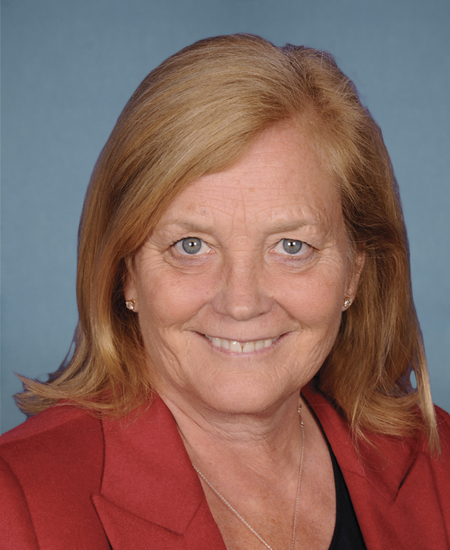
Rep. Chellie Pingree
Sponsored bills
Pharmacy DIR Reform To Reduce Senior Drug Costs Act This bill establishes certain requirements for prescription drug plans and the prices of covered drugs under the Medicare prescription drug benefit. Specifically, the bill requires price concessions, payments, and fees that are negotiated with a pharmacy to be included in a drug's negotiated price, excluding incentive payments, and for this price to be provided at the point of sale. Additionally, prescription drug plans must report price concessions or incentive payments that are made after payment for covered drugs at the point of sale, including by contracted intermediaries, to the pharmacy at least annually. The Centers for Medicare & Medicaid Services must establish standardized pharmacy performance measures with respect to incentive payments and price concessions; such measures must account for all pharmacy types, including specialty pharmacies, and focus on patient health outcomes and other targeted areas.
End Polluter Welfare Act of 2021 This bill limits or eliminates certain fossil fuel oil and gas subsidies for oil companies, including by (1) eliminating the limit on liability for offshore facilities and pipeline operators; (2) eliminating the authority of the Department of Energy to carry out the Fossil Energy Research and Development Program and prohibiting funds made available to the Advanced Research Project Agency from being used to carry out any project that supports fossil fuels; (3) terminating certain provisions relating to enhanced oil recovery, producing oil and natural gas from marginal wells, and limitations on percentage depletion for oil and natural gas wells; (4) terminating other deductions and accounting methods supporting oil, natural gas, and coal companies; (5) increasing the Oil Spill Liability Trust Fund financing rate; (6) denying a tax deduction for removal costs and damages relating to oil spills; (7) imposing an excise tax on the removal price of any taxable crude oil or natural gas; (8) increasing amortization periods for tertiary injectant expenses, development expenditures of a mine or other natural deposit, mining exploration expenditures, and intangible drilling and development costs for oil and gas wells and geothermal wells; (9) repealing the tax credits for the production of electricity from refined coal and for carbon oxide sequestration; and (10) requiring a study and elimination of certain other fossil fuel subsidies.
Timely ReAuthorization of Necessary Stem-cell Programs Lends Access to Needed Therapies Act of 2021 or the TRANSPLANT Act of 2021 This bill modifies and reauthorizes through FY2026 the C.W. Bill Young Cell Transplantation Program, which provides support to patients who need a potentially life-saving bone marrow transplant or umbilical cord blood transplant. The bill also requires the Department of Health and Human Services to conduct a periodic review of the science of using adult stem cells and birthing tissues in therapeutic treatments. In addition, the Government Accountability Office must report on the regenerative medicine workforce.
Keeping All Students Safe Act This bill prohibits the use of seclusion and limits the use of physical restraint in schools and Head Start programs that receive federal funding. Specifically, the bill prohibits the use of seclusion, which is the involuntary confinement of a student alone in a room or area from which the student is physically prevented from leaving. The term does not include a time out, which may involve separating the student from others in a non-locked setting. The bill prohibits the use of mechanical or chemical restraints or physical restraints that restrict breathing or are life threatening. The bill outlines the requirements for the use of physical restraint, including that the student's behavior must pose an imminent danger of serious physical injury to the student or other individual. Each state must ensure that a sufficient number of program personnel are trained and certified by a state-approved crisis intervention training program. Additionally, each program must establish procedures to follow after an incident involving physical restraint. Further, the bill establishes enforcement provisions, including a private right of action for a student who has been subjected to unlawful seclusion or restraint. The Department of Education and the Department of Health and Human Services must withhold payments from a program for unlawful seclusion or restraint. Finally, the bill requires each state educational agency (SEA) to establish, implement, and enforce policies and procedures required by the bill. It also creates a grant program to assist SEAs with these activities.
Stop Child Hunger Act of 2021 This bill establishes a permanent program and provides funds for electronic benefit transfer (EBT) cards to cover meals for children during extended school closures. Specifically, the Department of Agriculture must establish a program to provide EBT cards to cover meals for children who are enrolled in the National School Lunch Program or School Breakfast Program when a school is closed, operating remotely, or a combination of both for a period of five days or more. Cards may be used to purchase food from approved retailers under the Supplemental Nutrition Assistance Program.
Biodiesel Tax Credit Extension Act of 2021 This bill extends the income and excise tax credits for biodiesel and renewable diesel used as fuel through 2025.
Mothers and Offspring Mortality and Morbidity Awareness Act or the MOMMA's Act This bill establishes various programs and requirements to reduce maternal mortality. It also increases federal tobacco taxes and equalizes the tax treatment of different tobacco products. Specifically, the Centers for Disease Control and Prevention (CDC) must provide technical assistance and best practices for collecting data, standardizing reporting, and preventing maternal mortality. The CDC must consult with the Health Resources and Services Administration (HRSA) on this assistance. The bill also provides statutory authority for CDC grants for state-based collaboratives to improve care immediately before and after birth and to improve maternal and infant health outcomes, and a HRSA program to improve the quality and safety of maternity care. Furthermore, the Department of Health and Human Services (HHS) must establish regional centers through health professional schools and training programs to educate health care providers about implicit bias and culturally competent care. In addition, the bill expands eligibility for Medicaid, the Children's Health Insurance Program (CHIP), and other benefits for pregnant and postpartum individuals. Specifically, it extends postpartum eligibility for Medicaid and CHIP for one year; provides coverage for oral health services for pregnant and postpartum individuals under Medicaid and CHIP; and extends postpartum eligibility for the Special Supplemental Nutrition Program for Women, Infants, and Children for two years. HHS must also take steps to publicize the benefits available to pregnant and postpartum individuals under Medicaid and CHIP, and the Centers for Medicare & Medicaid Services must provide guidance on Medicaid coverage for doula services.
Peace on the Korean Peninsula Act This bill requires the Department of State to report to Congress on various issues relating to North Korea. Specifically, the State Department must report to Congress a review of the restrictions on travel by U.S. nationals to North Korea, including whether such restrictions should be adjusted to allow travel to North Korea to attend a commemoration of a relative. The State Department must also report to Congress a clear roadmap for achieving permanent peace on the Korean Peninsula.
Contact Lens Prescription Verification Modernization Act This bill revises the requirements for the verification of prescriptions related to the purchase of contact lenses. Specifically, online sellers of prescription contact lenses must provide consumers with a method to transmit a digital copy of their prescriptions to such sellers. Online sellers also must encrypt protected health information they send by email. Additionally, the bill prohibits any seller of prescription contact lenses from using telephone calls with an artificial or prerecorded voice (i.e., robocalls) to verify a consumer's prescription.