This resolution expresses support for the goals and ideals of PCOS Awareness Month. Polycystic ovary syndrome (PCOS) is caused by a hormone imbalance. Symptoms can include infertility, weight gain, excess hair growth, and acne.
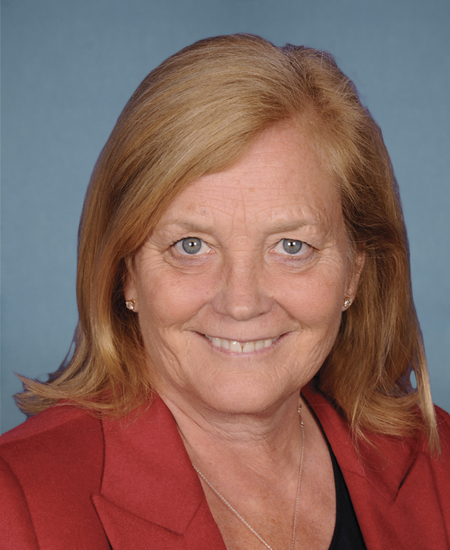
Rep. Chellie Pingree
Sponsored bills
Supplemental Security Income Restoration Act of 2021 This bill modifies eligibility for, and other components of, the Supplemental Security Income (SSI) program, including by (1) increasing applicable income and resource limits used to determine SSI eligibility, (2) equalizing treatment of married couples when both spouses receive SSI as compared to two unmarried individuals, and (3) eliminating the penalty on SSI applicants or recipients who transfer resources to another individual for less than fair market value.
Physical Therapist Workforce and Patient Access Act of 2021 This bill makes physical therapists eligible for the National Health Service Corps Loan Repayment Program. This program assists primary care, mental health, and dental providers in repaying eligible student loans in exchange for working in areas with shortages of such providers.
Nullifying Opportunities for Variants to Infect and Decimate Act or the NOVID Act This bill establishes the Pandemic Preparedness and Response Program to coordinate and carry out the U.S. government's global health response to COVID-19, its variants, and other pathogens with pandemic potential. As part of the program, the bill requires, within 30 days, the development of a comprehensive strategy to end the COVID-19 pandemic. The strategy must outline efforts to increase COVID-19 vaccinations worldwide, including through the immediate release of the COVID-19 vaccine doses that the United States committed to sending abroad. The bill also requires a long-term strategy for the program to prevent future pandemics.
Resilient Highways Act of 20 21 This bill addresses projects to improve the resiliency of federal-aid highways, bridges, and tunnels on and off the National Highway System. Specifically, the bill allows states to use up to 15% of funds apportioned under the national highway performance program for projects to mitigate the risk of recurring damage or the cost of future repairs from extreme weather, flooding, and other natural disasters on infrastructure that is part of the National Highway System; provides for a maximum federal cost-share of up to 100% for these projects; and authorizes emergency relief funds to be used to pay for these projects, including raising roadway grades, deepening channels to prevent flooding, improving drainage, and stabilizing slopes.
Medical Nutrition Equity Act of 2021 This bill expands coverage under Medicare, Medicaid, other specified federal health care programs, and private health insurance to include foods, vitamins, and individual amino acids that are medically necessary for the management of certain digestive and metabolic disorders and conditions.
State-Based Universal Health Care Act of 20 21 This bill establishes the option for states, or groups of states, to apply to waive certain federal health insurance requirements and provide residents with health insurance benefits plans through a state-administered program. Such programs must cover 95% of the residents in the state within five years and plan benefits must be at least as comprehensive and affordable as the coverage under the equivalent federal program. State programs are supported with funds from the federal programs the state programs replace, which may include Medicare, Medicaid, the Children's Health Insurance Program, the Federal Employee Health Benefits program, certain federal tax credits, and premium-assistance funds, among others. The bill requires the Department of Health and Human Services to appoint an Independent Assessment Panel for Comprehensive Care to review and recommend whether to approve state applications. Each approved state program must be independently reviewed every five years to evaluate changes in health benefits access, quality, and coverage, including whether the state has met the 95% coverage requirement. The federal government must pay all health insurance costs for American Indians and Alaska Natives who enroll in a plan through a state insurance program.
Paycheck Fairness Act This bill addresses wage discrimination on the basis of sex, which is defined to include pregnancy, sexual orientation, gender identity, and sex characteristics. Specifically, it limits an employer's defense that a pay differential is based on a factor other than sex to only bona fide job-related factors in wage discrimination claims, enhances nonretaliation prohibitions, and makes it unlawful to require an employee to sign a contract or waiver prohibiting the employee from disclosing information about the employee's wages. The bill also increases civil penalties for violations of equal pay provisions. Additionally, the Equal Employment Opportunity Commission (EEOC) and the Office of Federal Contract Compliance Programs must train EEOC employees and other affected parties on wage discrimination. The bill directs the Department of Labor to (1) establish and carry out a grant program to provide training in negotiation skills related to compensation and equitable working conditions, (2) conduct studies to eliminate pay disparities between men and women, and (3) make available information on wage discrimination to assist the public in understanding and addressing such discrimination. The bill establishes the National Award for Pay Equity in the Workplace for an employer who has made a substantial effort to eliminate pay disparities between men and women. It also establishes the National Equal Pay Enforcement Task Force to address compliance, public education, and enforcement of equal pay laws. Finally, the bill requires the EEOC to issue regulations for collecting from employers compensation and other employment data according to the sex, race, and national origin of employees for use in enforcing laws prohibiting pay discrimination.

Toxic Free Food Act of 2021 This bill requires the Food and Drug Administration (FDA) to revise its regulations relating to food additives that may be considered generally recognized as safe (GRAS). (A substance deemed GRAS is not subject to the premarket review requirements for food additives. A manufacturer may notify the FDA that it has determined that a substance is GRAS.) The revised regulations must prohibit a manufacturer from marketing a substance as GRAS (or manufacturing or selling a food containing that substance) unless the manufacturer has notified the FDA that it has determined that the substance is GRAS and submitted certain information supporting this position, including information about the substance's cumulative effects. The FDA must maintain a public website with each GRAS submission and supporting information. There must be a period of at least 90 days for the FDA and the public to review and object to such submissions. Furthermore, under the revised regulations, newly synthesized or novel chemicals and carcinogenic substances may not be deemed GRAS. The FDA may not rely on experts with conflicts of interest when making a GRAS determination. The FDA must also (1) incorporate in its rules certain best practices for convening a GRAS panel, (2) create a process to systematically reassess any substances previously determined to be GRAS, and (3) reestablish the Food Advisory Committee to assist with establishing standards and procedures for reassessing substances.
Sensible, Timely Relief for America's Nuclear Districts' Economic Development Act of 2021 or the STRANDED Act of 2021 This bill provides resources to communities affected by stranded nuclear waste. The bill defines stranded nuclear waste as nuclear waste or spent nuclear fuel stored in dry casks or spent fuel pools at the site of an eligible civilian nuclear power plant. Specifically, the bill provides a first-time homebuyer tax credit for homeownership in nuclear affected communities. In addition, the bill directs the Economic Development Administration to establish a competitive prize competition to award prizes to affected communities for proposals to carry out alternatives to nuclear facilities, generating sites, and waste sites. The bill also provides grants to nuclear-affected communities to (1) offset the economic and social impacts of stranded nuclear waste on such communities, and (2) support such communities that are facing decreased tax revenues or assessed valuation as a result of decommissioning a civilian nuclear power plant.