

Vanessa Guillén Military Justice Improvement and Increasing Prevention Act This bill modifies the process and policy related to the disposition of charges and convening of courts-martial for certain sexual assault cases and other specified offenses under the Uniform Code of Military Justice (UCMJ). Among other elements, the bill provides that the determinations on the preferral, disposition, and referral of charges for specified offenses under the UCMJ must be made by a commissioned officer of the Armed Forces who is designated as a court-martial convening authority (in grade O-6 or higher) and who is available for detail as trial counsel, has significant trial experience, and is outside the chain of command of the member subject to the charges.
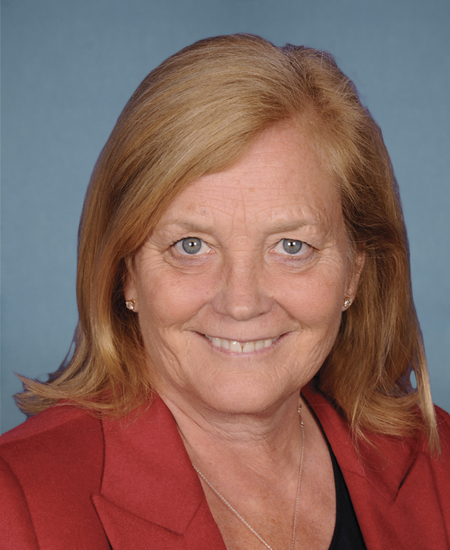
Rep. Chellie Pingree
Sponsored bills
Blue Carbon Protection Act This bill establishes programs, grants, and requirements to protect and restore marine and blue carbon ecosystems, which are vegetated coastal habitats and include mangroves, tidal marshes, and other tidal or salt-water wetlands that have the capacity to sequester and store carbon.
Regional Ocean Partnership Act of 2021 This bill allows the National Oceanic and Atmospheric Administration (NOAA) to designate and support Regional Ocean Partnerships between coastal states that share a common ocean or coastal area. Specifically, NOAA may designate a partnership as a Regional Ocean Partnership if it (1) is established to coordinate the interstate management of coastal resources; (2) focuses on the environmental issues affecting the ocean and coastal areas of the coastal states participating in the partnership; (3) complements existing state coastal and ocean management efforts on an interstate scale, focusing on shared regional priorities; (4) does not have a regulatory function; and (5) is not duplicative of an existing Regional Ocean Partnership. The bill designates the following entities as Regional Ocean Partnerships: the Gulf of Mexico Alliance, the Northeast Regional Ocean Council, the Mid-Atlantic Regional Council on the Ocean, and the West Coast Ocean Alliance. Each partnership must maintain mechanisms for consultation and engagement with the federal government, tribal governments, and nongovernmental entities, such as academic organizations. A partnership may use provided federal funds to award grants and enter into contracts for certain purposes, including to monitor the water quality and living resources of multistate ocean and coastal ecosystems.
Bolstering Long-term Understanding and Exploration of the Great Lakes, Oceans, Bays, and Estuaries Act or the BLUE GLOBE Act This bill addresses data collection and monitoring of the Great Lakes, oceans, bays, estuaries, and coasts. The bill increases domestic and international coordination to enhance data management and monitoring of the Great Lakes, oceans, bays, estuaries, and coasts. It adds programs for the application and development of innovative technology to the list of technology programs used to combat illegal, unreported, and unregulated fishing. It also modifies requirements related to the scientific workforce in areas of oceanic and atmospheric research and development to include investigating whether there is a workforce shortage, workforce diversity, actions the federal government can take to increase diversity in the scientific workforce, and actions it can take to shorten the hiring backlog for such workforce. The National Oceanic Atmospheric Administration (NOAA) must (1) ensure that a goal of its cooperative institutes is to advance or apply emerging technologies, (2) create an ocean innovation prize to catalyze the rapid development and deployment of data collection and monitoring technology, and (3) seek to enter into an agreement with the National Academy of Sciences to assess the potential for an Advanced Research Projects Agency-Oceans. The bill also reauthorizes through FY2024 various NOAA hydrographic programs, including nautical mapping and charting. Additionally, relevant federal agencies must measure the value and impact of industries related to the Great Lakes, oceans, bays, estuaries, and coasts on the U.S. economy.
Keep America's Waterfronts Working Act This bill addresses the preservation and accessibility of waterfronts in coastal states. The bill directs the National Oceanic and Atmospheric Administration (NOAA) to establish a Working Waterfront Task Force that will be designed to identify and address critical working waterfront needs with respect to cultural and economic importance, environmental threats, and market conditions for water-dependent businesses. NOAA must also establish a Working Waterfront Grant Program. Under the program, NOAA may award grants to coastal states with approved working waterfront plans in place to preserve and expand access to coastal waters for people engaged in fishing, aquaculture, boat building, and other water-dependent businesses. In addition, NOAA is authorized to award grants to coastal states for the purpose of developing or revising working waterfront plans. States are allowed to allocate any grant money received to eligible Indian tribes, local governments, and other entities. Each state that is awarded a grant must contribute at least 25% of matching funds towards the total cost of the project carried out with the grant, subject to certain exceptions. The bill establishes the Working Waterfronts Preservation Loan Fund to provide loans to coastal states for the purpose of implementing working waterfront plans.
Blue Carbon for Our Planet Act This bill addresses the protection and restoration of coastal blue carbon ecosystems, which are vegetated coastal habitats and include mangroves, tidal marshes, and other tidal or salt water wetland that have the ability to sequester and store carbon. Specifically, the bill establishes the Interagency Working Group on Coastal Blue Carbon to (1) develop and maintain a map of these ecosystems, (2) assess the impediments to the protection and restoration of these ecosystems, and (3) establish national protection and restoration priorities regarding these ecosystems. The National Oceanic and Atmospheric Administration (NOAA) must chair the group and establish a national goal for conserving ocean and coastal blue carbon ecosystems within the territory of the United States and set targets to restore degraded coastal blue carbon ecosystems as appropriate. NOAA must also (1) establish integrated pilot programs to restore degraded coastal blue carbon ecosystems, and (2) enter into an agreement with the National Academy of Sciences to assess the long-term effects of geologic stores of carbon dioxide in a deep seafloor environment. Finally, the bill establishes requirements concerning the stewardship and standardization of blue carbon data in the Coastal Carbon Data Clearinghouse.
Keeping Our Promises Act This bill expands the list of diseases that are provided a presumption of service-connection for veterans who served in the Republic of Vietnam between January 9, 1962, and May 7, 1975. The bill extends through September 30, 2030, the requirement for the Department of Veterans Affairs (VA) to make determinations and submissions related to the connection between herbicide exposure and occurrence of disease. Additionally, the VA is prohibited from taking the costs of compensation into account when determining the association between exposure to an herbicide agent and occurrence of a disease. The bill requires the VA to determine within 120 days (currently 60) whether a presumption of service-connection is warranted for diseases covered by a National Academy of Sciences report.
This bill requires the Department of Veterans Affairs to ensure that, if it creates a presumption of service-connection between the occurrence of a disease and exposure to an herbicide agent while serving in the Armed Forces between January 9, 1962, and June 30, 1976, at a military base in Thailand, such presumption must also apply to exposure at any military base in Thailand, regardless of where on the base the veteran was located or what military job specialty the veteran performed.
Continuous Improvement and Accountability in Organic Standards Act This bill requires the Department of Agriculture (USDA) to undertake rulemaking and other activities to implement certain recommendations of the National Organic Standards Board (a federal advisory board that considers and makes recommendations concerning the production, handling, and processing of organic products). Specifically, USDA must issue within a specified time line final rules for implementing recommendations approved (1) by the board between December 31, 2000, and the date of the bill's enactment; and (2) with at least two-thirds of the votes cast at a meeting where a quorum was present. If USDA determines issuing rules for such recommendations is not practicable, it must identify and report to Congress about the specific constraints that preclude rulemaking. In addition, the bill sets out a process and time line for USDA to implement through rulemaking future recommendations of the board that are approved by at least two-thirds of the votes cast at a meeting where a quorum was present. The bill also requires state officials or entities that certify organic farms or handling operations to report annually concerning the implementation of and compliance with any new rule or guidance.
Puppy Protection Act of 2021 This bill requires the Department of Agriculture to expand standards that govern the humane handling, care, treatment, and transportation of animals to include new requirements for commercial dog dealers. Specifically, the standards must require dog dealers to provide to dogs adequate housing, exercise, and veterinary care; appropriate and nutritious food; continuous access to potable water; and meaningful socialization with humans and compatible dogs for at least 30 minutes each day. The standards must also include requirements for breeders to use safe breeding practices and make all reasonable efforts to find humane placement for retired breeding dogs.