

Maddy summaryThis bill establishes pay equity for federal firefighters by adjusting how their retirement benefits are calculated and setting a standard workweek. It requires retirement annuities to include overtime hours worked as part of a firefighter's regular schedule (e.g., overtime during standard shifts), rather than excluding them. The bill also mandates a maximum 60-hour regular workweek for federal firefighters, set by the Office of Personnel Management within one year of enactment. These changes directly affect federal firefighters, aiming to improve pay comparability with municipal firefighters and other federal employees while supporting recruitment and retention.
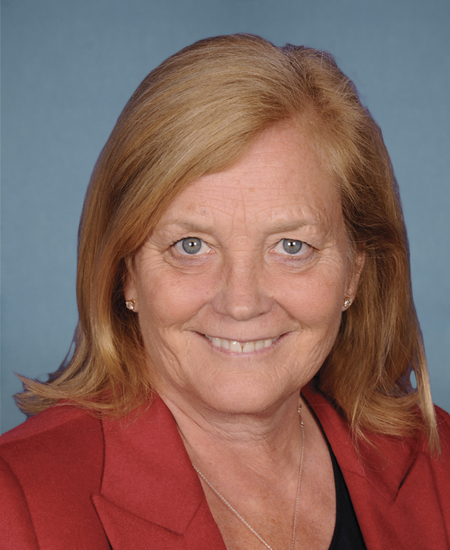
Rep. Chellie Pingree
Sponsored bills
Maddy summaryHR 1247 would award a Congressional Gold Medal to the Freedom Riders collectively, honoring their pivotal role in challenging segregation in interstate travel during the Civil Rights movement. The medal, to be struck by the U.S. Mint and displayed at the Smithsonian Institution, recognizes their nonviolent protests that led to the 1961 federal ban on segregation in interstate public facilities. This is a symbolic tribute with no legal effect, as the bill does not create new policies or alter existing laws.
Maddy summaryHR 1263, the Transformation to Competitive Integrated Employment Act, aims to end the use of special certificates that allow employers to pay people with disabilities below minimum wage or customary rates for similar work. The bill requires employers currently using these certificates to transition to competitive integrated employment where individuals with disabilities receive at least minimum wage or the customary rate for similar work. It creates grant programs for states and specific employers to support this transition, with a timeline to phase out special certificates over four years. The act also establishes reporting requirements and technical assistance to help individuals with disabilities find and retain integrated employment.
Maddy summaryThe Richard L. Trumka Protecting the Right to Organize Act of 2023 strengthens workers' rights to organize unions by making it harder for employers to interfere with organizing efforts. Key provisions include changing the definition of "employee" to make it more difficult to classify workers as independent contractors, prohibiting employers from threatening to permanently replace striking workers, and requiring employers to provide voter lists for union elections. The bill also creates a new electronic voting system for union elections, strengthens whistleblower protections for workers reporting labor violations, and increases penalties for unfair labor practices. These changes directly affect workers seeking to form unions, employers who may interfere with organizing, and labor organizations. The bill aims to make it easier for workers to exercise their right to collective bargaining under the National Labor Relations Act.
Maddy summaryThis is a non-binding resolution expressing the House of Representatives' symbolic support for designating February 27-March 3, 2023, as "Public Schools Week." It does not create new laws, allocate funding, or directly affect any individuals or institutions. The resolution highlights the importance of public schools to democracy, equity, and student success through a series of supporting statements. As a procedural resolution, it has no legal effect beyond acknowledging the significance of public education.
Maddy summaryThe Justice for Black Farmers Act of 2023 addresses historical discrimination against Black farmers by the USDA through several key provisions. It establishes an Equity Commission to study discrimination and recommend solutions, creates an independent Civil Rights Oversight Board to review discrimination complaints, and provides land grants of up to 160 acres to eligible Black farmers at no cost. The bill also improves access to credit for socially disadvantaged farmers, requires the USDA to collect and publish data on racial disparities in its programs, and includes protections against discriminatory practices in the livestock industry. These measures aim to increase land ownership and economic opportunity for Black farmers while addressing systemic barriers they've faced for decades.
Maddy summaryThis bill requires drug manufacturers to include patient experience data in the U.S. Food and Drug Administration's risk-benefit assessments for new drug approvals. It amends the Federal Food, Drug, and Cosmetic Act to mandate that sponsors submit and describe how patient experience data was considered during the review process. The law directly affects pharmaceutical companies seeking new drug approvals and the FDA during its evaluation. The key provision adds specific language to the approval framework, making patient experience data a formal part of the assessment.
This bill authorizes the Department of Agriculture to waive the matching funds requirement for grants under the specialty crop research initiative. Currently, entities that receive grants under the initiative must provide nonfederal matching funds (including funds from an agricultural promotion, research, and information program) equal to not less than the amount of the grant.
Maddy summaryThe COMPOST Act (HR 651) makes composting a recognized conservation practice under federal farm programs, directly affecting farmers, local governments, and community organizations. It creates a new $200 million annual grant and loan program (2024-2033) to fund projects like composting facility construction, food waste collection systems, and onsite composting programs. Priority is given to projects serving low-income communities, supporting minority-owned businesses, and using distributed infrastructure (e.g., home, farm, or community-scale composting). The bill requires projects to demonstrate waste processing capacity, high-quality compost production, and environmental justice considerations.
Maddy summaryThe Department of Peacebuilding Act of 2023 would establish a new Cabinet-level Department of Peacebuilding within the executive branch of the U.S. government. The department would include multiple offices focused on domestic and international peacebuilding, violence prevention, peace education, and conflict resolution, with specific offices dedicated to areas like peace education, domestic activities, international activities, technology, arms control, and human rights. It would create a Secretary of Peacebuilding position and require the department to develop policies addressing root causes of violence, promote nonviolent conflict resolution, and collaborate with existing federal agencies. The bill would mandate annual reports on progress toward peace in the United States and require consultation with other departments on matters related to conflict prevention and peacebuilding.