

Maddy summaryThe COST of Relocations Act (HR 2470) requires federal agencies to conduct a detailed benefit-cost analysis before relocating more than 5% or 100 employees (whichever is smaller) outside their current commuting area. Agencies must submit an unredacted report to their Inspector General, covering expected outcomes, stakeholder impacts, risk assessments, and how the move affects the agency's mission. The Inspector General then reviews the report and submits findings to Congress within 90 days, including an assessment of whether the relocation complies with existing OMB guidance. This law applies specifically to significant relocations of federal operations, ensuring transparency without overriding other legal requirements for such moves.
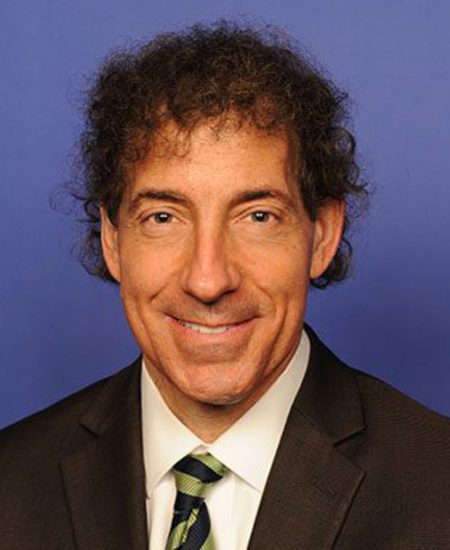
Rep. Jamie Raskin
Sponsored bills
Maddy summary# Northern Rockies Ecosystem Protection Act (2023) - Summary This comprehensive environmental protection bill designates and protects vast areas across the Northern Rockies region of Idaho, Montana, Wyoming, Oregon, and Washington. ## Key Provisions 1. **Wilderness Designations**: - Creates numerous new wilderness areas totaling millions of acres across the region - Includes specific designations like Yellowstone, Glacier/Northern Continental Divide, Hells Canyon, Salmon/Selway, and Cabinet-Yaak ecosystems - Includes 108 specific wilderness areas identified in the bill (from Anaconda-Pintler to McCullough Peaks) 2. **Biological Connecting Corridors**: - Designates approximately 2.9 million acres as biological corridors - These corridors connect larger ecosystem areas to facilitate wildlife migration - Prohibits timber harvesting, mining, oil/gas development, and new road construction in these corridors 3. **Wild and Scenic Rivers**: - Adds 78 new river segments to the Wild and Scenic Rivers system - Protects rivers like the South Fork Payette, Salmon River, Yaak River, and many others - Specifies exact segments for protection 4. **Wildland Restoration**: - Designates 9 recovery areas totaling approximately 1,023,000 acres - Requires restoration of damaged lands to natural conditions - Prohibits certain activities in these recovery areas 5. **Implementation**: - Requires an interagency team to monitor and evaluate implementation - Mandates geographic information system for monitoring the Northern Rockies Bioregion - Requires annual reports to Congress on implementation progress 6. **Special Protections**: - Maintains existing water rights of the United States - Protects Indian Tribe treaty rights and cultural access to protected areas - Requires consultation with Tribes regarding management plans This bill represents a comprehensive effort to protect biodiversity, maintain ecosystem connectivity, and restore damaged lands across a significant portion of the Northern Rockies region.
Maddy summaryThis bill, HR 2411, directs the U.S. government to immediately resume funding for the United Nations Relief and Works Agency for Palestine Refugees (UNRWA) by repealing two prior funding restrictions. It requires the State Department to restart payments to UNRWA under existing authorities and mandates the President to rescind a 2025 executive order ending UNRWA support. The bill affects Palestinian refugees in Gaza, Jordan, Lebanon, Syria, and the West Bank who rely on UNRWA for humanitarian aid, as well as U.S. funding mechanisms. It also requires quarterly reports through 2028 on UNRWA’s progress implementing accountability reforms from an independent review led by Catherine Colonna.
Maddy summaryThis bill would require federal firearms licensees to prohibit sales of specific high-capacity rifles and shotguns to people under 21. It targets semiautomatic centerfire rifles and shotguns capable of holding more than 5 rounds in their magazines, raising the age limit from 18 to 21 for these weapons. Exceptions apply for active military members and certain government employees authorized to carry firearms. The law directly affects gun retailers and individuals under 21 seeking to purchase these specific firearms. It modifies existing federal gun sale rules without changing age requirements for other firearms.
Maddy summaryHCONRES 21 is a symbolic House resolution recognizing the persistent gender wage gap in the U.S., where women earn significantly less than men for comparable work. It cites specific data showing women overall earn 75 cents and women of color earn even less (e.g., 58 cents for Latinas) per dollar earned by White, non-Hispanic men. The resolution does not create new laws or policies but formally acknowledges the economic impact of this disparity, including annual lost wages exceeding $994 million for full-time women workers. It also highlights designated Equal Pay Days for different demographic groups to underscore the varying timelines to close the gap.
Maddy summaryHR 1936, the "No Invading Allies Act," prohibits the use of U.S. military funds to invade or seize territory from Canada, Panama, or Greenland without specific authorization. It requires either a congressional declaration of war, specific statutory authorization, or a national emergency caused by an attack on the U.S. to fund such actions. The bill also limits emergency military deployments to a 60-day window following an attack. It explicitly states this does not change constitutional authority or existing treaties, and applies only to these three specific territories.
Maddy summaryThe Paycheck Fairness Act strengthens equal pay protections by expanding the definition of "sex" to include pregnancy, childbirth, sexual orientation, gender identity, and sex characteristics. It modifies employer defenses for pay disparities to require proof that any pay difference is job-related, not based on sex, and accounts for the entire pay gap. The bill prohibits employers from asking about salary history, enhances penalties for violations, and requires employers with 100+ employees to collect and report detailed pay data by race, sex, and job category. It also establishes training programs for employers on eliminating pay bias and creates a National Equal Pay Enforcement Task Force to coordinate enforcement efforts. This legislation directly affects employers, particularly those with 100+ employees, and aims to address pay disparities impacting women, people of color, and other underrepresented groups.
Maddy summaryH.J. Res. 80 would declare the Equal Rights Amendment (ERA) part of the U.S. Constitution, asserting it has been ratified by 38 states (three-fourths of the states) despite the original 1972 deadline. If passed, this resolution would formally establish the ERA as a constitutional amendment, requiring all federal and state laws to align with its gender equality protections. The bill does not create new laws but confirms the ERA's status as part of the Constitution, affecting how laws are interpreted and enforced. It is a procedural step to resolve the legal dispute over the ERA's validity after decades of debate.
Maddy summaryThe Air America Act of 2025 authorizes one-time payments of $40,000 to individuals who worked for Air America or its affiliated companies for at least five years during 1950-1976, or to their surviving spouses, children, or dependents. Additional payments of $8,000 per full year beyond five years are allowed. The program is capped at $60 million total funding, with claims required within two years of final regulations. Payments are a single lump sum with no ongoing benefits, and the bill explicitly states it does not create new entitlements beyond this one-time award.
Maddy summaryHR 2029, the "Stop Comstock Act," amends federal obscenity laws to remove outdated restrictions on abortion and contraception. It deletes references to "indecent" materials and abortion-related language from Title 18 (e.g., removing "or means for procuring abortion" from section 552 and revising definitions in sections 1461 and 1462). The bill clarifies that federal law does not prohibit the distribution of materials related to abortion or contraceptives, updating how "obscene" is defined. These changes directly affect federal enforcement of obscenity laws, particularly regarding medical information and devices. The bill focuses on modernizing statutory language to align with current legal standards for protected speech and healthcare access.