

Maddy summaryThis bill (HJRES 115) terminates a presidential emergency declaration made on August 11, 2025, which claimed a "crime emergency" in Washington, D.C. It directly affects the District of Columbia by ending federal restrictions that prevented D.C. from using $1 billion in locally-raised funds for public safety, law enforcement, fire services, and schools. The resolution cites that the emergency declaration was legally flawed - section 740 of the DC Home Rule Act does not permit federalizing the Metropolitan Police Department - and notes that D.C. violent crime has reached a 30-year low. The bill formally ends the emergency under the DC Home Rule Act, restoring D.C.'s authority over its own budget and public safety resources.
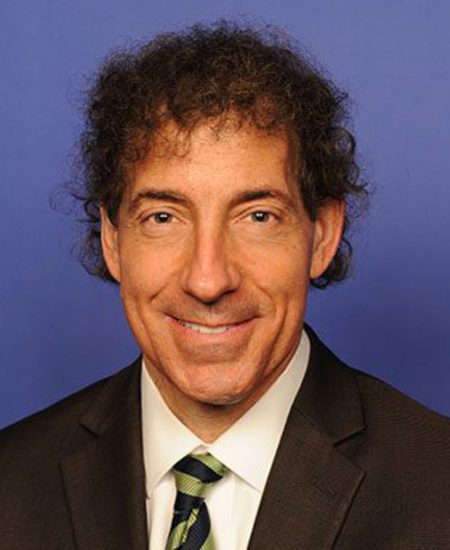
Rep. Jamie Raskin
Sponsored bills
Maddy summaryThe PUPP Act of 2025 creates a federal grant program to fund housing for unhoused people who have pets. It authorizes $5 million annually (2026-2030) for grants to local governments, nonprofits, or housing providers to build or retrofit properties that offer both human housing and pet-friendly accommodations. Key requirements include on-site veterinary care for pets (spaying, vaccinations, etc.), supportive services like mental health counseling for residents, and coordination with local animal care providers. This directly affects unhoused individuals with pets - often excluded from standard shelters - and the organizations managing these housing programs.
Maddy summaryHR 4917, the Expanding the VOTE Act, amends the Voting Rights Act to increase language access for voters. It expands the definition of "voting materials" to include digital formats and requires states to provide language assistance (both written and oral) for minority language groups, with special provisions for American Indian and Alaska Native languages when written translations aren't feasible. The bill creates grants to help jurisdictions provide voting materials in languages that don't currently trigger Section 203 coverage, and mandates a study on lowering population thresholds for language assistance requirements. This directly affects states, local election jurisdictions, and voters who speak minority languages, including those in communities not currently covered by existing language access rules.
Maddy summaryHR 4786, the "Honest Elections and Campaign, No Gain Act," requires federal candidates' campaign committees and leadership PACs to disburse any leftover funds within two years after an election. Committees must first pay existing obligations, then return contributions to donors, donate to qualified charities, or transfer funds to political parties - prohibiting direct payments to relatives except for documented committee expenses. Former candidates registering as lobbyists or foreign agents must certify compliance with these disbursement rules under penalty of perjury. The law applies to elections starting in 2026, aiming to prevent unused campaign funds from being retained or misused after elections.
Maddy summaryThis bill removes a barrier preventing most low-income students from accessing SNAP benefits. It amends the Food and Nutrition Act to explicitly allow students enrolled at least half-time in recognized higher education programs to qualify for SNAP, reversing a prior exclusion. The key change eliminates the previous requirement that students meet specific exceptions (now deleted) and adds a new eligibility category under Section 3(m)(5). This directly affects low-income undergraduate and graduate students at colleges and training programs who were previously ineligible. The changes take effect January 2, 2026.
Maddy summaryHR 4796, the Restoring Essential Healthcare Act, repeals a provision that blocked Medicaid payments to certain healthcare providers during a specific period. It directly affects Medicaid beneficiaries who received care from these providers between the enactment of the prior law (Public Law 119-21) and this bill's enactment. The key provision retroactively restores Medicaid payments for services already provided during that blocked period, treating the payment restriction as if it never existed. This change ensures eligible individuals and providers receive reimbursement for covered care delivered during the prohibited timeframe.
Maddy summaryHR 4763, the PTO Act, requires most employers to provide employees with at least 1 hour of paid annual leave for every 25 hours worked, with a maximum of 80 hours per year. It applies to private-sector workers and certain government employees, protecting their right to use paid leave for any purpose without disclosing the reason. The bill mandates employers to maintain health benefits during leave, allow carryover of up to 40 hours of unused leave, and pay out unused leave upon separation. It also prohibits employers from discriminating against employees for using paid leave or requiring them to find replacements while on leave. The law includes enforcement mechanisms, allowing employees to file complaints with the Department of Labor or pursue private lawsuits.
Maddy summaryHRES 601 is a non-binding House resolution recognizing the Federal Government's duty to lead global biomedical research. It expresses Congress's position that NIH funding and scientific independence are critical national assets, emphasizing the need to protect research capacity and double biomedical investment over the next decade. The resolution lists specific goals, including reducing cancer deaths, advancing Alzheimer's research, and improving clinical trial representation, but does not create new laws or allocate funds. It directly addresses the National Institutes of Health (NIH), federal research policy, and the broader biomedical research community. As a symbolic resolution, it has no legal effect but aims to shape future policy discussions.
Maddy summaryThis bill adds "spotted lanternfly control" as a priority research area under federal agricultural funding, authorizing grants to develop and share tools for combating the invasive spotted lanternfly pest (Lycorma delicatula). It directly affects farmers, agricultural communities, and state departments of agriculture in states like Pennsylvania where the pest causes significant crop damage. The key provision amends existing law to allow research grants focused on creating effective treatments and management strategies for the pest. The bill also extends the funding period for all high-priority research initiatives through 2030.
Maddy summaryThis bill would require states to adopt ranked choice voting for elections of U.S. Senators and Representatives, with specific rules for how the voting system would work, including ballot design and tabulation methods. It mandates the use of multi-member districts in states with six or more representatives (with districts electing 3-5 representatives each) and requires states with five or fewer representatives to elect all representatives at-large. The bill also establishes new nonpartisan criteria for congressional redistricting, including requirements for population equality, Voting Rights Act compliance, and measures to prevent partisan gerrymandering. States would receive federal funding to implement these changes, with the requirements taking effect for elections following the 2030 census.