This resolution (1) supports the designation of a National Day of Reason; and (2) encourages all citizens, residents, and visitors to focus on the central importance of reason, critical thought, the scientific method, and free inquiry to resolving social problems and promoting human welfare.
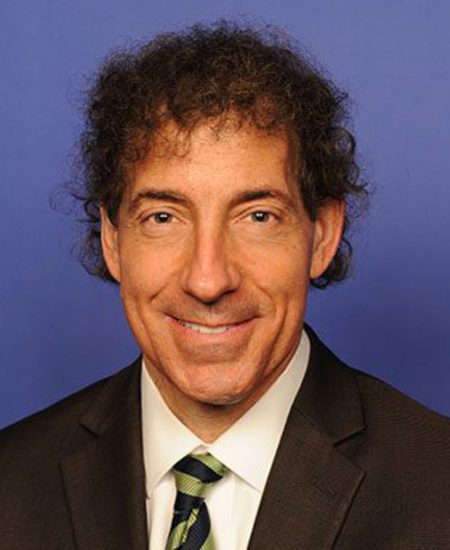
Rep. Jamie Raskin
Sponsored bills
This resolution condemns and denounces all forms of anti-Asian sentiment, including those related to COVID-19 (i.e., coronavirus disease 2019), and calls on federal law enforcement officials, working with state and local agencies, to take specified steps. The resolution calls on federal officials to expeditiously investigate and document all credible reports of hate crimes, harassment, bullying, and threats against the Asian American and Pacific Islander communities; the Attorney General to work with state and local agencies and Asian American and Pacific Islander community-based organizations to prevent discrimination and to expand culturally competent and linguistically appropriate education campaigns on public reporting of hate crimes; and the Department of Health and Human Services to issue guidance describing best practices to mitigate racially discriminatory language in describing the pandemic. The resolution recommits the United States to serving as a world leader in building more inclusive, diverse, and tolerant societies by (1) prioritizing language access and inclusivity in communication practices, and (2) combating misinformation and discrimination that put Asian Americans and Pacific Islanders at risk.
Homecare for Seniors Act This bill allows tax-exempt distributions from health savings accounts (HSAs) to be used for qualified home care. Qualified home care means a contract to provide three or more of the following services in the residence of the service recipient assistance with eating, assistance with toileting, assistance with transferring, assistance with bathing, assistance with dressing, assistance with continence, and medication adherence. The Department of Health and Human Services must carry out a campaign to increase public awareness of the in-home service expenses that are eligible for tax-free distribution from HSAs.
Universal Child Care and Early Learning Act This bill provides funds to the Department of Health and Human Services (HHS) for an affordable child care and early learning program. Children who are at least six weeks of age but not yet required to attend school may participate in the program regardless of family income, disability status, citizenship status, or employment of a family member. Under the program, HHS must support sponsors (e.g., states, local governments, tribal organizations, and nonprofit community organizations) that provide child care and early learning services for families. Families must pay a subsidized fee, based on their income, for the services. The fees are waived for children from families with incomes below 200% of the poverty line. The fees are capped at 7% of a family's income regardless of the family's income level.
Ghost Guns Are Guns Act This bill broadens the definition of firearm for purposes of federal firearms laws. Specifically, it includes as a firearm any combination of parts designed or intended to be used to convert a device into a firearm and from which a firearm may be readily assembled.
Saudi Arabia Accountability for Gross Violations of Human Rights Act This bill imposes visa-blocking sanctions on specified foreign persons determined to have played a role in the killing of Jamal Khashoggi, and it requires the Department of State to report on incidents of arbitrary detention, violence, and state-sanctioned harassment by Saudi Arabia against U.S. citizens and their family members. The bill also requires the State Department to make publicly available a report that describes whether and how a concurrence with Saudi Arabia for U.S. security assistance will avoid identifying the United States with governments that deny human rights and fundamental freedoms to their people.
No Guns for Abusers Act of 2021 This bill authorizes the Department of Justice (DOJ) to make grants for states, local governments, and tribal governments to implement procedures to remove firearms from individuals who are charged with or convicted of domestic violence or subject to a domestic violence protective order. The National Institute of Justice must report on best practices for implementing such procedures, and DOJ must submit federal legislative recommendations in accordance with the best practices.
Pandemic Heroes Compensation Act of 2021 This bill allows essential workers and their family members to file claims and receive compensation for harm or death suffered as a result of COVID-19 (i.e., coronavirus disease 2019). A Special Master appointed by the Department of Justice must review claims submitted and determine if a claimant is eligible for compensation, the extent of the harm to the claimant, and the amount of compensation to be awarded.
Mental Health Justice Act of 2021 This bill creates a grant program for states and local governments to train and dispatch mental health professionals to respond, instead of law enforcement officers, to emergencies that involve people with behavioral health needs. The Substance Abuse and Mental Health Services Administration (SAMHSA) must manage the program in consultation with the Department of Justice (DOJ). SAMHSA may cancel grants that increase incarceration or institutionalization. Grantees must use funds for purposes including de-escalation and anti-racism training. The Department of Health and Human Services and the DOJ must evaluate this program.
Do No Harm Act This bill prohibits the application of the Religious Freedom Restoration Act of 1993 (RFRA) to specified federal laws or the implementation of such laws. Currently, RFRA prohibits the government from substantially burdening a person's exercise of religion even if the burden results from a rule of general applicability, except in furtherance of a compelling governmental interest when using the least restrictive means. Under the bill, RFRA is inapplicable to laws or the implementation of laws that protect against discrimination or the promotion of equal opportunity (e.g., the Civil Rights Act of 1964); require employers to provide wages, other compensation, or benefits, including leave; protect collective activity in the workplace; protect against child labor, abuse, or exploitation; or provide for access to, information about, referrals for, provision of, or coverage for, any health care item or service. The bill prevents RFRA from being used to deny (1) goods or services the government has contracted, granted, or made an agreement to provide to a beneficiary of or participant in a program or activity funded by such government contract, grant, agreement, or other award; or (2) a person's full and equal enjoyment of a government-provided good, service, benefit, facility, privilege, advantage, or accommodation. In order for a person to assert a RFRA claim or defense in a judicial proceeding, the government must be a party to the proceeding.