Supplemental Security Income Restoration Act of 2021 This bill modifies eligibility for, and other components of, the Supplemental Security Income (SSI) program, including by (1) increasing applicable income and resource limits used to determine SSI eligibility, (2) equalizing treatment of married couples when both spouses receive SSI as compared to two unmarried individuals, and (3) eliminating the penalty on SSI applicants or recipients who transfer resources to another individual for less than fair market value.
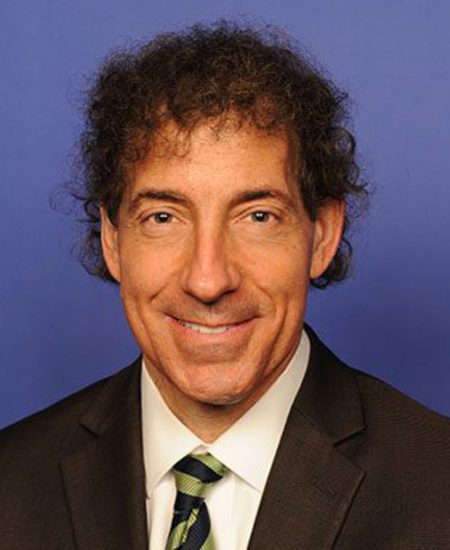
Rep. Jamie Raskin
Sponsored bills
Services and Trauma-informed Research of Outcomes in Neighborhoods Grants for Support for Children Act of 2021 or the STRONG Support for Children Act of 2021 This bill establishes two grant programs for governmental health departments to prevent and mitigate childhood trauma and adverse childhood experiences. For the first program, the Department of Health and Human Services (HHS) must award grants to health departments to use data analysis methods to identify interventions to prevent and mitigate childhood trauma. Grant activities include using data analysis to identify geographic areas with a high prevalence of adverse childhood experiences and to implement strategies to improve outcomes for infants, children, and adolescents. For the second program, HHS must award grants to local or tribal governments to establish or expand early childhood trauma-informed care coordination services, including by instituting risk and needs assessments to respond to adverse childhood experiences. For both grants, the bill prohibits the use of funds for certain purposes, such as using the data analysis methods to inform individual case decisions, including child removals, or increasing the presence of law enforcement. In addition, HHS must evaluate and report on these programs and make findings and recommendations publicly available on its website.
Medical Nutrition Equity Act of 2021 This bill expands coverage under Medicare, Medicaid, other specified federal health care programs, and private health insurance to include foods, vitamins, and individual amino acids that are medically necessary for the management of certain digestive and metabolic disorders and conditions.
Parity Implementation Assistance Act This bill provides grants to assist states with the implementation of the federal mental health parity requirements. States receiving the grants must request and review from private health insurance plans their required comparative analysis of nonquantitative treatment limitations (NQTLs) with respect to mental health or substance use disorder benefits. (NQTLs are limitations on the scope or duration of benefits for treatment, such as preauthorization requirements.)
State-Based Universal Health Care Act of 20 21 This bill establishes the option for states, or groups of states, to apply to waive certain federal health insurance requirements and provide residents with health insurance benefits plans through a state-administered program. Such programs must cover 95% of the residents in the state within five years and plan benefits must be at least as comprehensive and affordable as the coverage under the equivalent federal program. State programs are supported with funds from the federal programs the state programs replace, which may include Medicare, Medicaid, the Children's Health Insurance Program, the Federal Employee Health Benefits program, certain federal tax credits, and premium-assistance funds, among others. The bill requires the Department of Health and Human Services to appoint an Independent Assessment Panel for Comprehensive Care to review and recommend whether to approve state applications. Each approved state program must be independently reviewed every five years to evaluate changes in health benefits access, quality, and coverage, including whether the state has met the 95% coverage requirement. The federal government must pay all health insurance costs for American Indians and Alaska Natives who enroll in a plan through a state insurance program.
FAIR Leave Act or the Fair Access for Individuals to Receive Leave Act This bill repeals the limit on the aggregate number of workweeks of family and medical leave that spouses employed by the same employer may be entitled to during any 12-month period. The current limit is 12 aggregate workweeks.
Keep It in the Ground Act of 2021 This bill eliminates new fossil fuel production projects on federal public land and waters. Specifically, it prohibits the Bureau of Ocean Energy Management (BOEM) from issuing, renewing, reinstating, or extending any nonproducing lease, or issuing any authorization for the exploration or production of fossil fuel on the Outer Continental Shelf. BOEM must also cancel any lease issued in the Beaufort Sea, Cook Inlet, or Chukchi Sea (three of the five bodies of water that encompass the Alaska Outer Continental Shelf). Further, the Bureau of Land Management (BLM) may not issue, renew, reinstate, or extend any nonproducing lease for the exploration or production of any onshore fossil fuels on land subject to the Mineral Leasing Act. The bill provides for exceptions if there is an imminent national security threat that would be significantly reduced by granting an exception. In addition, BOEM and the BLM may allow a nonproducing lease to be renewed or extended if (1) the lease contract was signed before enactment of this bill, and (2) it is determined that giving effect to any provision of this bill is likely to lead to a judicial ruling that there was a material breach of the nonproducing lease contract.
Shareholder Political Transparency Act of 2021 This bill requires an issuer of securities to disclose information related to expenditures for political activities. Specifically, issuers must disclose quarterly any such expenditure, including by identifying any candidate the expenditure was made in relation to and any trade association or other tax-exempt organization that received dues or other payments that may be used for political activities. Annually, issuers must report on expenditures for political activities made in the previous year over $10,000 and information related to anticipated expenditures for the next year. The Government Accountability Office must report on the effectiveness of the Securities and Exchange Commission's oversight of these reporting and disclosure requirements.
Paycheck Fairness Act This bill addresses wage discrimination on the basis of sex, which is defined to include pregnancy, sexual orientation, gender identity, and sex characteristics. Specifically, it limits an employer's defense that a pay differential is based on a factor other than sex to only bona fide job-related factors in wage discrimination claims, enhances nonretaliation prohibitions, and makes it unlawful to require an employee to sign a contract or waiver prohibiting the employee from disclosing information about the employee's wages. The bill also increases civil penalties for violations of equal pay provisions. Additionally, the Equal Employment Opportunity Commission (EEOC) and the Office of Federal Contract Compliance Programs must train EEOC employees and other affected parties on wage discrimination. The bill directs the Department of Labor to (1) establish and carry out a grant program to provide training in negotiation skills related to compensation and equitable working conditions, (2) conduct studies to eliminate pay disparities between men and women, and (3) make available information on wage discrimination to assist the public in understanding and addressing such discrimination. The bill establishes the National Award for Pay Equity in the Workplace for an employer who has made a substantial effort to eliminate pay disparities between men and women. It also establishes the National Equal Pay Enforcement Task Force to address compliance, public education, and enforcement of equal pay laws. Finally, the bill requires the EEOC to issue regulations for collecting from employers compensation and other employment data according to the sex, race, and national origin of employees for use in enforcing laws prohibiting pay discrimination.

Medicare Access to Radiology Care Act of 2021 This bill provides for Medicare coverage of services that are furnished by a certified radiologist assistant under the supervision of a radiologist. Payment must be made to the supervising radiologist.