

Maddy summaryHR 7507, the Fiscal Harms of Federal Firings Act, mandates the Government Accountability Office (GAO) to study how federal workforce reductions (RIFs) impact state and local government budgets. The study will examine increased costs for services like unemployment insurance and Medicaid, reduced tax revenues, regional economic shifts, and varying fiscal challenges across states. It requires the GAO to consult with state officials, economists, and federal agencies, then submit a public report to Congress within 18 months detailing findings, historical case studies, and policy options. This bill does not change federal policy but aims to provide data for future decisions about RIFs' fiscal effects.
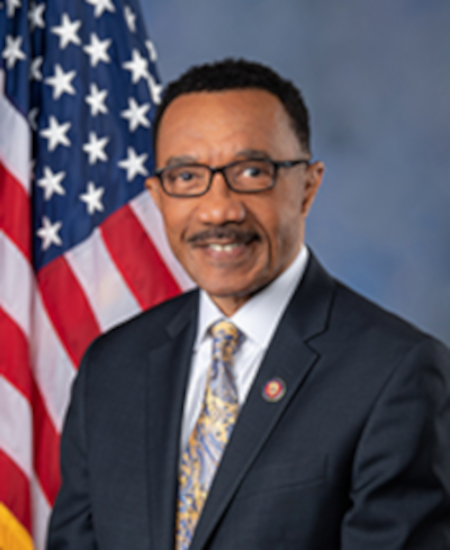
Rep. Kweisi Mfume
Sponsored bills
Maddy summaryHR 7480, the FAIR Act, sets pay adjustments for federal employees in 2027. It increases base pay by 3.1% for most federal workers under standard pay systems and for employees paid according to local civilian wages in high-cost areas. Additionally, it raises locality pay adjustments by 1% for 2027. The bill directly affects all federal employees covered by these pay systems through concrete, formula-based adjustments.
Maddy summaryHRES 1047 designates January 2026 as "National Mentoring Month" to highlight the importance of mentoring relationships for youth development. The resolution does not create new laws or allocate funding but encourages public awareness and support for existing mentoring programs that help young people build skills, confidence, and educational opportunities. It emphasizes mentoring's role in improving academic performance, career readiness, and mental health outcomes without imposing any new obligations on individuals or organizations.
Maddy summaryHRES 1040 is a symbolic resolution recognizing the Greensboro Four sit-in during Black History Month. It commemorates the 66th anniversary of the February 1, 1960, sit-in at a Greensboro Woolworth's lunch counter, where four Black students challenged racial segregation. The resolution encourages states to include the Greensboro Four's history and contributions in school curricula. As a non-binding resolution, it has no legal effect but formally honors this pivotal civil rights moment.
Maddy summaryHR 7363, the ICE Out of Our Faces Act, prohibits U.S. Customs and Border Protection (CBP) and U.S. Immigration and Customs Enforcement (ICE) officers from using facial recognition, voice recognition, or other biometric surveillance technology for immigration enforcement. It directly affects CBP and ICE officers, including those deputized under Section 287(g), by banning the acquisition, possession, or use of such technology within the U.S. The bill requires immediate deletion of all existing biometric data collected by these agencies within 30 days of enactment and makes illegally obtained data inadmissible in court. Individuals harmed by violations can sue the federal government for damages, while officers violating the law face retraining, suspension, or termination.
Maddy summaryHRES 1039 is a symbolic resolution supporting National Black HIV/AIDS Awareness Day observed annually on February 7. It highlights that Black Americans account for disproportionate HIV impacts (e.g., 39% of new diagnoses despite representing 12% of the U.S. population) and urges state/local health agencies to promote HIV testing, reduce stigma, and prioritize minority-led HIV services. The resolution encourages alignment with the National HIV/AIDS Strategy and emphasizes culturally competent care, but does not create new funding or enforceable requirements. It serves as a non-binding endorsement of existing efforts to address racial disparities in HIV prevention and treatment.
Maddy summaryHRES 1035 is a non-binding House resolution condemning recent and proposed workforce reductions at FEMA, which the resolution states endanger the agency's ability to prepare for, respond to, and recover from disasters. It specifically cites a 35% staffing shortage at FEMA (per GAO) and notes that over 2,000 permanent staff left FEMA in 2025, weakening disaster response during events like Hurricanes Helene and California wildfires. The resolution expresses concern that staffing cuts would delay aid, reduce assistance to vulnerable communities (including rural, coastal, and wildfire-prone areas), and undermine counterterrorism programs supporting first responders. It calls for a stable, adequately resourced FEMA workforce to ensure effective disaster management, without proposing new legislation or policy changes.
Maddy summaryThe Rebuild America's Schools Act of 2026 authorizes $20 billion annually from 2027 to 2031 to improve public school facilities nationwide. The bill provides grants to states to fund school construction, renovation, and modernization projects that focus on safety, energy efficiency, and accessibility, with priority given to schools serving high percentages of students eligible for free or reduced-price lunch. Funds cannot be used for routine maintenance, athletic facilities, or vehicles, and must meet specific environmental, safety, and energy efficiency standards. The bill also includes specific provisions for repairing school foundations affected by pyrrhotite, a mineral that causes concrete deterioration, and requires use of American-made materials for construction projects.
Maddy summaryHR 7335 establishes comprehensive humanitarian standards for individuals held in U.S. Immigration and Customs Enforcement (ICE) and U.S. Customs and Border Protection (CBP) custody. The bill requires facilities to provide immediate health screenings within 12 hours (6 hours for high-risk individuals like children, pregnant people, or those with medical conditions), ensure access to adequate water, sanitation, food (with 2,000+ calories daily for adults), and age-appropriate shelter. It mandates specific facility standards including separate housing for males and females, accessible accommodations for people with disabilities, daily outdoor access for those detained over 48 hours, and proper medical equipment and personnel on-site. The bill also requires regular inspections, staff training on humanitarian protocols, and public reporting of sexual abuse complaints. These standards directly affect all individuals detained by ICE or CBP, with special protections for vulnerable groups like children, pregnant people, and those with medical needs.
Maddy summaryHR 7265, the Vote by Mail Tracking Act, requires all government entities sending mail-in ballots for federal elections to use a standardized Postal Service barcode on ballot envelopes. This barcode enables tracking of each individual ballot, while also mandating specific envelope designs and machineability standards set by the Postal Service. The bill applies to all mail-in ballots for federal office elections starting in 2026, but excludes Federal write-in absentee ballots under the Uniformed and Overseas Citizens Absentee Voting Act. The Postmaster General must provide compliance guidance to government entities by June each year to implement the tracking system.