

Whistleblower Protection Improvement Act of 2021 This bill establishes, modifies, and expands certain whistleblower protections for federal employees, including with respect to petitions to Congress, whistleblower identity, and protected disclosures. For example, the bill prohibits personnel action against employees who exercise their right to petition or furnish information to Congress and specifically precludes the President, Members of Congress, members of the uniformed services, and other federal employees from interfering with this right. It also generally prohibits employees from disclosing the identity of whistleblowers to individuals outside of the government and allows the Inspector General to determine whether to investigate a referral if the referral is found to have been made in retaliation for whistleblowing activity. Employees may request corrective action from the Merit Systems Protection Board with respect to such prohibited practices and may file an action in court if the board does not render a final decision within 180 days of a request. The bill also expands the list of recipients to whom an employee may make a protected disclosure to include a supervisor in the employee's direct chain of command. It also includes personnel actions involving furloughs of more than 14 days but less than 30 days, and furloughs of 13 days or less that are not due to funding lapses, as appealable adverse actions that are subject to certain procedural requirements.
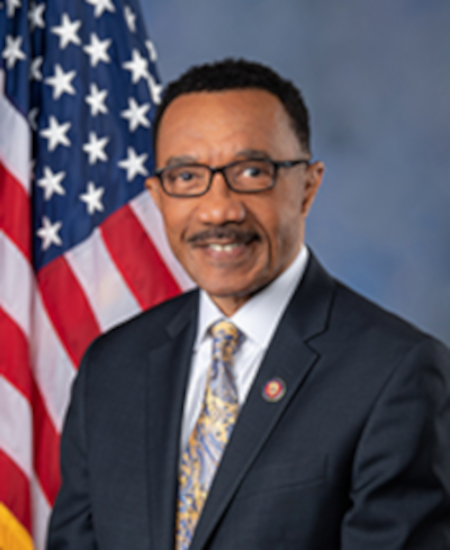
Rep. Kweisi Mfume
Sponsored bills
Improving Seniors' Timely Access to Care Act of 2022 This bill establishes several requirements and standards relating to prior authorization processes under Medicare Advantage (MA) plans. Specifically, MA plans must (1) establish an electronic prior authorization program that meets specified standards, including the ability to provide real-time decisions in response to requests for items and services that are routinely approved; (2) annually publish specified prior authorization information, including the percentage of requests approved and the average response time; and (3) meet other standards, as set by the Centers for Medicare & Medicaid Services, relating to the quality and timeliness of prior authorization determinations.
PPP and Bank Fraud Enforcement Harmonization Act of 2022 This bill establishes a 10-year statute of limitations for criminal charges and civil enforcement against a borrower who engages in fraud with respect to a Paycheck Protection Program loan.
Keep Kids Fed Act of 2022 This bill provides funding for and makes changes to school meal programs and the Child and Adult Care Food Program (CACFP). It also rescinds certain funds provided under the American Rescue Plan Act of 2021; the Consolidated Appropriations Act, 2021; and the Coronavirus Aid, Relief, and Economic Security Act (CARES Act). Specifically, the bill increases the reimbursement rate for school lunches by 40 cents and for school breakfasts by 15 cents for the school year beginning in July 2022. Further, the bill changes income eligibility for school meal programs for the school year beginning in July 2022. The bill extends the authority of the Department of Agriculture (USDA) to waive certain requirements for the school meal programs and the CACFP to address COVID-19, including by extending authority through September 30, 2022, for USDA to grant waivers related to summer food service programs. The bill authorizes USDA to establish a nationwide waiver of statutory and regulatory requirements under child nutrition programs for the 2022-2023 school year. Additionally, the bill increase the reimbursement rate for meals and snacks under the CACFP by 10 cents for the school year beginning in July 2022. Further, the bill increases the reimbursement of tier II family or group day care homes to tier I amounts for the 2022-2023 school year. The bill rescinds certain funding provided to USDA, the Department of Education, and the Small Business Administration.
Harriet Tubman Bicentennial Commemorative Coin Act This bill directs the Department of the Treasury to mint and issue 50,000 $5 gold coins, 400,000 $1 silver coins, and 750,000 half-dollar clad coins emblematic of the legacy of Harriet Tubman as an abolitionist. The Secretary may issue coins under this bill only during the period of January 1, 2024, through December 31, 2024. All surcharges received by Treasury from the sale of such coins must be paid equally to the National Underground Railroad Freedom Center in Cincinnati, Ohio, and The Harriet Tubman Home, Inc. in Auburn, New York, for the purpose of accomplishing and advancing their missions.
Assault Weapons Ban of 2022 This bill makes it a crime to knowingly import, sell, manufacture, transfer, or possess a semiautomatic assault weapon (SAW) or large capacity ammunition feeding device (LCAFD). The prohibition does not apply to a firearm that is (1) manually operated by bolt, pump, lever, or slide action, except for certain shotguns; (2) permanently inoperable; (3) an antique; (4) only capable of firing rimfire ammunition; or (5) a rifle or shotgun specifically identified by make and model. The bill also exempts from the prohibition the following, with respect to a SAW or LCAFD: importation, sale, manufacture, transfer, or possession related to certain law enforcement efforts, or authorized tests or experiments; importation, sale, transfer, or possession related to securing nuclear materials; and possession by a retired law enforcement officer. The bill permits continued possession, sale, or transfer of a grandfathered SAW, which must be securely stored. A licensed gun dealer must conduct a background check prior to the sale or transfer of a grandfathered SAW between private parties. The bill permits continued possession of, but prohibits sale or transfer of, a grandfathered LCAFD. Newly manufactured LCAFDs must display serial number identification. Newly manufactured SAWs and LCAFDs must display the date of manufacture. The bill also allows a state or local government to use Edward Byrne Memorial Justice Assistance Grant Program funds to compensate individuals who surrender a SAW or LCAFD under a buy-back program.
Susan Muffley Act of 2022 This bill restores the full vested monthly benefits for eligible participants of certain pension plans that were sponsored by Delphi Corporation and terminated as a result of General Motors' bankruptcy in 2009. The Pension Benefit Guaranty Corporation (PBGC) must recalculate and adjust each plan participant's monthly benefits payment. The PBGC must also apply the recalculation to previously-made monthly payments and make a lump-sum payment for any additional benefits based on the recalculation. The bill establishes and provides appropriations to a fund for the payment of these benefits and specifies how the lump-sum payments are treated for tax purposes. Finally, the bill requires the PBGC to report on recommendations to ensure the long-term solvency of its insurance programs.
Advancing Telehealth Beyond COVID-19 Act of 2022 This bill modifies the extension of certain Medicare telehealth flexibilities after the end of the COVID-19 public health emergency. Specifically, the bill provides that certain flexibilities continue to apply until December 31, 2024, if the emergency period ends before that date. The bill allows beneficiaries to continue to receive telehealth services at any site, regardless of type or location (e.g., the beneficiary's home); occupational therapists, physical therapists, speech-language pathologists, and audiologists to continue to furnish telehealth services; federally qualified health centers and rural health clinics to continue to serve as the distant site (i.e., the location of the health care practitioner); evaluation and management and behavioral health services to continue to be provided via audio-only technology; and hospice physicians and nurse practitioners to continue to complete certain requirements relating to patient recertifications via telehealth. The bill also delays implementation of certain in-person evaluation requirements for mental health telehealth services until January 1, 2025, or the first day after the end of the emergency period, whichever is later.
Securing and Enabling Commerce Using Remote and Electronic Notarization Act of 2022 or the SECURE Notarization Act of 2022 This bill allows a notary public commissioned under state law to remotely notarize electronic records and perform notarizations for remotely located individuals. The bill provides technical requirements for such notarizations, including the creation and retention of video and audio recordings and the use of communication technologies (i.e., video chat). Additionally, the bill requires U.S. courts and states to recognize notarizations—including remote notarizations of electronic records and notarizations of remotely-located individuals—that occur in or affect interstate commerce and are performed by a notary public commissioned under the laws of other states. The bill also allows a notary public to remotely notarize electronic records involving an individual located outside of the United States, subject to certain requirements.
Original Slavery Remembrance Day Resolution of 2021 This resolution supports the designation of a Slavery Remembrance Day and condemns slavery and its progenies.