

Maddy summaryThe Better CARE for Animals Act of 2023 amends the Animal Welfare Act to strengthen enforcement of animal welfare standards. It gives the Attorney General authority to bring civil cases for violations, including seeking penalties up to $10,000 per day per violation and injunctions to remove or relocate animals. The bill also requires the Secretary of Agriculture and Attorney General to coordinate through a new Memorandum of Understanding, focusing on repeat violators. These changes directly affect dealers, exhibitors, and enforcement agencies by expanding civil enforcement tools and clarifying jurisdiction over rule violations.
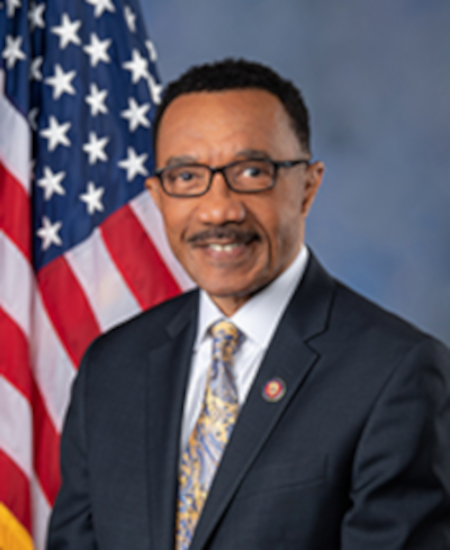
Rep. Kweisi Mfume
Sponsored bills
Maddy summaryThe John R. Lewis Voting Rights Advancement Act of 2023 would strengthen the Voting Rights Act of 1965 by updating the criteria for which states and localities must obtain federal preclearance before changing voting practices. It would establish new standards for proving vote dilution and vote denial by requiring courts to consider historical discrimination, racial polarization in voting, and whether voting practices disproportionately burden minority voters. The bill would also require states and localities to provide public notice of voting changes and share demographic data about polling locations. These changes would primarily affect jurisdictions with a history of voting rights violations, aiming to prevent discriminatory voting practices before they take effect.
Maddy summaryThe Humane Cosmetics Act of 2023 bans cosmetic animal testing in the United States, prohibiting companies from conducting or contracting such testing after its enactment (effective 1 year later). It also bans selling or transporting cosmetics developed using animal testing conducted after that date within U.S. interstate commerce. The law directly affects cosmetic manufacturers, retailers, and suppliers operating in the U.S. market, requiring them to use non-animal testing methods for safety evaluations. Exceptions exist for foreign regulatory requirements or when no alternative testing methods are available for specific ingredients.
Maddy summaryThe No Tax Breaks for Union Busting Act would deny tax deductions for employers who attempt to influence employees' decisions about union activities, including unfair labor practices like firing workers for organizing or using captive audience meetings. It targets expenses related to union-busting tactics, such as consulting fees and other costs used to sway workers' opinions about collective bargaining. Employers would need to report these expenses on tax returns and would no longer be able to deduct them from taxable income. The bill aims to prevent employers from using tax-deductible expenses to influence union elections, aligning with existing rules that deny tax deductions for political spending. It would apply to expenses incurred in taxable years beginning 240 days after enactment.
Maddy summaryThis resolution supports designating August as National Black Business Month to honor the economic contributions of Black-owned businesses across the U.S. It recognizes that Black businesses, which contributed $83.6 billion in receipts in 2023 and employed over 1.3 million people, continue to face barriers like limited access to capital and higher loan denial rates. The resolution does not create new laws or programs but symbolically acknowledges their historical and current impact on the economy. It is a non-binding House resolution passed to raise awareness, not to mandate policy changes.
Maddy summaryHR 5322, the Time Off to Vote Act, requires most private employers (with 25+ employees) to provide two consecutive hours of paid leave for employees to vote in federal elections. Employers must grant this leave upon request, can schedule it during early voting periods if permitted by state law, and cannot include lunch breaks in the leave period. The bill prohibits retaliation against employees who take this leave and ensures it does not affect accrued employment benefits. Violations could result in civil penalties up to $10,000 per offense, enforced by the Department of Labor.
Voters on the Move Registration Act of 2023 This bill requires the Consumer Financial Protection Bureau to develop, and specified agencies to distribute, a statement providing individuals with information on how to register to vote and their voting rights. This information must be provided to individuals upon their participation in certain rental assistance programs or application for certain residential mortgages.
Maddy summaryThe People Over Long Lines Act (POLL Act) requires states to develop public plans ensuring voting wait times don't exceed 30 minutes at polling places for federal elections, particularly addressing documented disparities where voters in communities of color wait significantly longer than others. It establishes standards for minimum voting systems, poll workers, and resources based on factors like population demographics, voter turnout, and needs of disabled or limited English proficiency voters. The bill provides $500 million annually in federal funding to help states implement these changes, creates a private right of action allowing voters to sue states for violations with penalties including $50 per hour of wait time, and mandates remedial plans for states with excessive wait times. The law applies to federal elections starting in 2025, with states required to comply by January 1, 2025.
Maddy summaryHR 5293, the Youth Voting Rights Act, would improve voting access for young people aged 18-29 through several concrete changes. The bill requires public colleges and universities to serve as voter registration agencies, establishes pre-registration for 16-year-olds, mandates on-campus polling locations for all institutions of higher education, and prohibits age-based restrictions on voting by mail. It also requires states to accept student ID cards as valid voter identification and provides grants to states for youth voter engagement programs. The bill would collect data on voting trends by age to help identify barriers to youth participation. These changes aim to address systemic barriers that have led to lower youth voter turnout and higher ballot rejection rates among young voters.
Maddy summaryThe Sustaining Our Democracy Act creates a federal program to provide states with annual funding to improve election administration and increase voting access. It allocates $2 billion each year from 2024-2033 through the State Election Assistance and Innovation Trust Fund to support activities like upgrading voting equipment, training election workers, and expanding voting access for underserved communities, people with disabilities, and voters on Indian lands. States must submit detailed plans for using funds, which cannot be used for activities that restrict voting access or target election officials. The Act establishes an Office of Democracy Advancement and Innovation to administer the program, monitor fund usage, and oversee compliance with its requirements.